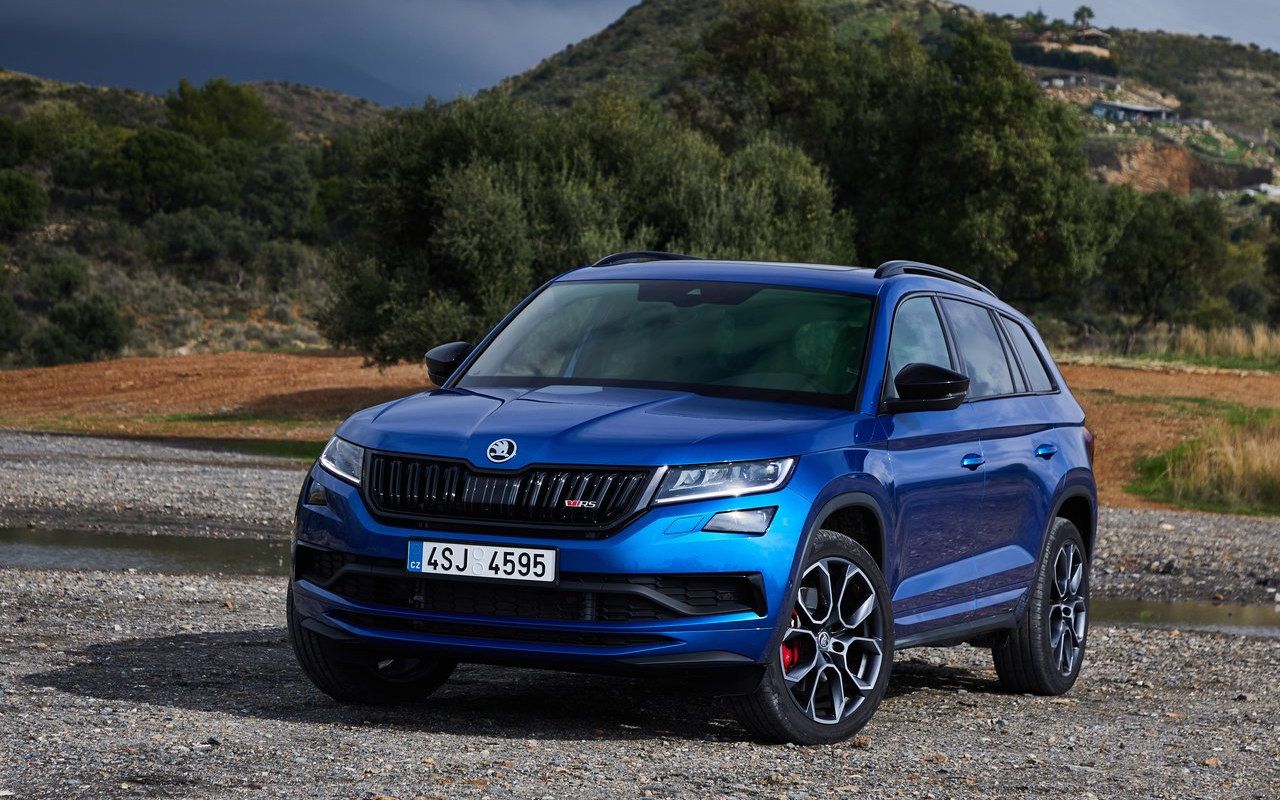
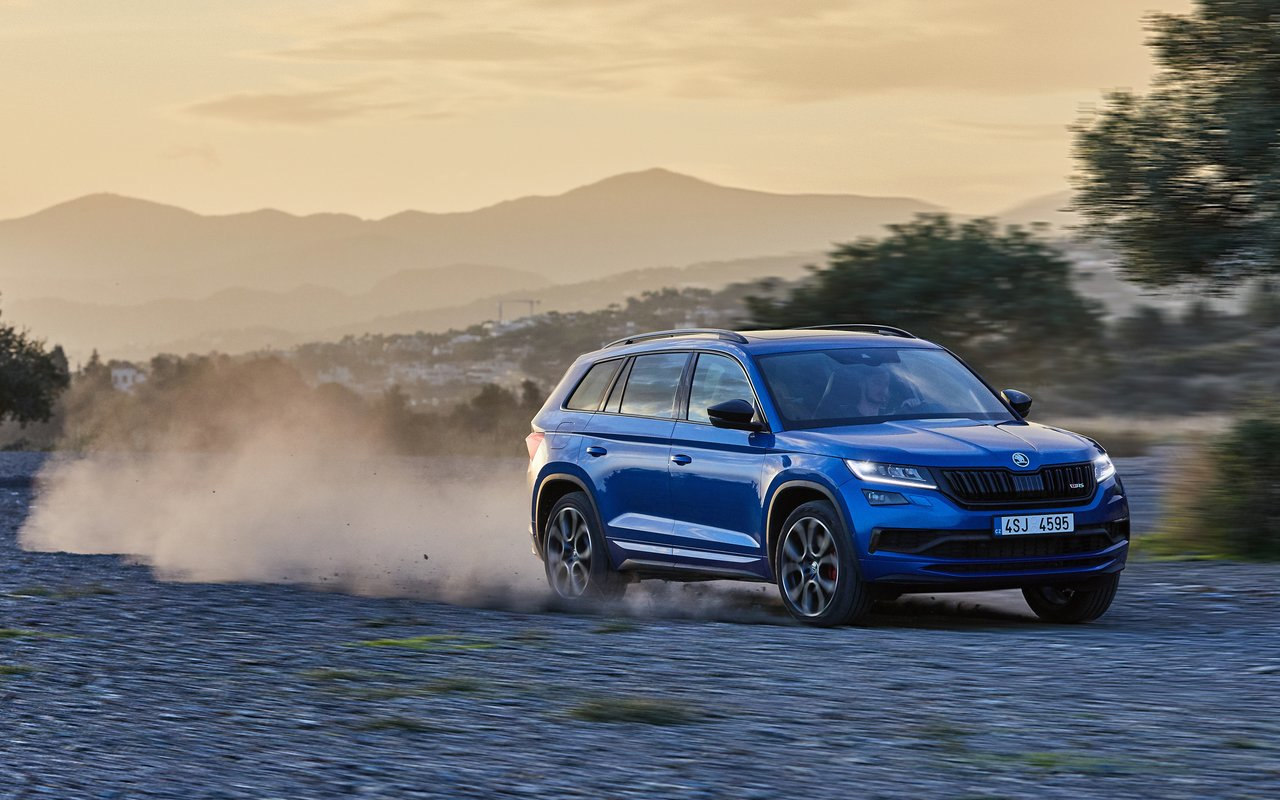
There are plenty of seven-seat SUVs to choose from if you've got a large budget, but what if you're looking for something that's got all the space but is more reasonably priced? Well, then the Skoda Kodiaq should be on your shortlist, because its attractive entry-level price certainly makes it appealing to big families looking for value for money. It's actually Skoda's first ever seven-seater car, and its first large SUV. It shares some of its underpinnings with other VW Group SUVs including the Audi Q2, Seat Ateca and Volkswagen Tiguan, but the larger Kodiaq is more of a rival for the Nissan X-Trail, while the higher-end and pricier versions compete with the Kia Sorento, Hyundai Santa Fe and even Land Rover's Discovery Sport. The entry-level versions of the Kodiaq come with five seats as standard, but it’s the seven-seat versions that have by far the most appeal. Engine options range from a 121bhp 1.4 petrol all the way up to a punchy 188bhp 2.0-litre diesel, and there’s also a choice between front and four-wheel drive and manual and automatic (DSG) gearboxes.
The Kodiaq is the first seven-seater for the Czech manufacturer, and the start of a rollout of SUV models due to hit showrooms over the next four years. Kodiaq is named after the Kodiak bear which inhabit the Kodiak islands in Alaska. For some handy dinner table trivia, the car is spelt with a ‘q’ not a ‘k’ as a tribute to Alaska’s native Alutiiq people who identify an animal by ending its name with a ‘q’. That and there’s already a Chevrolet Kodiak and, you know, lawyers.
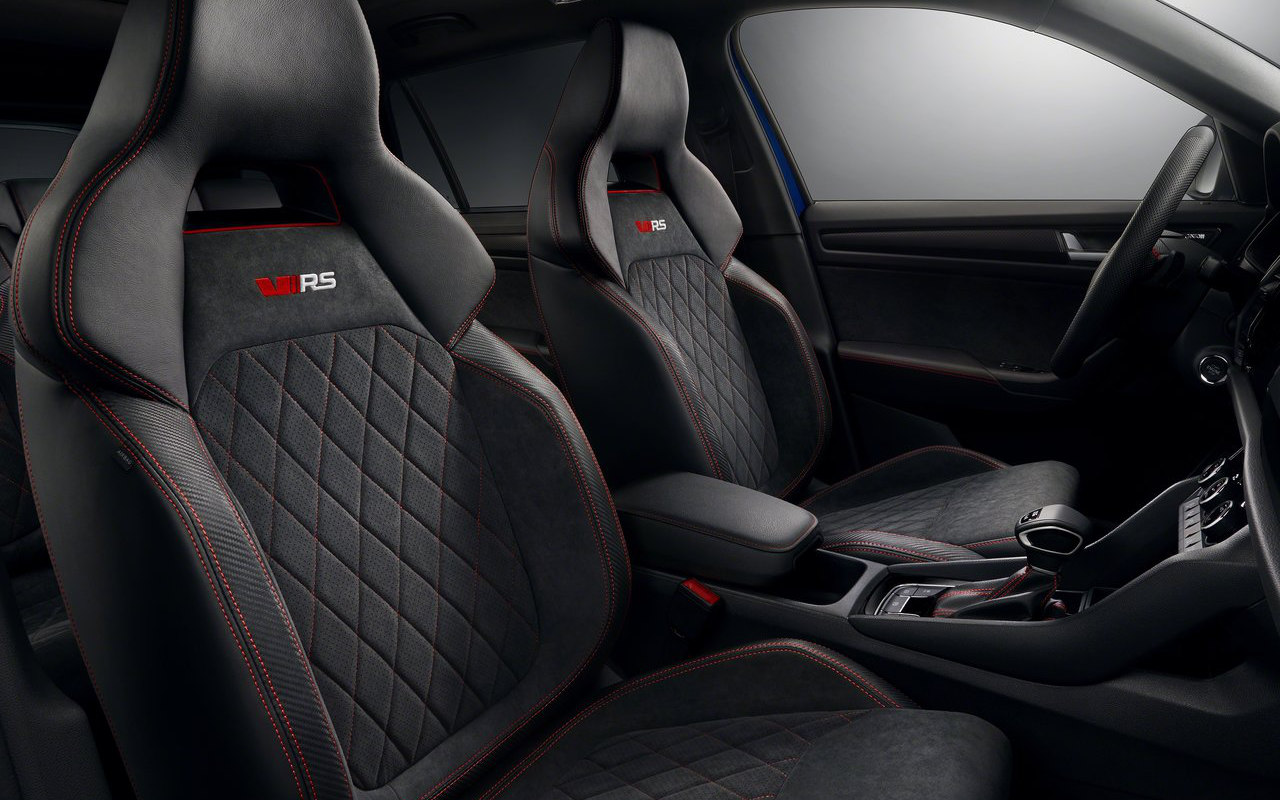
Pros Practical, spacious and clever - like a Skoda should be Comfortable seats, and comfortable ride Upmarket interior, especially the touchscreen
Cons Front design perhaps a little awkward Lacklustre midrange response from both engines Third row quite tight
The Skoda Kodiaq is the Czech company’s first seven-seater SUV and a real reason to worry for rival models such as the Nissan X-Trail, Hyundai Santa Fe and Kia Sorento. The Kodiaq strikes a good balance when it comes to offering comfort and agility. Well, ‘aglie’ might be too strong a word, but for a car of this size, the big Skoda suffers from little body roll even if you power through corners quickly. More important is the cosseting ride, which you get in all but 19-inch wheeled models. It shields passengers from big bumps and broken road surfaces, with only smaller high-frequency jolts catching the chassis out. We drove a model with 19-inch wheels and although the ride wasn’t uncomfortable, you did feel most bumps in the cabin.
Pros Superb build quality Hugely practical interior Seven-seat option
Cons Stiff ride with big wheels Some wind noise at motorway speed Top-spec diesel noisy
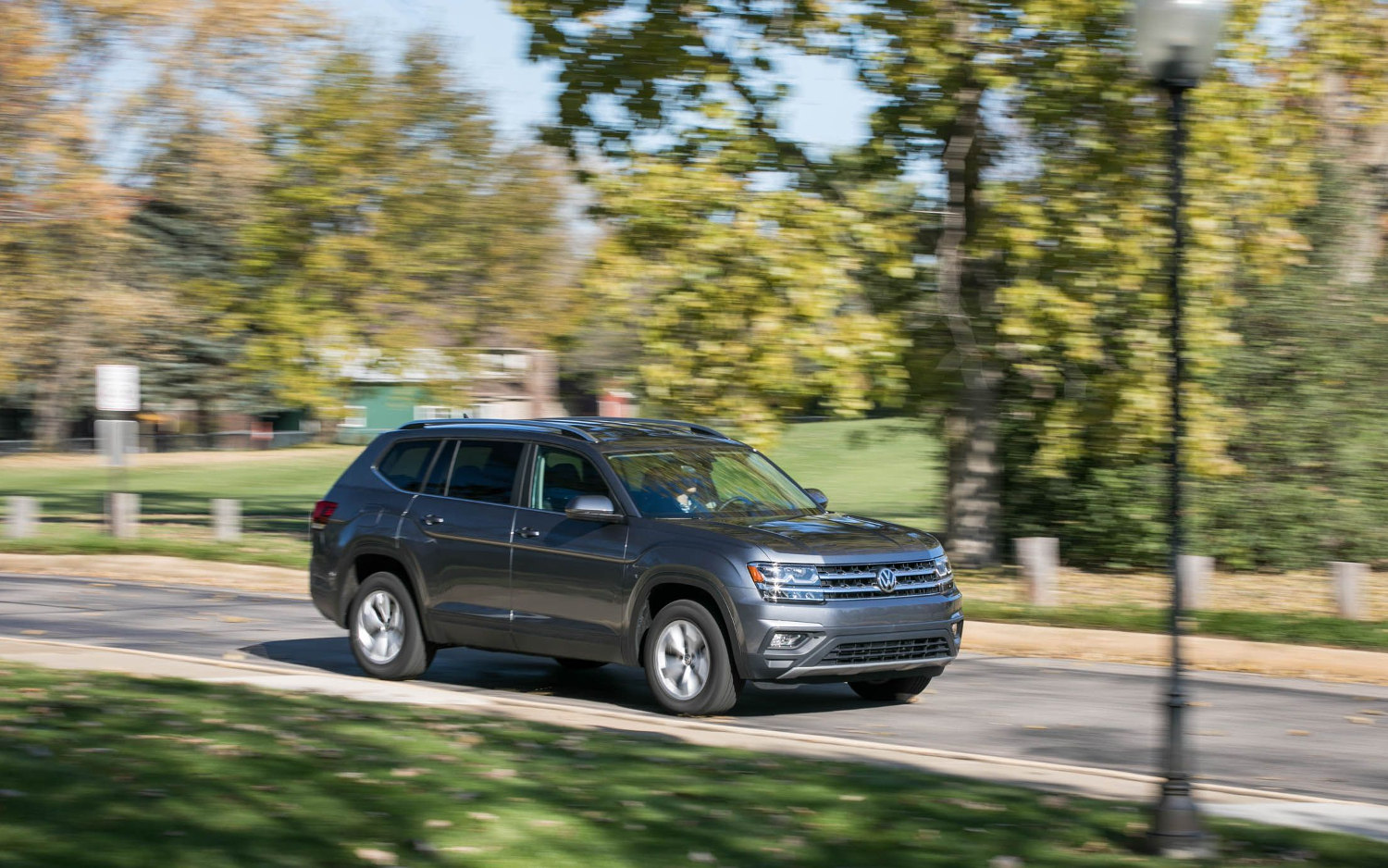
Volkswagen is dressing up the 2018 Atlas with its ubiquitous R-Line trim, which adds interior and exterior upgrades over the more basic models. The features include: 20-inch aluminum alloy wheels, snazzier bumpers, side skirts, and R-Line badges. The cabin gets stainless steel pedal covers and an R-Line steering wheel piece. The Atlas R-Line will be revealed next week at the Detroit Auto Show, and its features build on the SE and SEL trims.
The Atlas sport utility vehicle is VW's most anticipated vehicle in years. It goes on sale this spring and offers a 3.6-liter V6 with 276 horsepower or a turbo four-cylinder making 235 hp, which are each paired with an eight-speed automatic transmission. Volkswagen's 4Motion all-wheel-drive system is also an option.
The three-row SUV is the linchpin of VW's plans to move beyond its diesel-emissions scandal and capture new customers in the United States. It takes aim at entrenched competitors like the Ford Explorer, Honda Pilot, Toyota Highlander, and others.
The Atlas is based on VW's MQB architecture and will be built at the company's Chattanooga, Tenn., factory. The R-Line will be available in late 2018, and pricing has not been released for any of the Atlas trims.
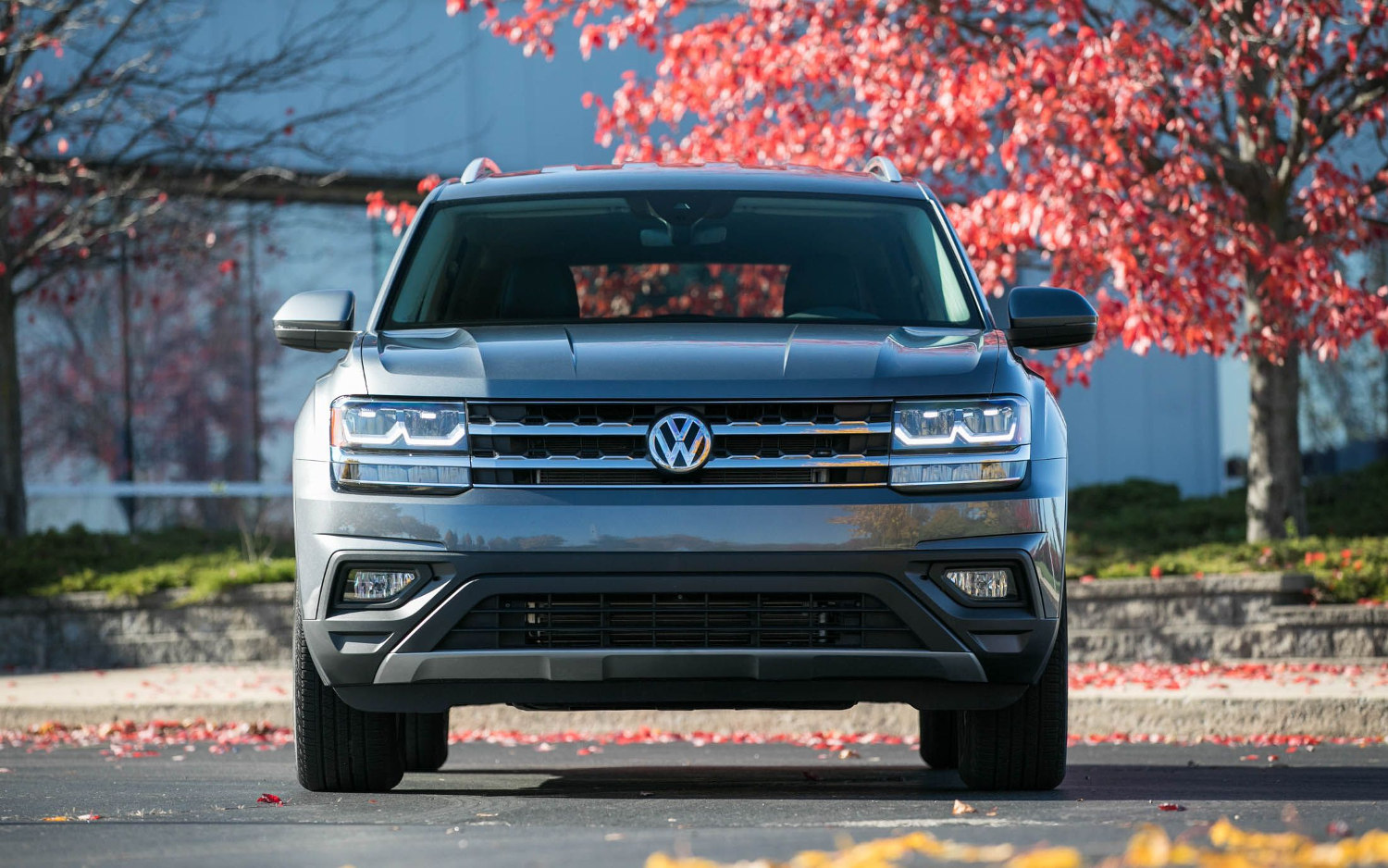
Making its debut at the North American International Auto Show in Detroit, the 2018 Volkswagen Atlas R-Line adds aggressive edge to the automaker’s soon-to-launch midsize 3-row SUV that will be built in Chattanooga, Tennessee. Available on Atlas SE and SEL models, the tasteful R-Line upfit brings a selection of subtle performance-inspired cosmetic and functional tweaks and will be introduced shortly after the 2018 VW Atlas arrives in showrooms here this spring.
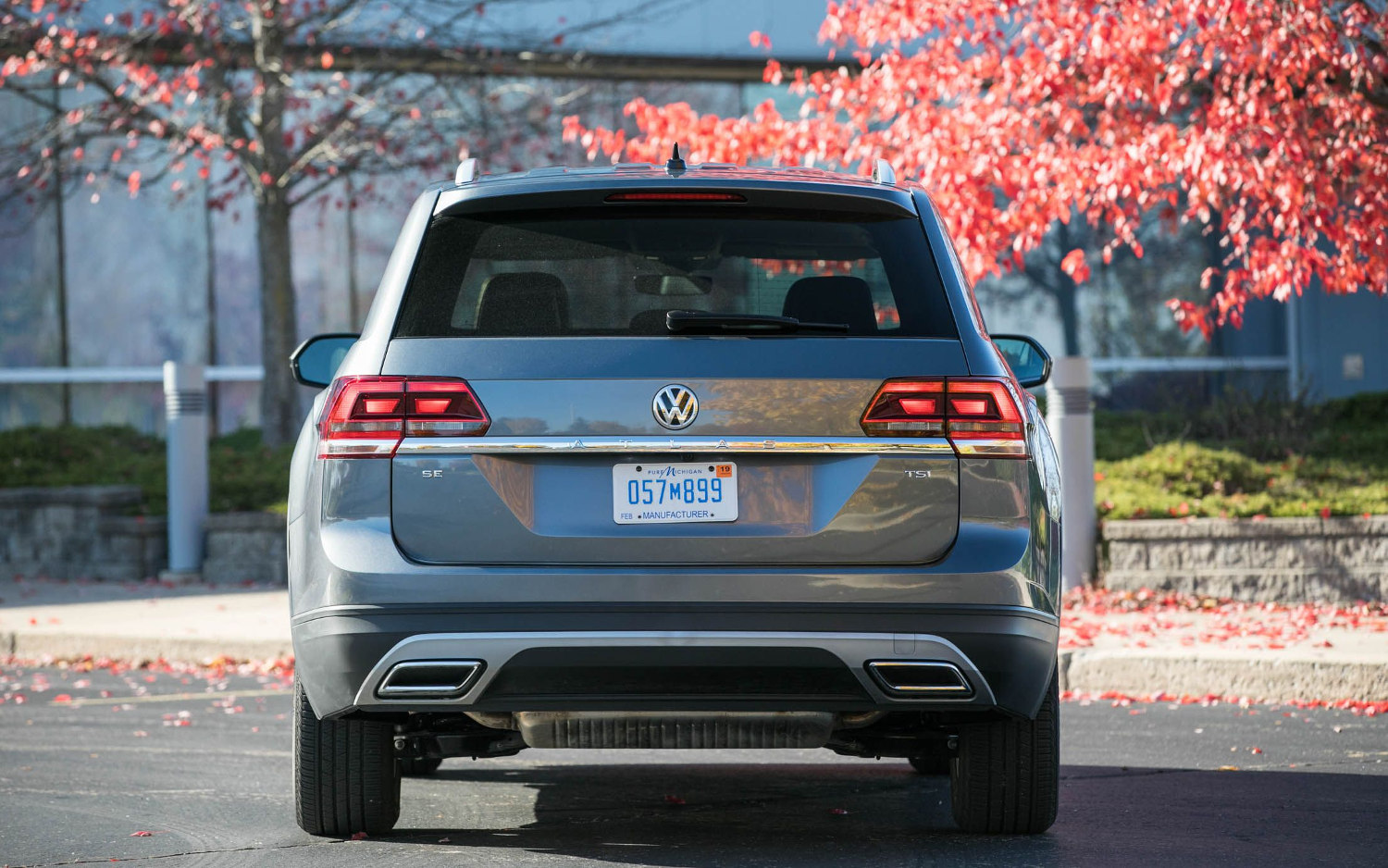
Key exterior changes to R-Line Atlas models include bolder fascias with larger air intakes up front and a unique gloss black rear diffuser as well as more deeply contoured side skirts, 20-inch aluminum wheels and R-Line badges. Inside, the package adds R-Line logos on the steering wheel and start screen on the infotainment package as well as stainless-steel sport pedal covers.
Like buyers of the standard 2018 VW Atlas, R-Line customers can choose from either a 235-horsepower/2.0-liter 4-cylinder TSI Turbo and front-wheel drive or a 276-horse/3.6-liter naturally aspirated V6 that’s available in FWD or AWD configurations. The sole transmission is an 8-speed automatic transmission.
There's a lot riding on its burly shoulders.
It is fitting that the all-new Volkswagen Atlas takes its name from the Greek god tasked with keeping the sky from falling on mortals. Coming off the hugely publicized diesel-emissions scandal, VW needs an emotional win. Despite the media and consumer kerfuffle, sales for the people’s brand are actually up so far in 2017, but that is mostly due to the arrival of the Golf Alltrack, a boomlet that eventually could fizzle. Hence the need for the Atlas to prop up the brand.
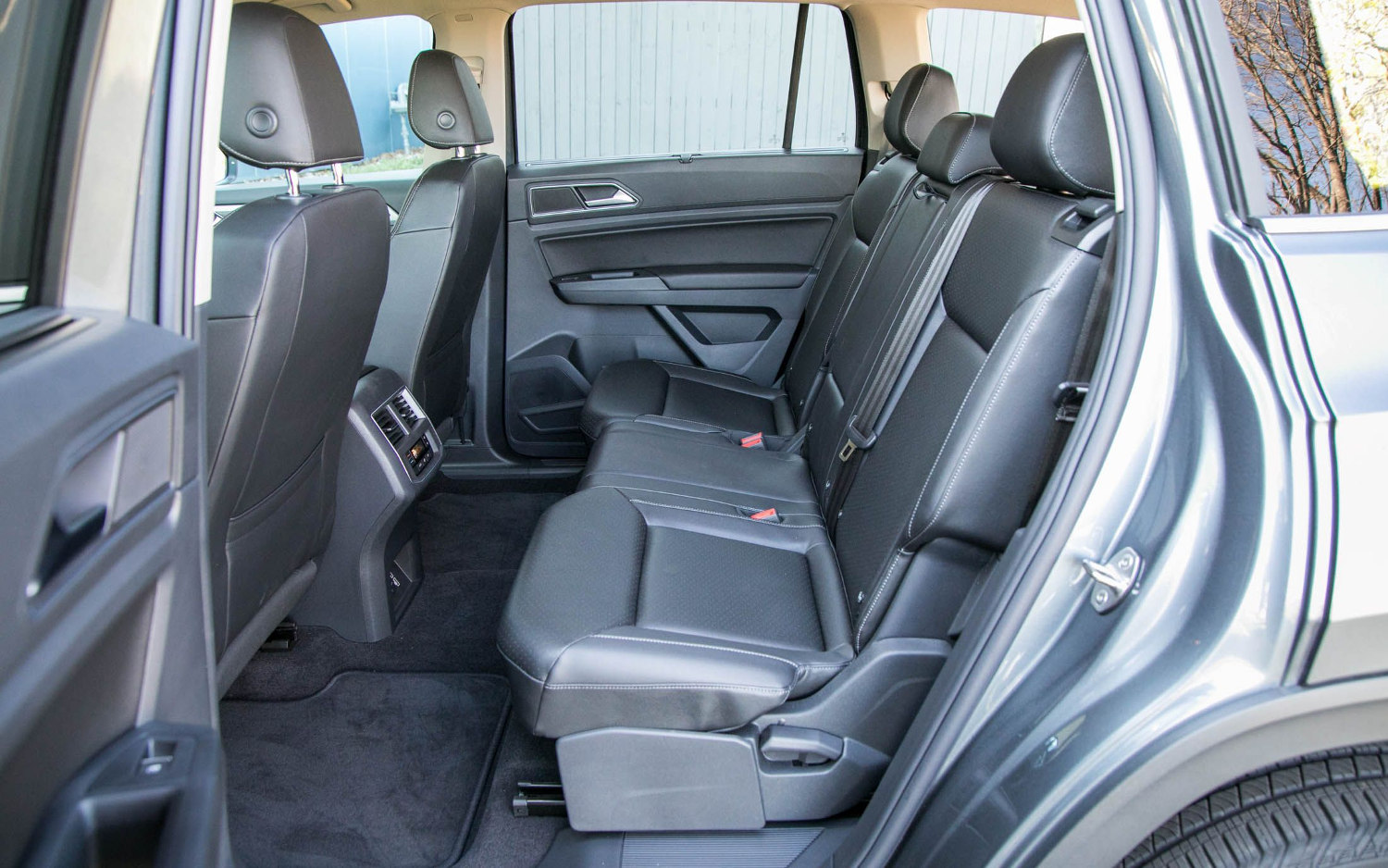
Riding on the same flexible architecture that underpins the Golf, the Tennessee-built Atlas is a medium-large three-row SUV that fills a major gap in VW’s portfolio. Not since the Routan—a rebadged Dodge Grand Caravan that VW last sold in 2013—has there been a Volkswagen with more than five seatbelts. Buyers have been forced to look elsewhere for their family-hauling needs.
The Atlas struts into dealerships this June, fully capable of shouldering the responsibility of transporting families and all their stuff as well as a big chunk of VW’s future in America. Like its namesake, this VW is strong enough to handle heavy lifting.
Everything. The 2018 Volkswagen Atlas is an all-new model for the 2018 model year. Though the SUV shares its MQB chassis and drivetrains with other Volkswagen Group products, this is the brand’s first three-row crossover offered in the U.S
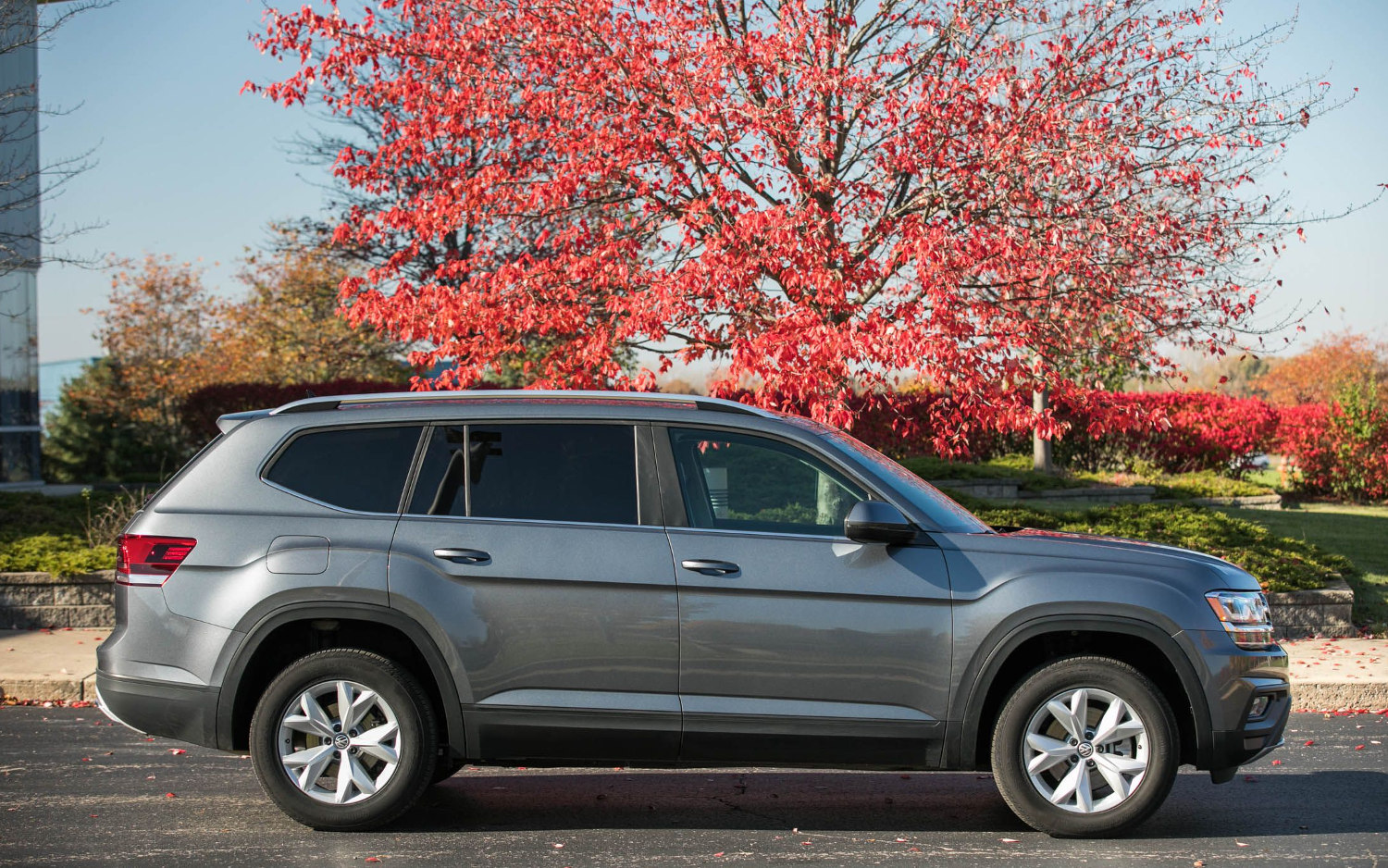
The Volkswagen Atlas is the German automaker’s all-new three-row midsize crossover that, in size, slots above the two-row midsize Touareg and compact Tiguan SUVs as well as the Golf Alltrack and Golf SportWagen in the automaker’s people and cargo carrying lineup. The Atlas competes in a crowded segment that includes the Ford Explorer, Chevrolet Traverse, Honda Pilot, Nissan Pathfinder, Toyota Highlander, Mazda CX-9, and Dodge Durango.
LED headlights, Bluetooth, Apple CarPlay, and Android Auto are all standard.
The 2018 Atlas comes standard with a turbocharged 2.0-liter I-4 rated at 235 hp and 258 lb-ft of torque, while a 3.6-liter VR6 rated at 276 hp and 266 lb-ft is optional. Both engines use an eight-speed automatic transmission. Front-drive is standard with both engines, and the automaker’s 4Motion all-wheel-drive system is optional with the 3.6-liter engine. EPA-rated fuel economy hasn’t been revealed for the turbo 2.0-liter, but the 3.6-liter is EPA-rated 18/25 mpg city/highway for the front-drive model and 17/23 mpg with all-wheel drive.