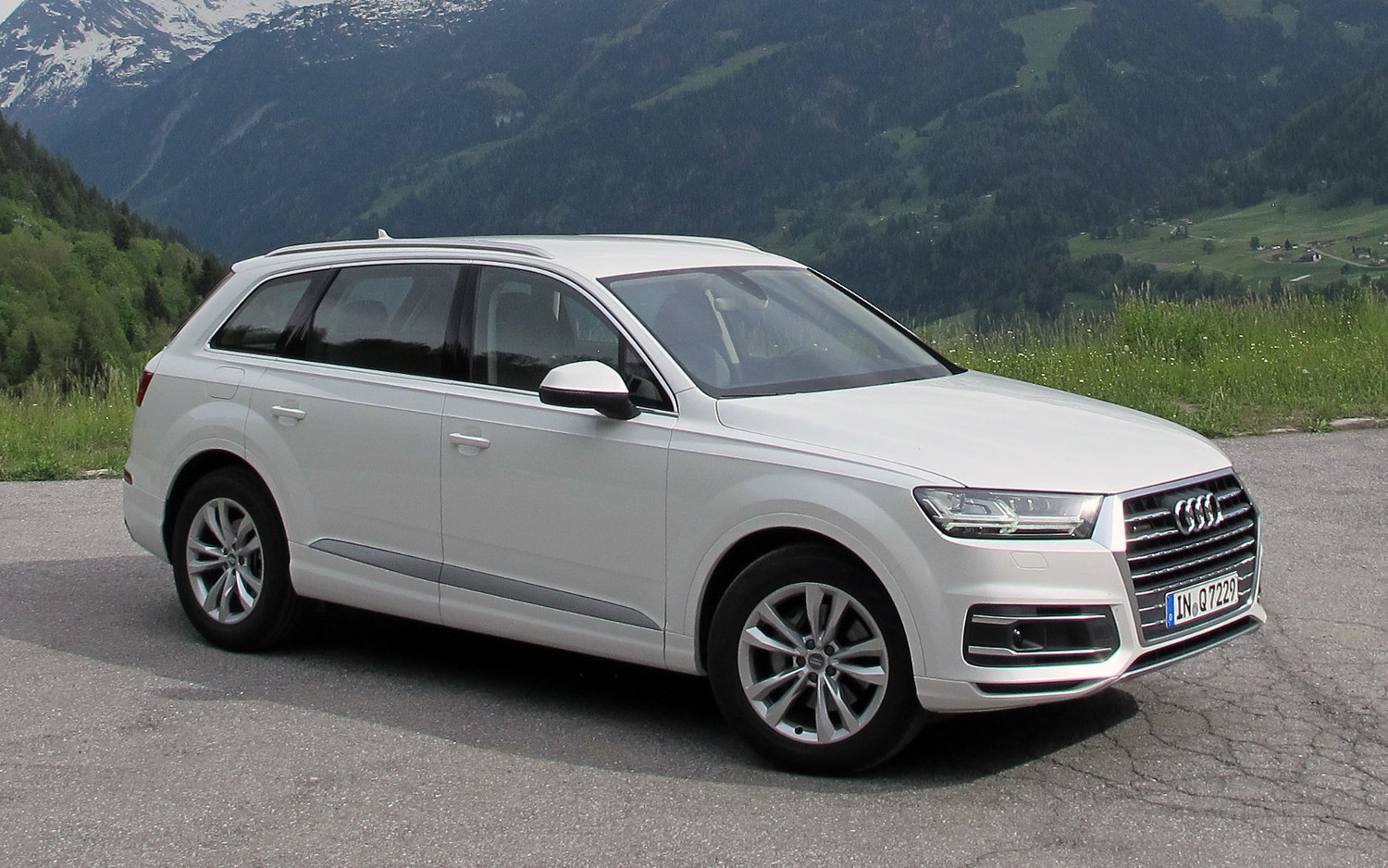
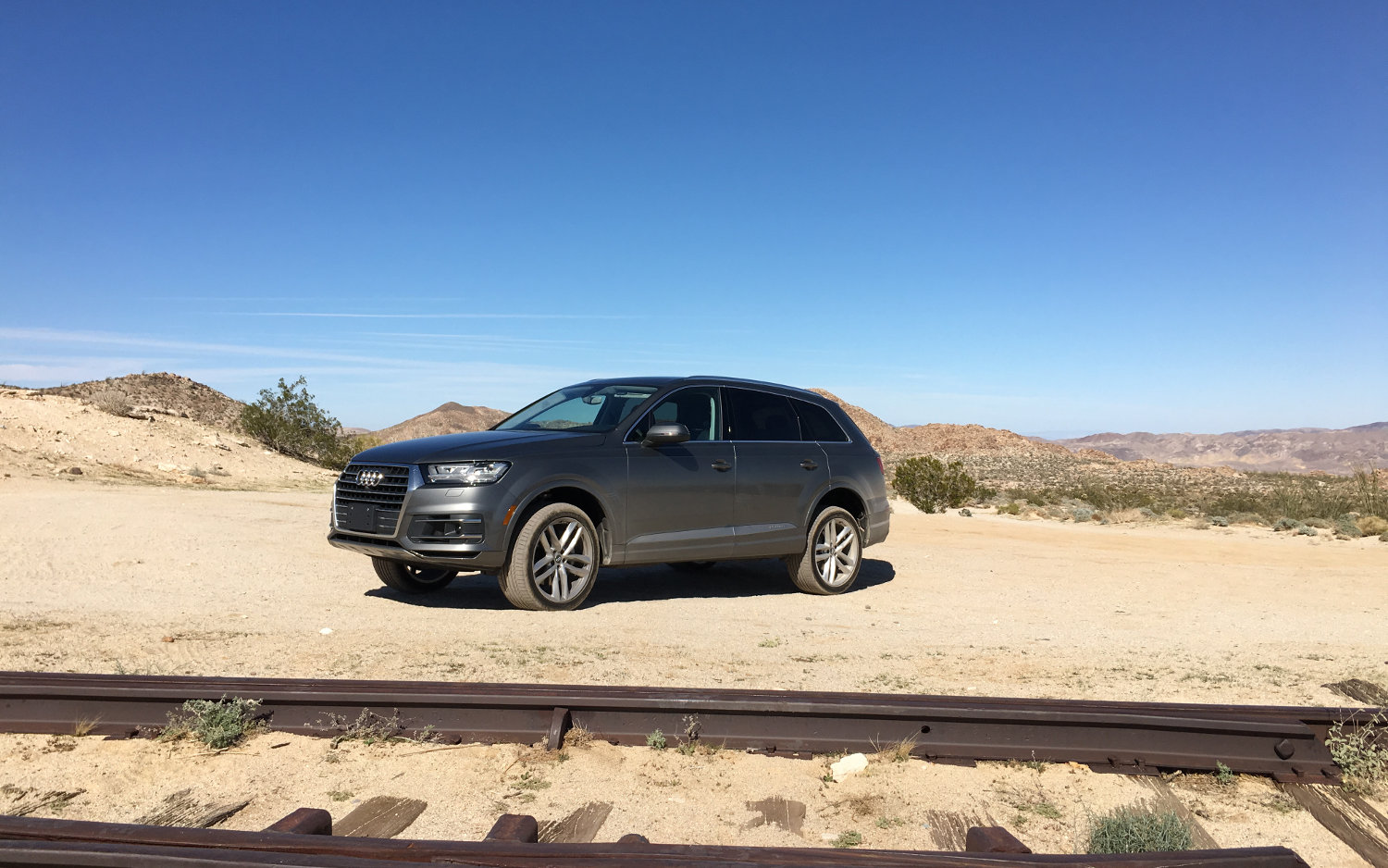
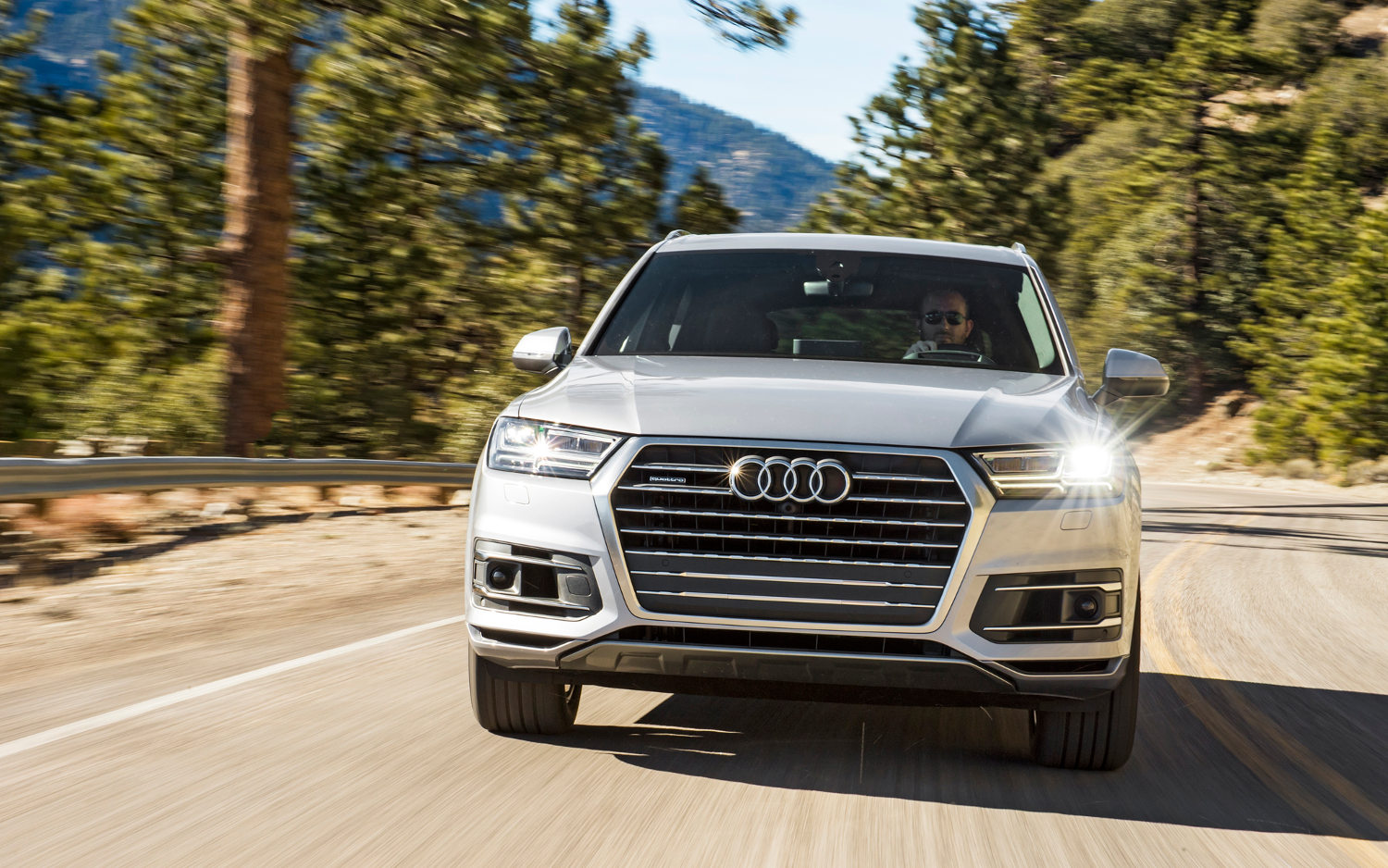
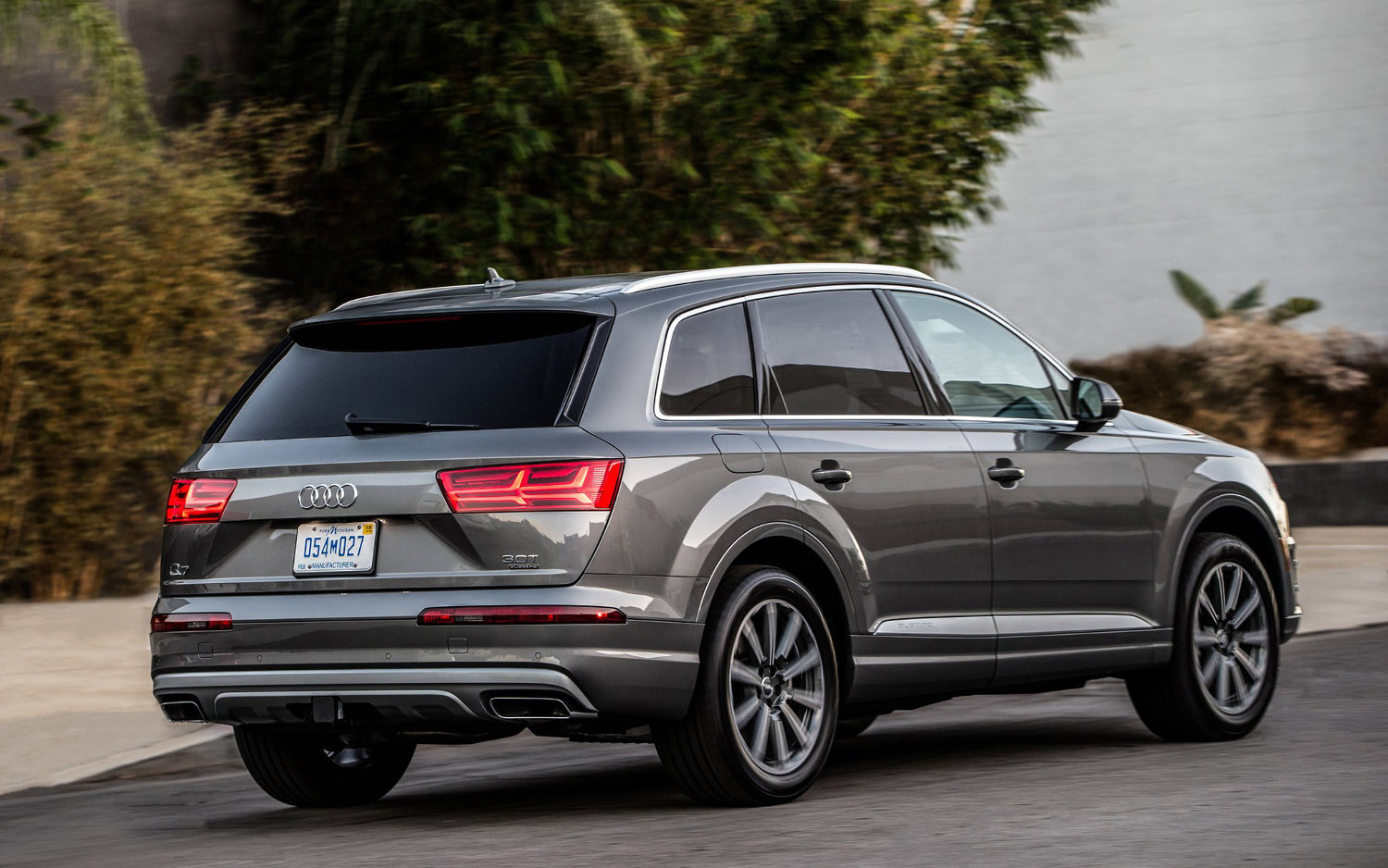
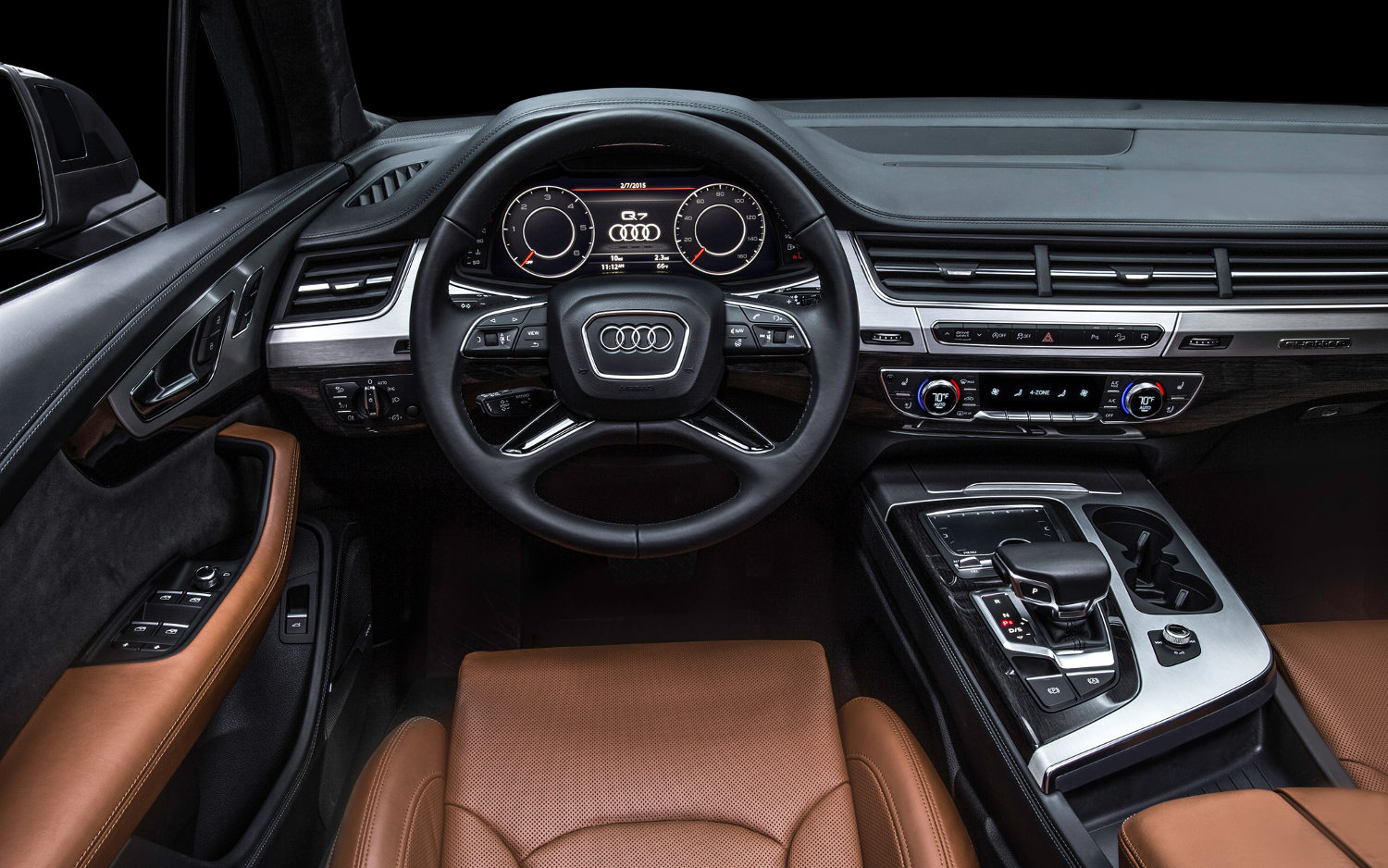
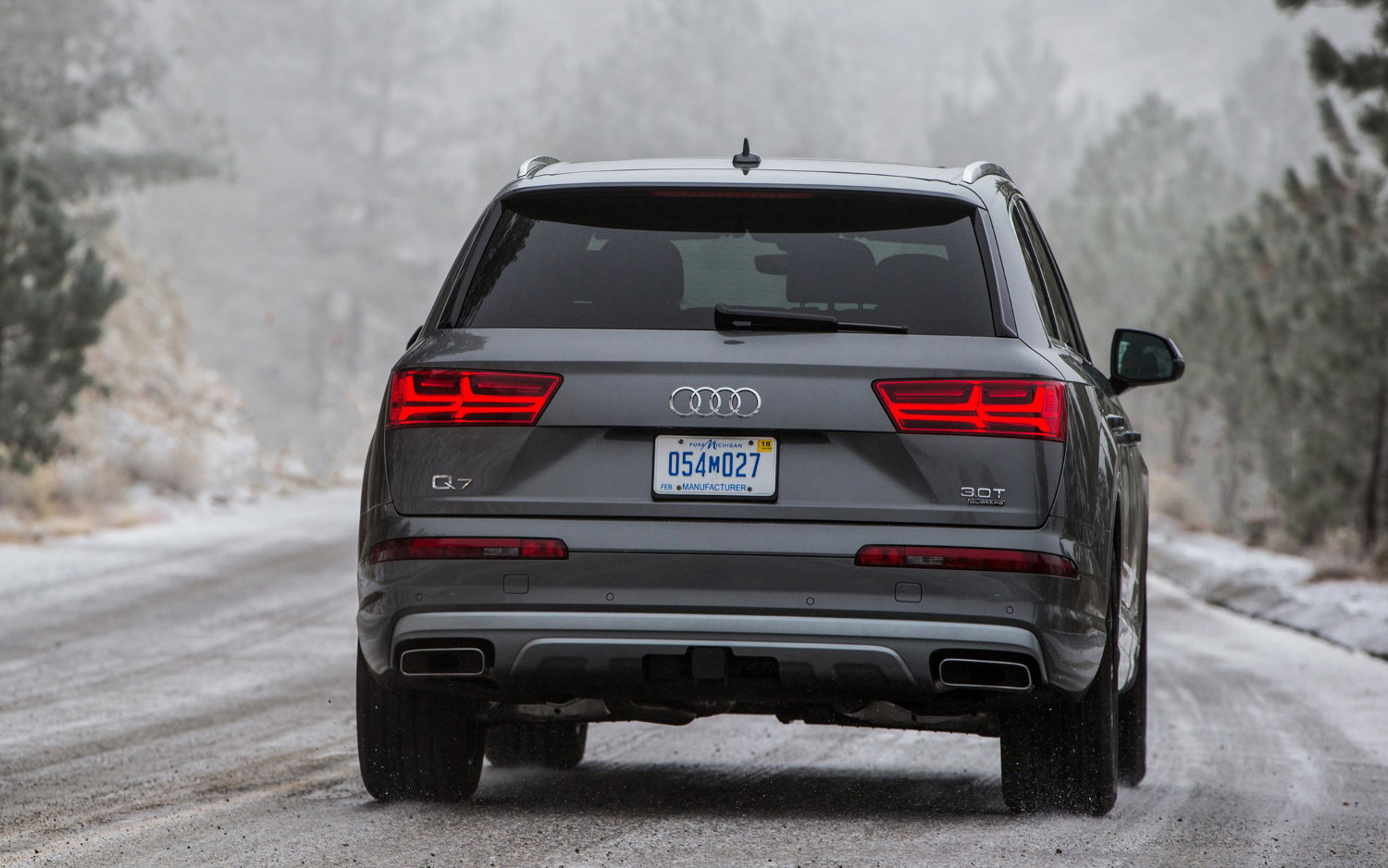
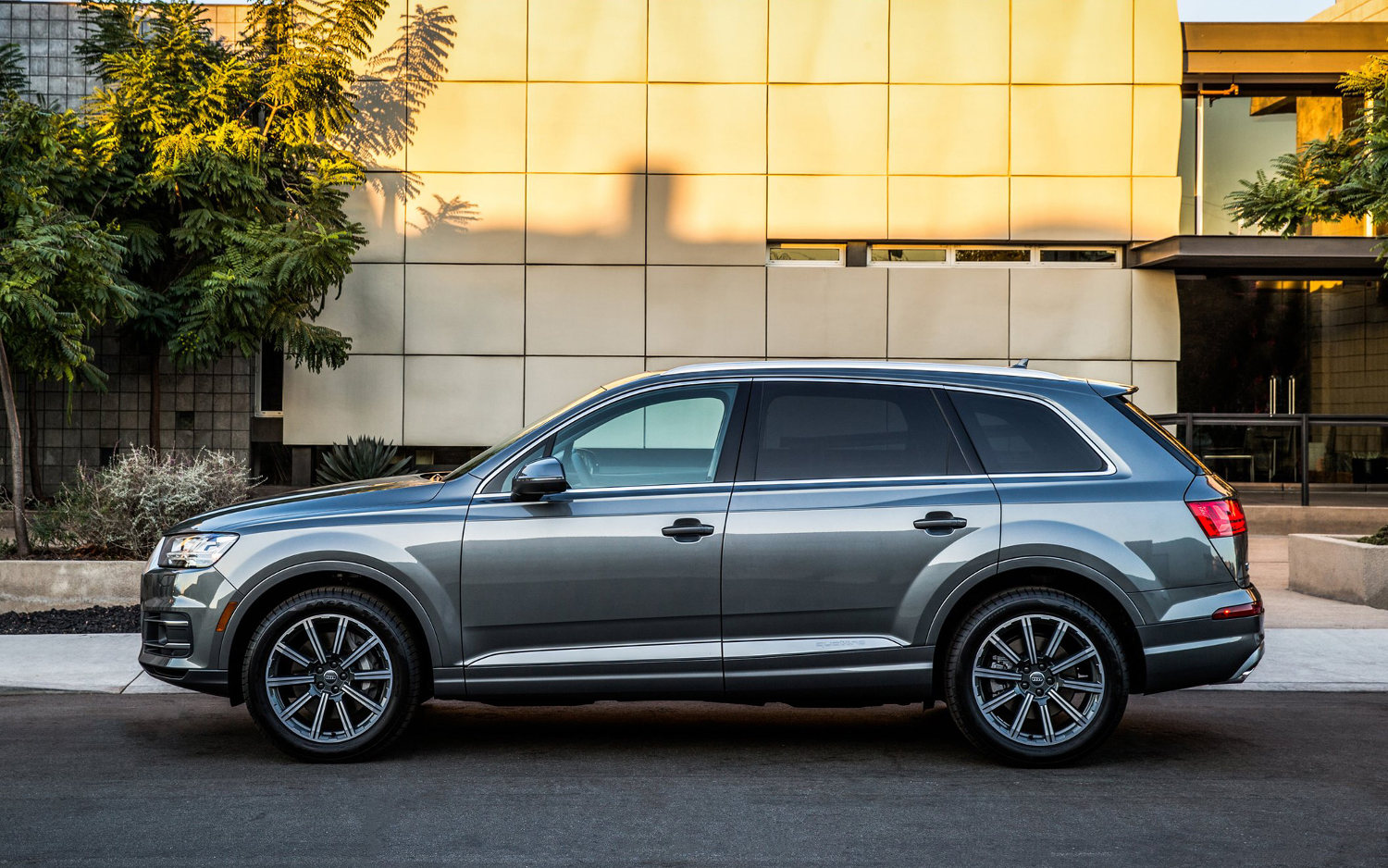
The 2017 Audi Q7 gets a rakish new sport-wagon look, a finely detailed, tech-savvy interior, and serious chassis advancements underneath—including a dramatic weight loss, available rear-wheel steering, and a plug-in hybrid version. Most models with a third row really put a damper on most kinds of driving enjoyment, whether that be zigzagging through tightly mountain-road esses, or just maneuvering through the parking lot of your local supermarket.
Pros Sportier, more carlike look and feel Finely detailed cabin Innovative rear-wheel steering Weight loss and better mpg
Cons Best tech features limited to top trim Third row not all that usable Potentially very expensive
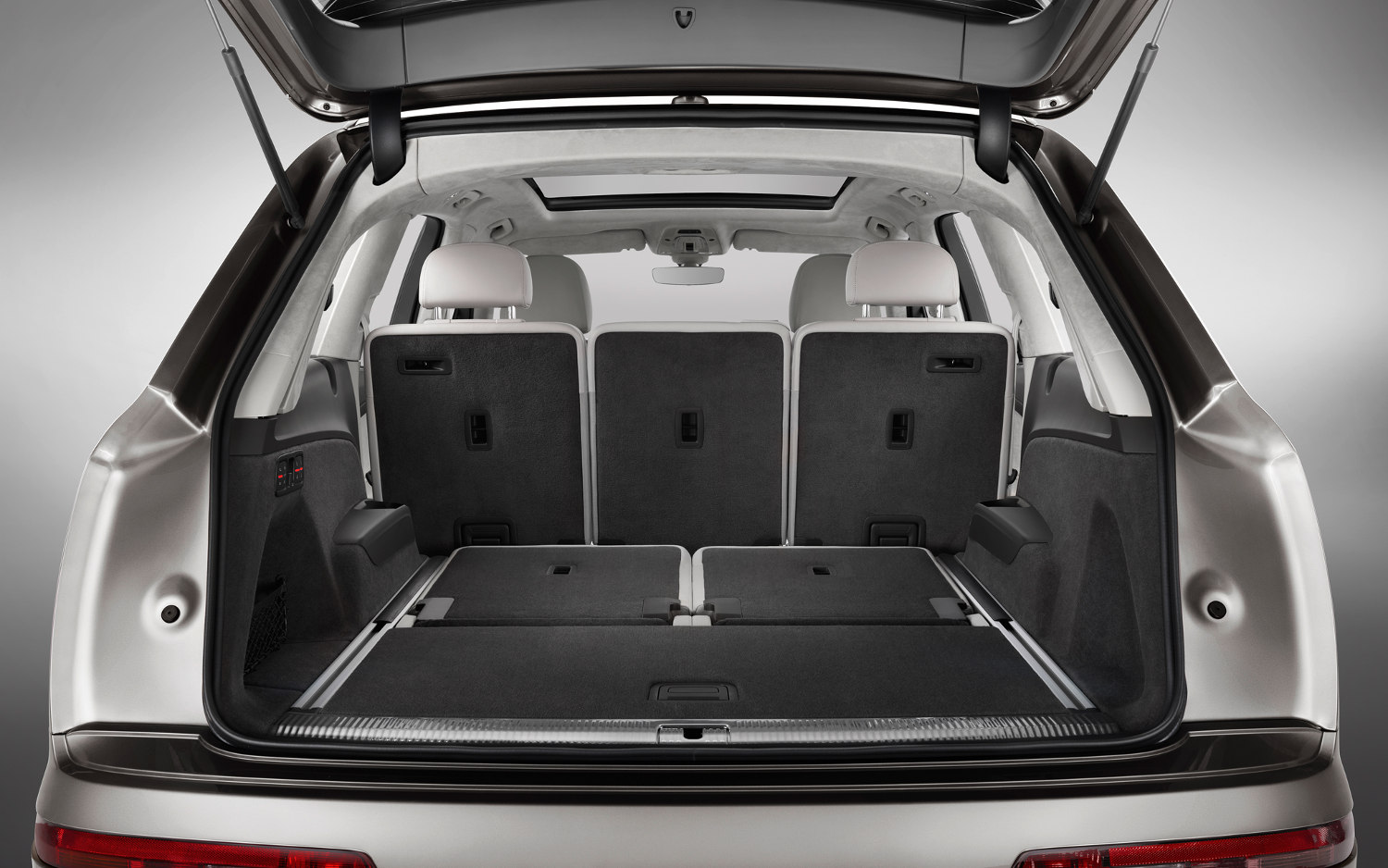
The 2017 Audi Q7 ranks 4 out of 21 Luxury Midsize SUVs. The completely redesigned 2017 Audi Q7 scores well in the very competitive luxury midsize SUV class. In particular, its combination of interior quality, passenger and cargo space, and performance stand out. Each of these are important considerations for shoppers in this segment.
Pros Potent V6 engine Nimble handling Luxurious interior
Cons Less cargo room than rivals
Few three-row luxury crossovers are as desirable as the fully redesigned 2017 Audi Q7. Thanks to a supremely comfortable cabin, a powerful V6 engine and the latest high-tech features, the Q7 delivers capability and elegance in a package that'll make you feel as if you've arrived. After a one-year hiatus, the Audi Q7 is back and fully redesigned for 2017. Highlights include revised styling, a roomier interior, new technology features, improved fuel economy and a new four-cylinder turbocharged engine.
pros Plenty of the latest safety features and driving aids Powerful supercharged V6 engine First-class cabin comfort with vault-like quietness Excellent IIHS safety scores
cons Limited cargo space compared to most other midsize SUVs
The Fortuner may only be the latest of many additions to the confusion of choice that is a booming SUV market segment, but Toyota has a steely-eyed confidence about it. “Fortuner definitely lives up to the promise of its road-less-travelled 4WD heritage “Fortuner is positioned perfectly between Kluger and Prado; diesel alternatives to Kluger are selling around 1400 vehicles a month, or almost 17,000 a year. Fortuner will give us a significant slice of that action.
“It’s a great choice for people who aspire to a luxury SUV … they want a stylish vehicle, they want seven seats and the safety of a high-seating position and great visibility; they also want genuine 4X4 ability.
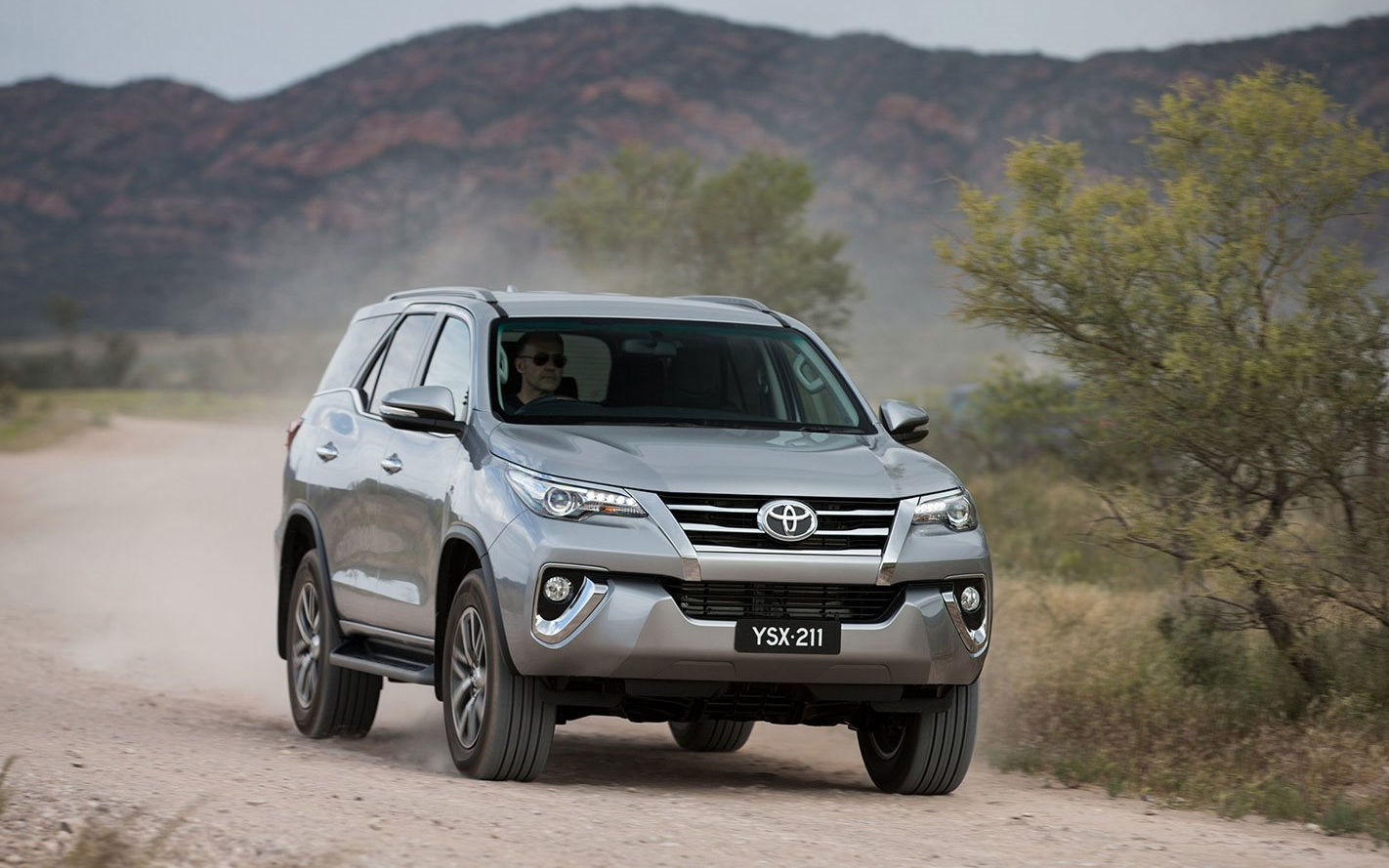
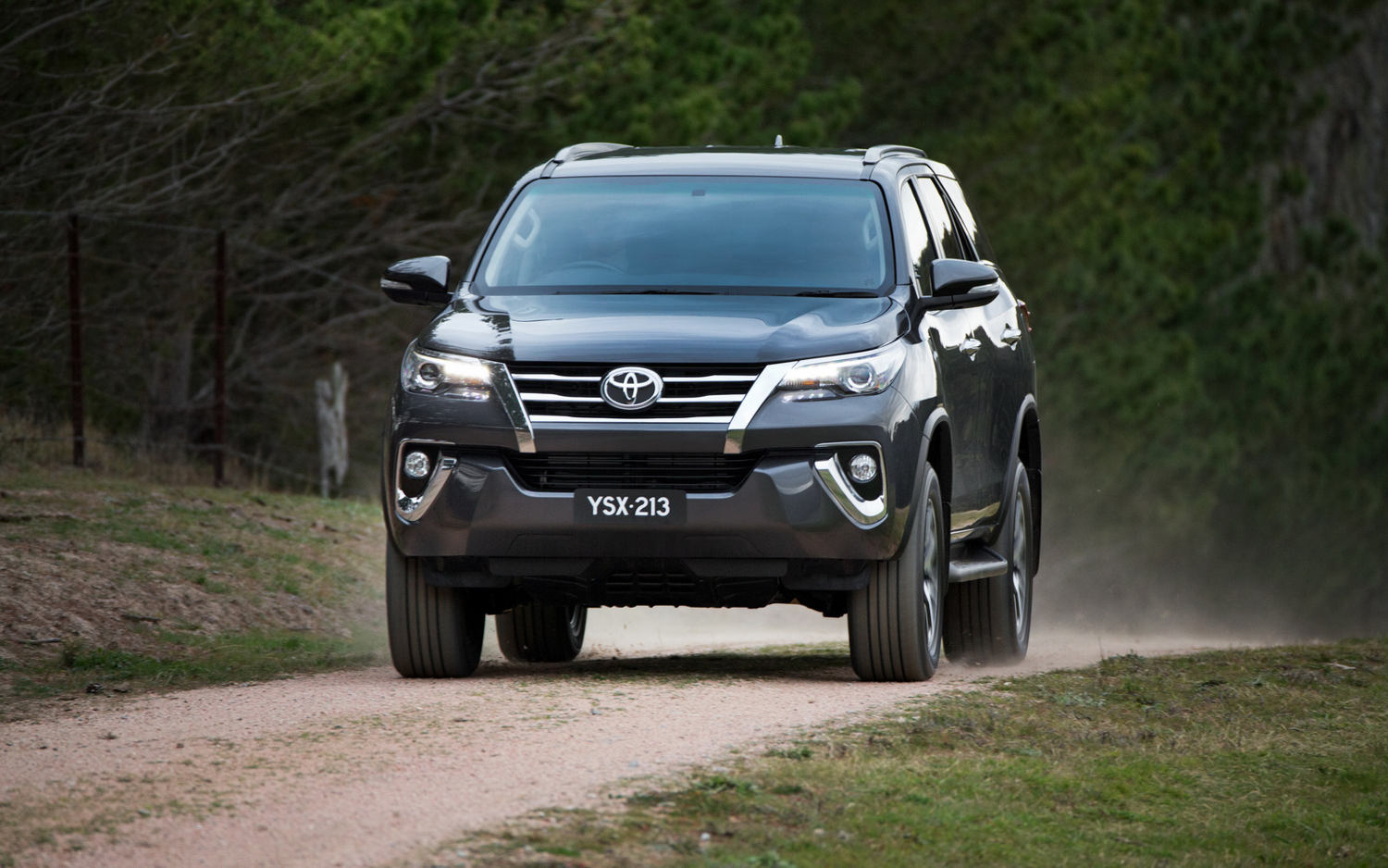
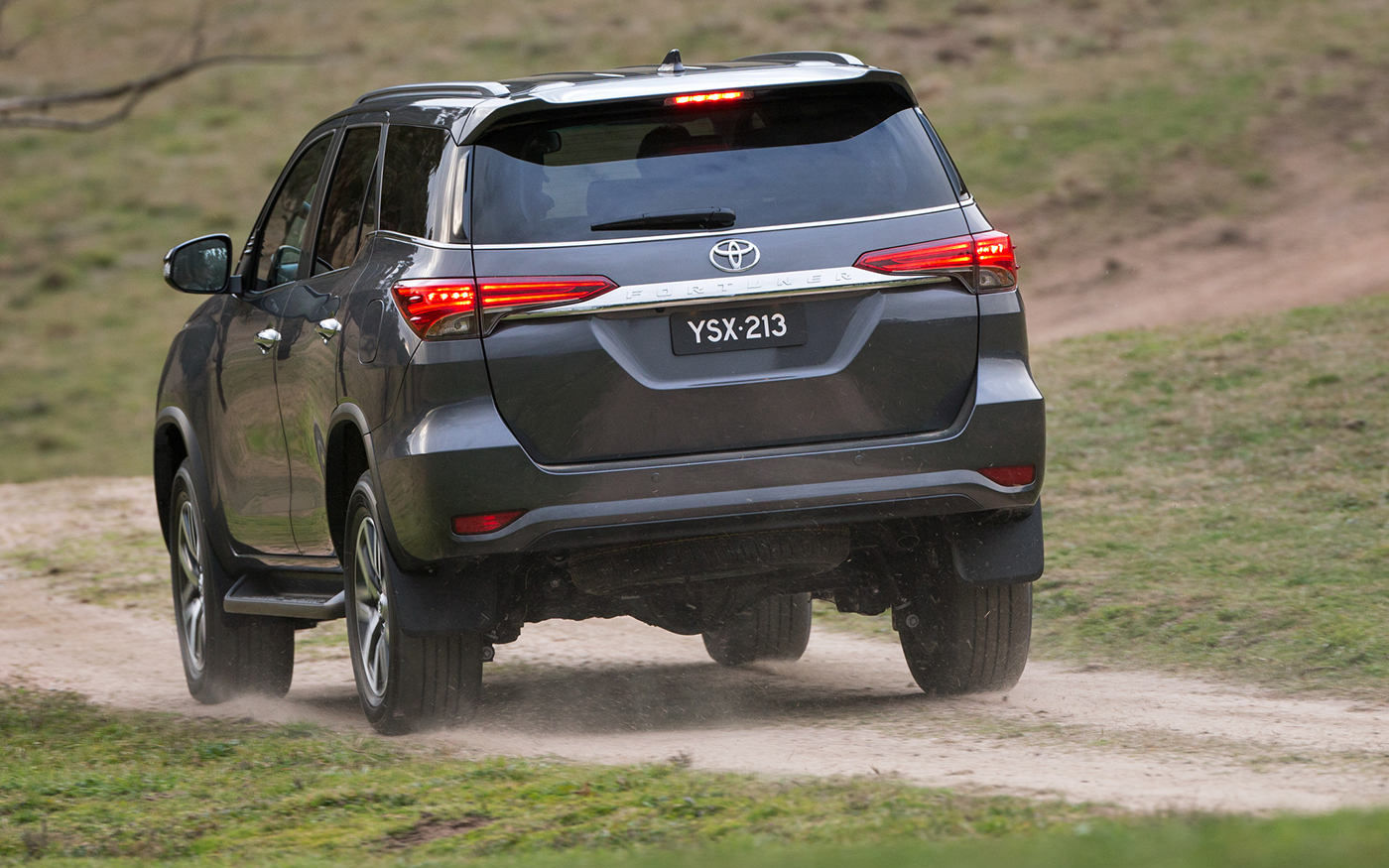
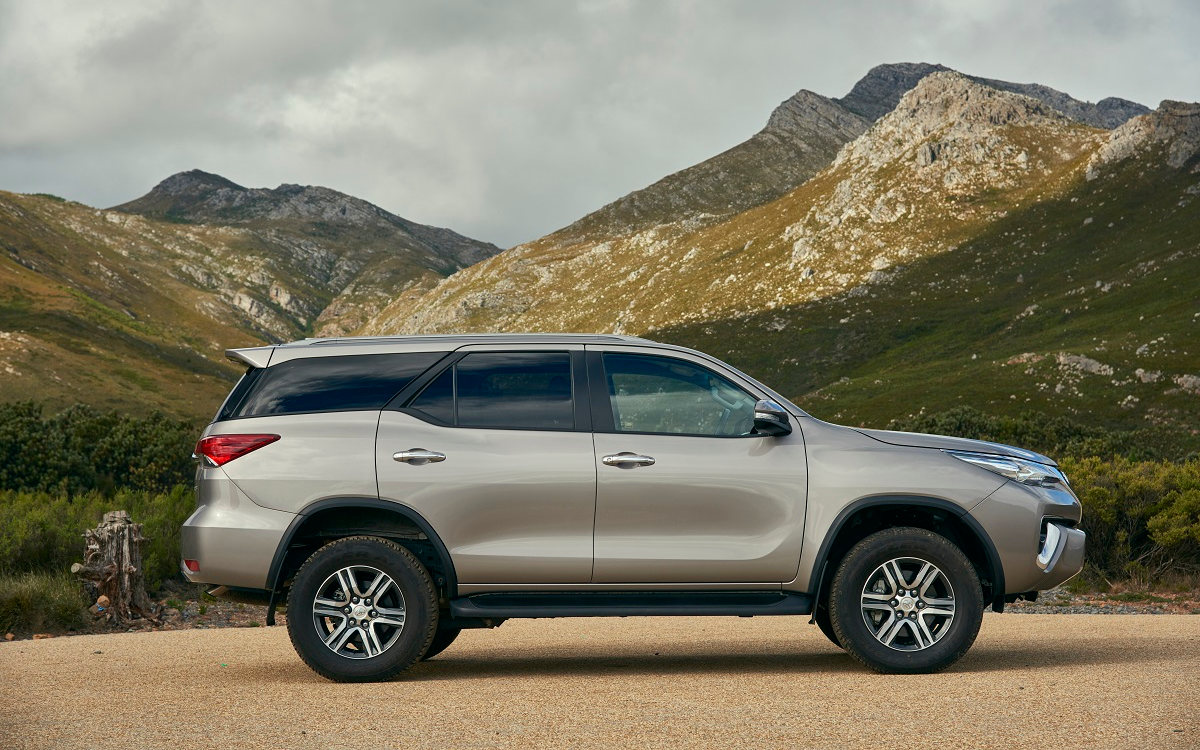
The Fortuner, shorter and narrower than Kluger and Prado, is chunky and solid; it looks like a mad scientist fused a Land Cruiser, Prado and Kluger together, threw in a bit of RAV4 for a laugh and then pumped the resulting mix full of steroids. It looks good; not too city-smooth, as do plenty of modern-day 4WDs, but country tough with class.
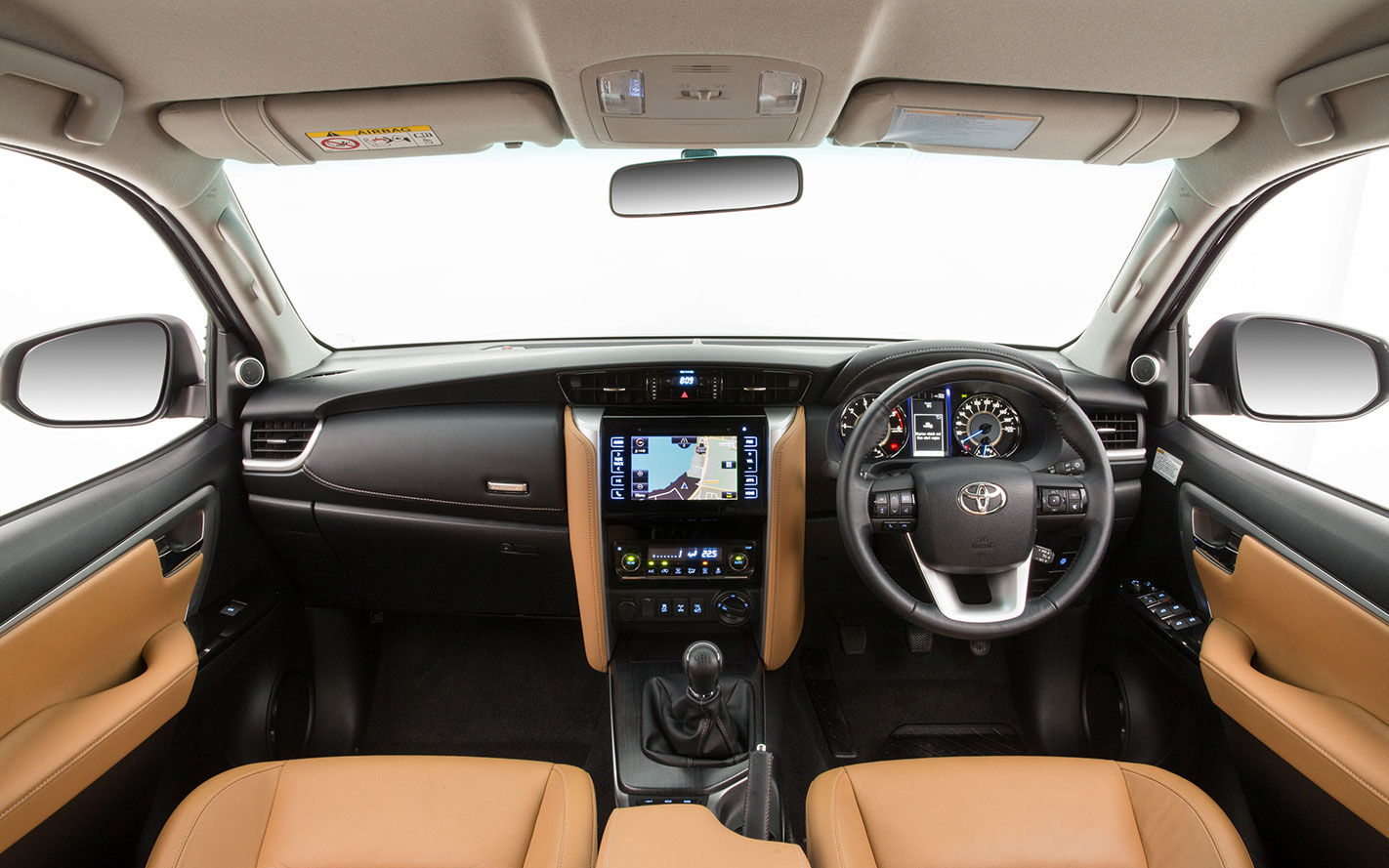
Driving position is nice, high and secure; the seats are comfortable and offer plenty of support. Steering is rake- and reach-adjustable. The paddle shifts will seem like a nice touch for some, but we reckon they’re wasted here. Visibility from the driver’s seat is more than generous with open spaces all-round.
The Toyota Fortuner boasts impressive off-road credentials, along with the benefit of thousands of kilometers of local engineering and testing, with Toyota’s local engineering team involved in a great deal of design and testing for the Fortuner
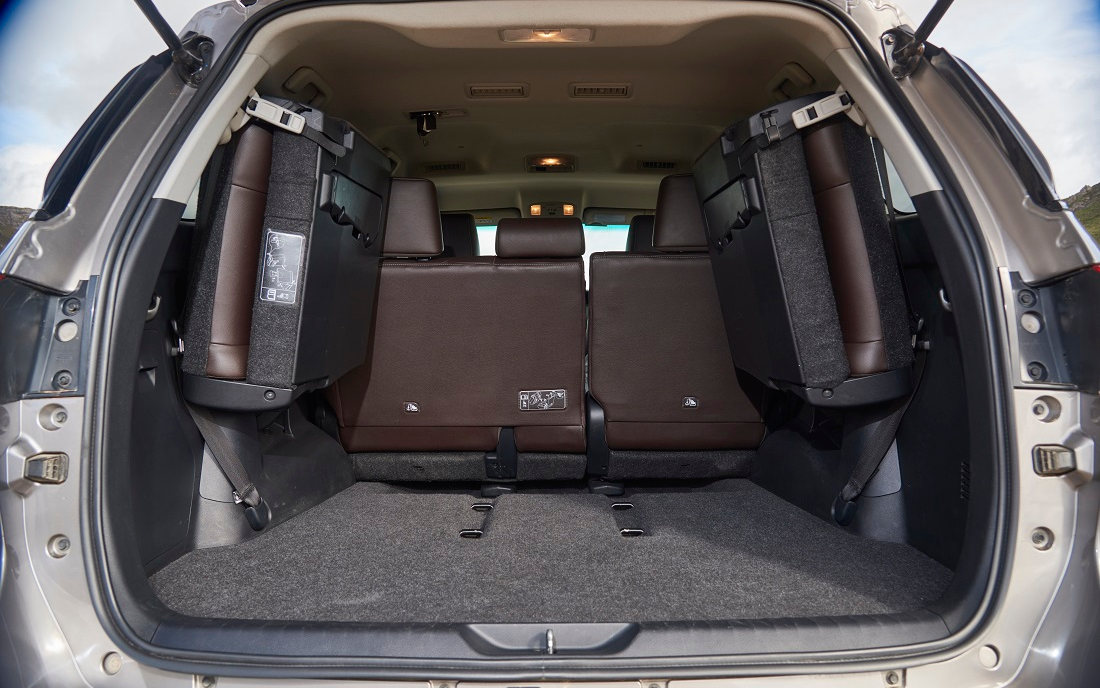
While it may look big from the outside, the Fortuner is actually shorter and narrower than both the Prado and Kluger. Despite the exterior size deficit, the cargo capacity wins out on volume and versatility. With the third row in place, there is 200 liters of cargo volume on offer (to the roof). The rear door is manually operated on GX and GXL variants, while the top-spec Crusade gets a motorised rear door.
High quality materials and premium fit and finish sets the Fortuner apart from the HILux (except the bit of trim that popped out unexpectedly on the passenger side door). Leather-look highlights on the top-spec Crusade model make it feel more like a Prado than an SUV derived from a commercial vehicle.
Under the Fortuner’s shell is a dual-range transmission with switchable four-wheel drive. The driver can switch between a two- and four-wheel drive high-range mode and a four-wheel drive low-range mode
Normally, when a car maker launches an all-new product, it opens not just a chapter in that vehicle’s history, but an entirely new volume. That said, Toyota didn’t get the memo with the all-new Fortuner. Granted it looks sleeker and much more sophisticated than ever before, it adheres too closely to the concept of kaizen or continuous improvement. It ends up telling pretty much the same story, remixed and retold
Toyota has done with the Fortuner’s design. While the first-generation model looked sturdy, the new one is sleek. It’s all fluid and swoopy with a strong crossover-vibe.
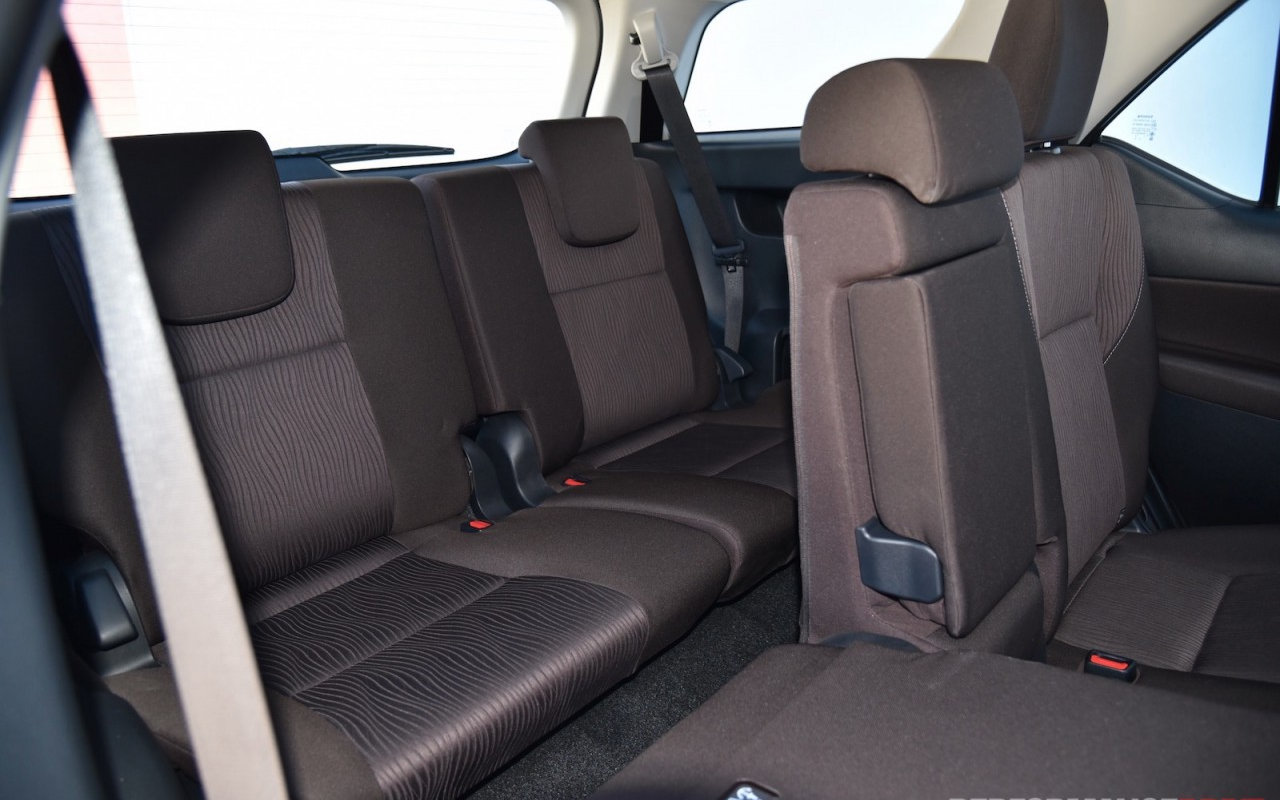
Moving to the second and third row though, the experience feels largely unchanged. Yes, it’s still quite roomy, but there’s surprisingly not a lot of head room available (especially the middle occupant in the second row and the entire third row). Apart from that, it doesn’t learn any new tricks. The second row still folds, slides, and tumbles in a 60/40 split, but a one-touch tumble mechanism allows easier access to the third row. The third row meanwhile still flips to the side, but a spring loaded mechanism and rear-mounted latch point, attached to the rearmost seat belts, make it easier to store