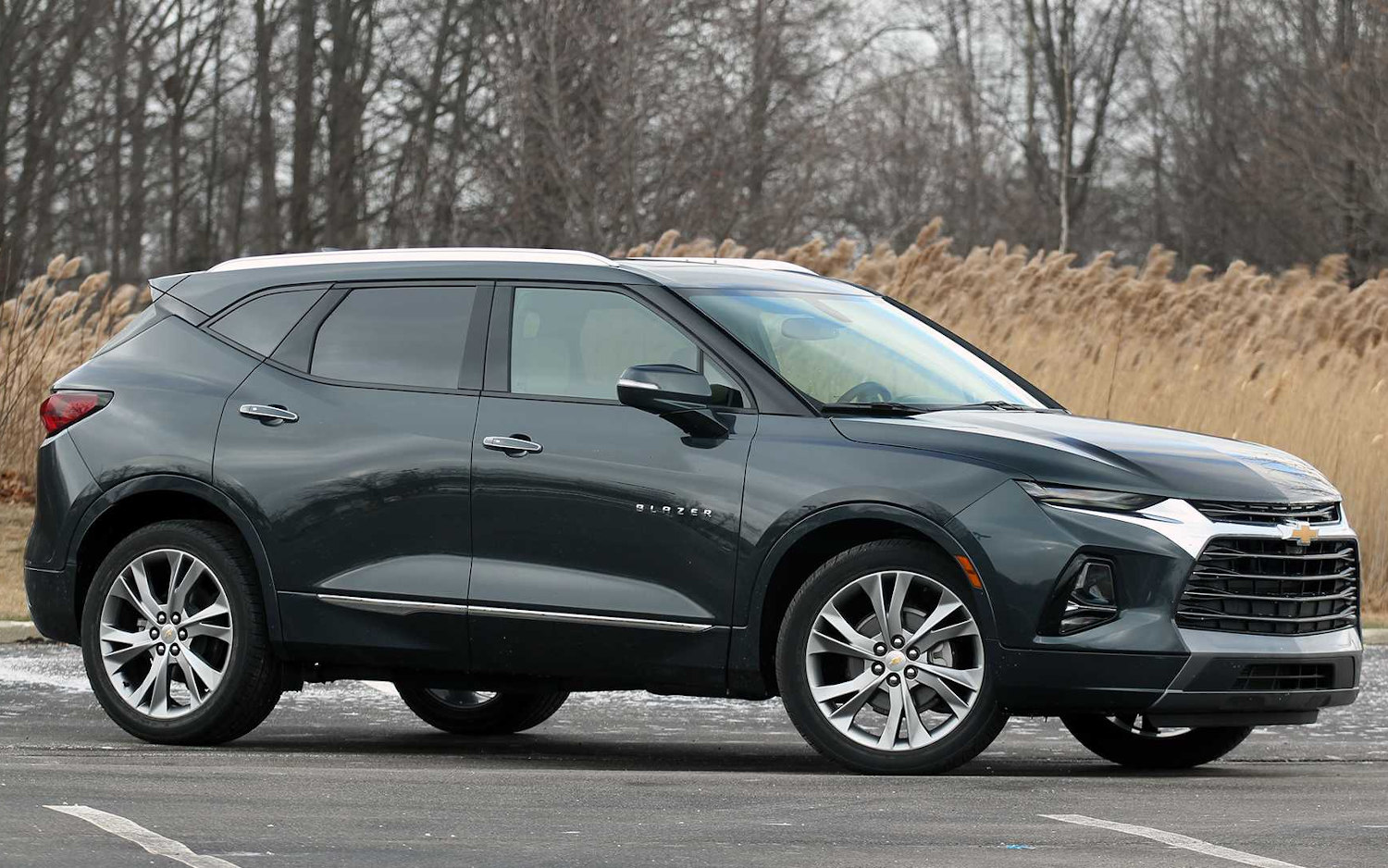
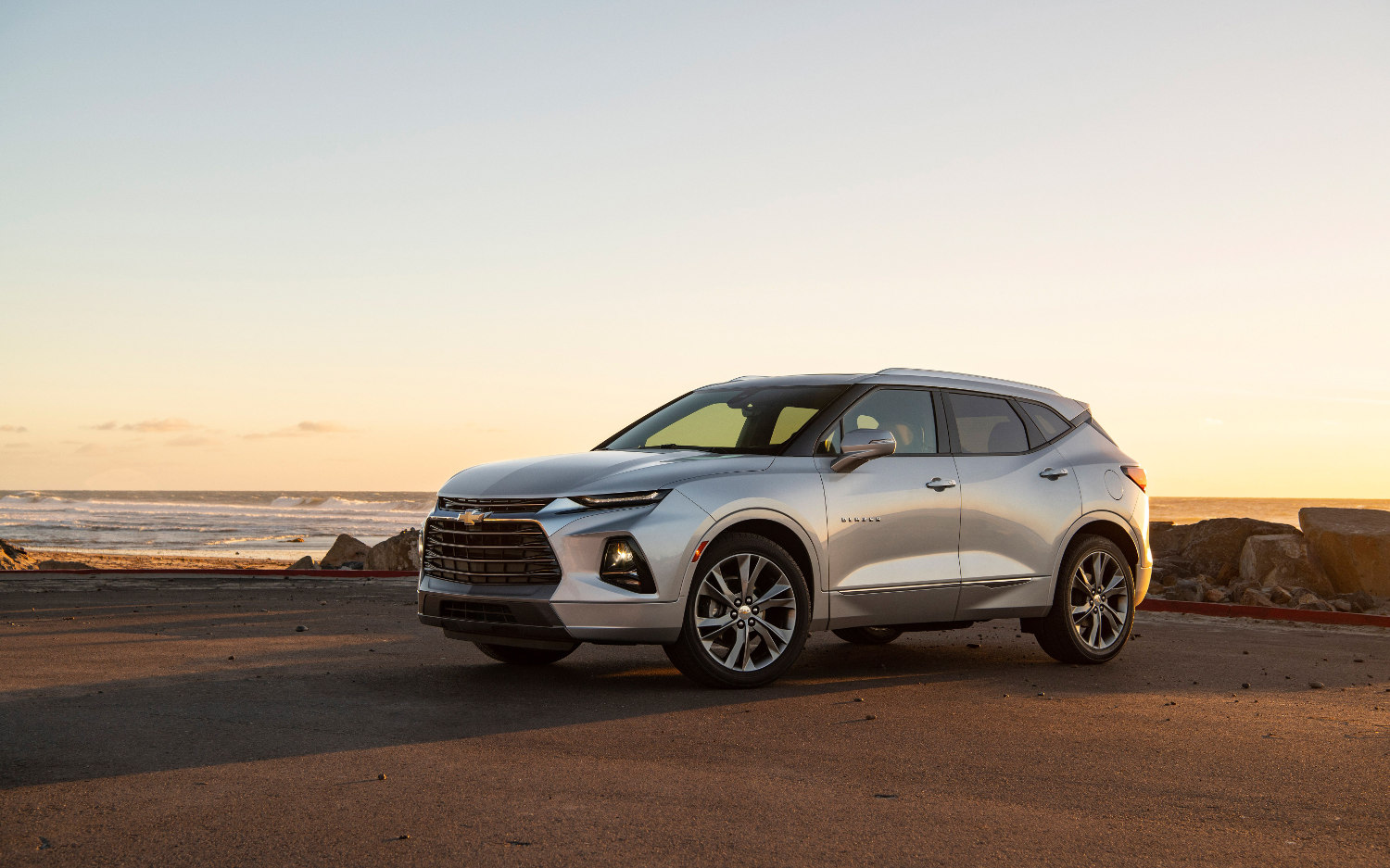
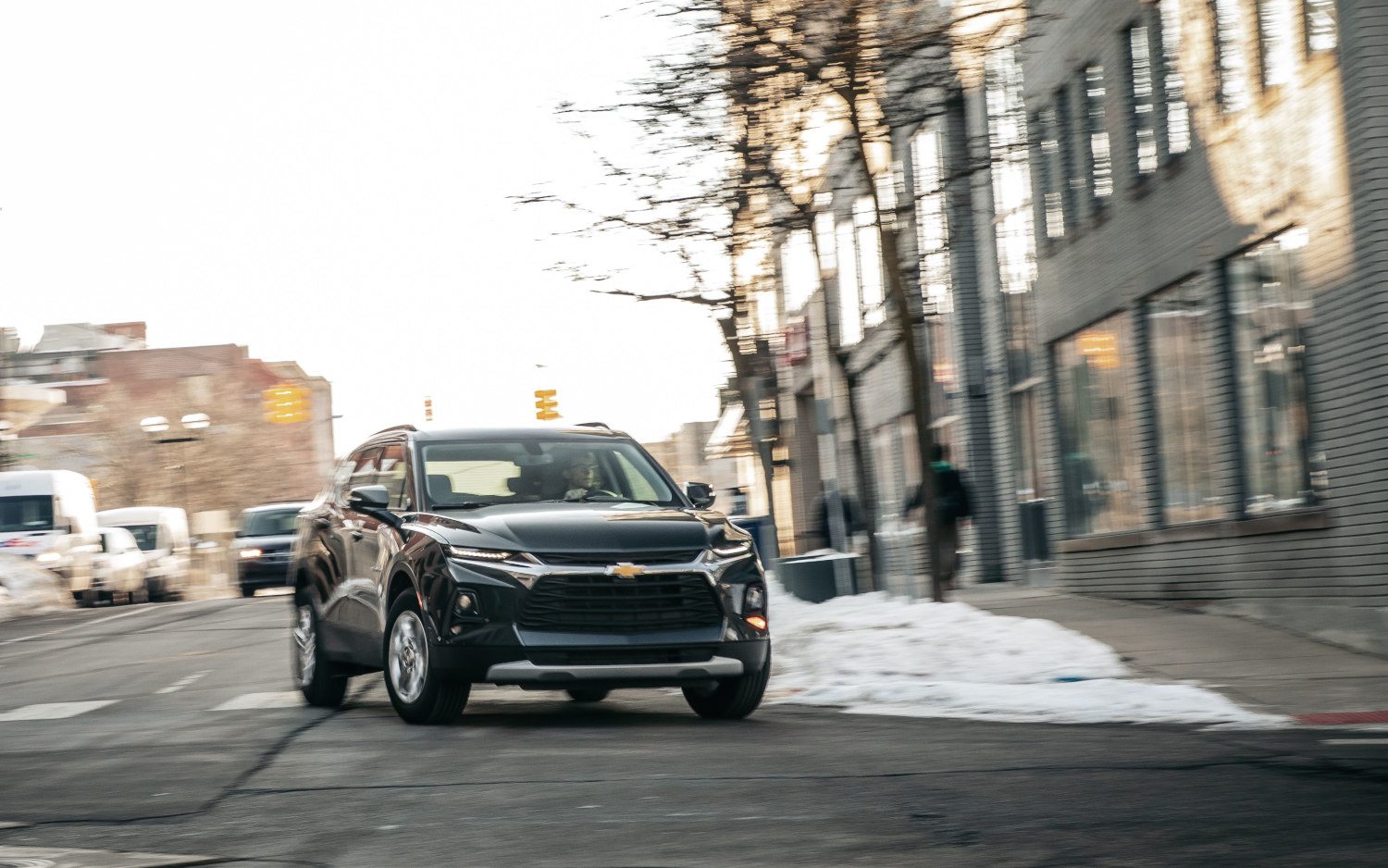
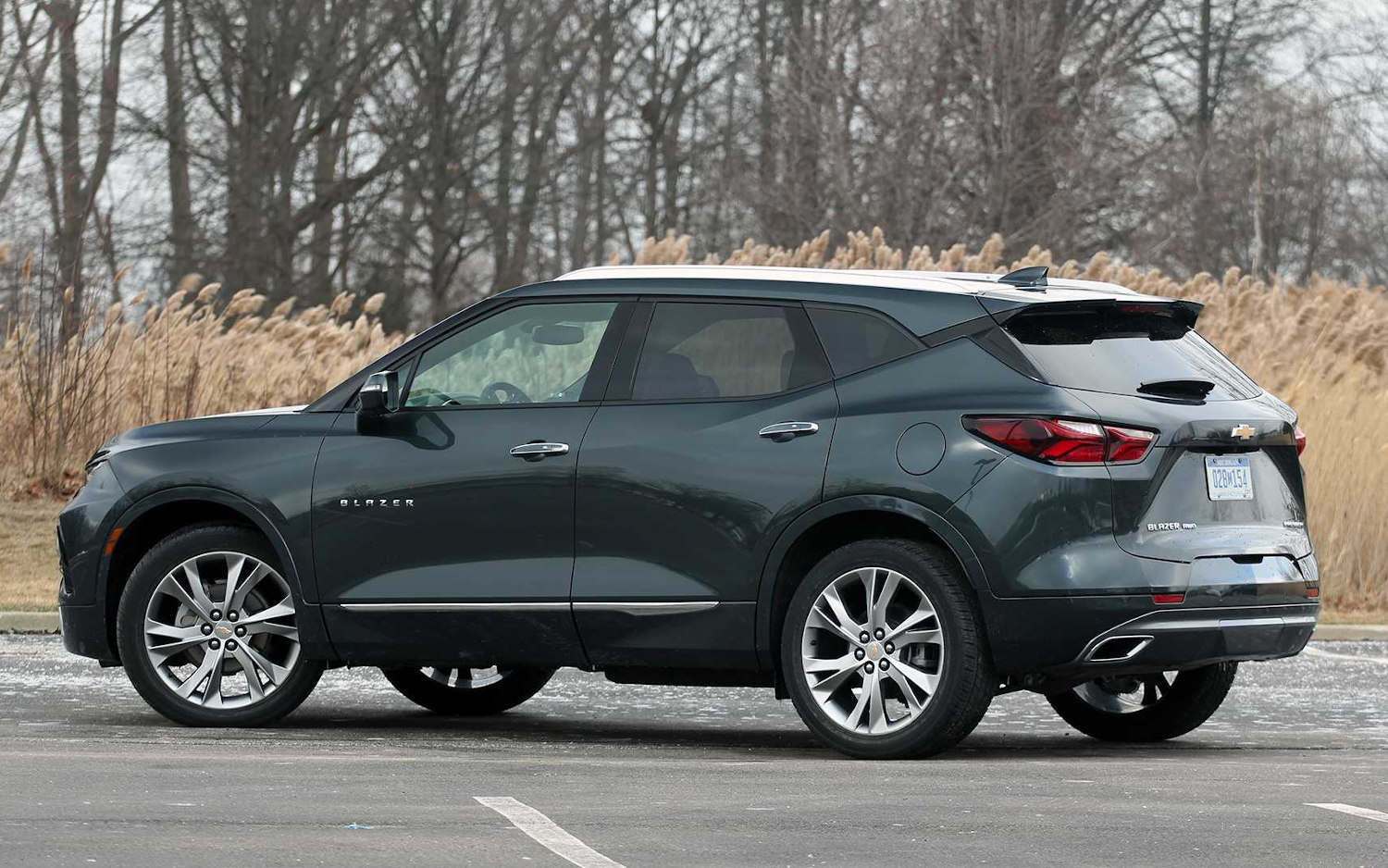
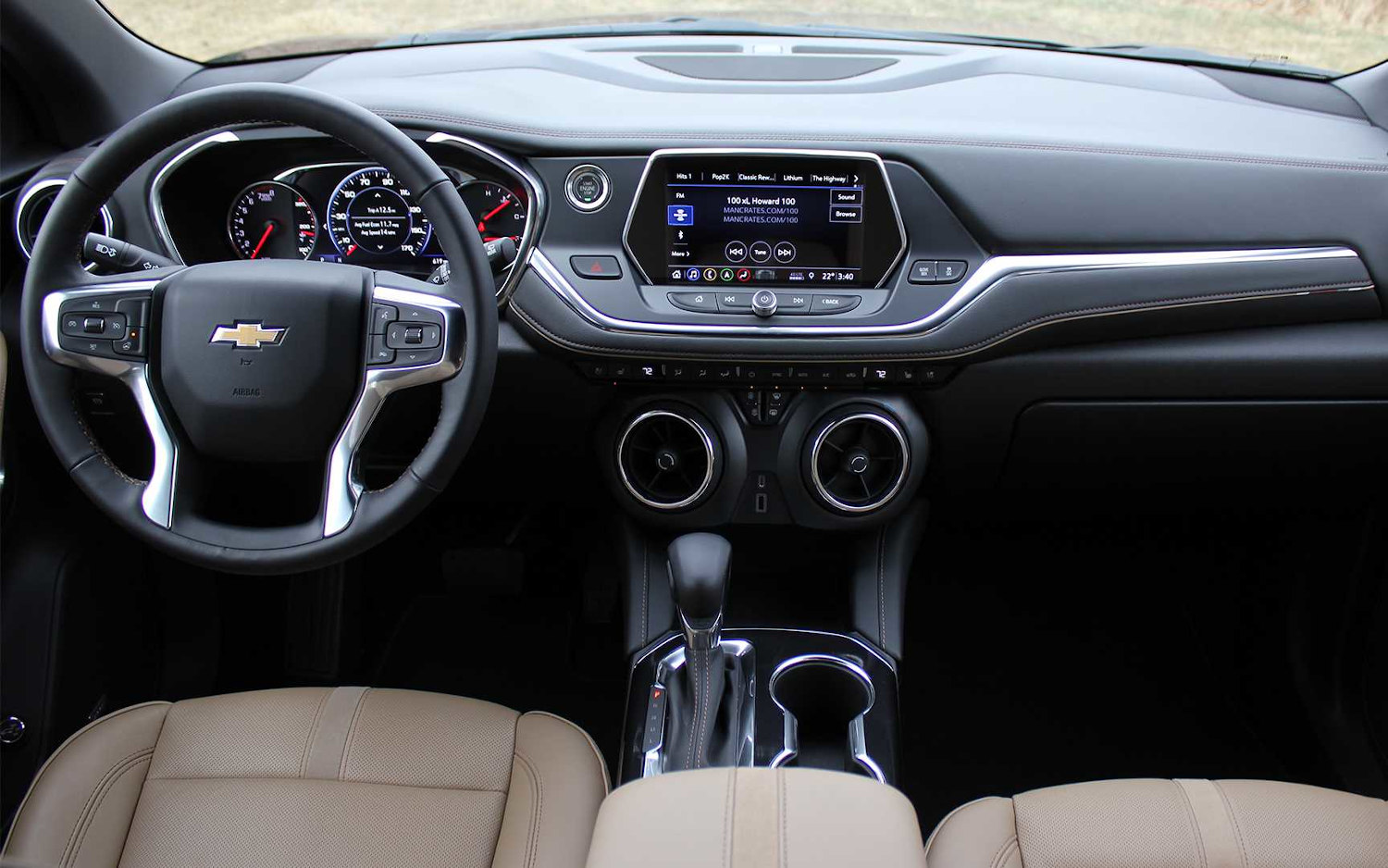
The 2020 Chevrolet Blazer isn't a burly 4x4 designed to chase Jeeps into the wilderness—it is instead a slick, decidedly street-oriented crossover bristling with cool, Camaro-inspired design touches.An all-new model for 2019, the Blazer blazes into 2020 with few major changes. Chevrolet has added a new 230-hp turbocharged 2.0-liter four-cylinder engine to the lineup, where it fits between the entry-level 193-hp 2.5-liter (non-turbo) four-cylinder and the available 308-hp V-6. The new engine forces a trim-level shakeup from last year's L, 2.5L, 3.6L cloth, 3.6L leather, RS, and Premier trims to L, LT, 2LT, 3LT, RS, and Premier.
Pros Stylish looks, fun to drive, useful cargo space.
Cons Ho-hum interior materials on lower trim levels, weak base engine, not a great value.
The 2020 Chevrolet Blazer comes with all wheel drive, and front wheel drive. Available transmissions include: 9-speed shiftable automatic.New turbocharged 2.0-liter four-cylinder engine option.Engine stop-start function can now be disabled.Trailer hitch guidance included with tow package.
Pros Refined ride quality Strong optional V6 engine Infotainment system is attractive and easy to use Agile handling for an SUV
Cons Base engine is underpowered Compromised headroom for rear passengers Maximum cargo capacity is lower than that of several rivals Limited availability of advanced driver safety aids
The 2019 Chevrolet Blazer ranked #16 in Midsize SUVs. Currently the Chevrolet Blazer has a score of 7.9 out of 10 which is based on our evaluation of 8 pieces of research and data elements using various sources.
Pros Responsive, user-friendly infotainment system Accommodating second-row seats Fuel-efficient base engine Agile handling
Cons Questionable value of upper trim levels Small cargo area
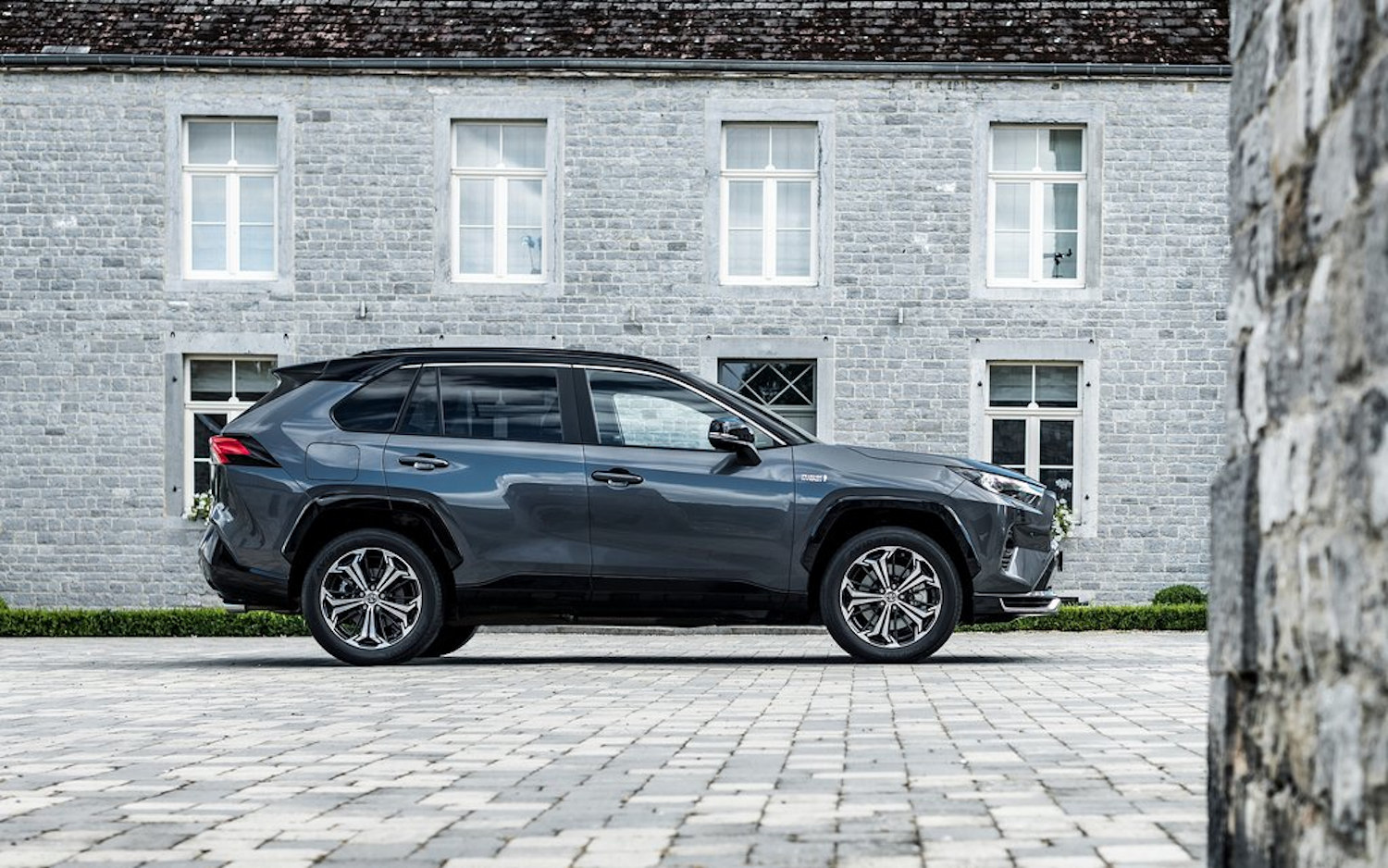
The 2021 Toyota RAV4 Hybrid's #2 ranking is based on its score within the Hybrid and Electric SUVs category. It is the winner of our 2021 Best Hybrid and Electric SUV for the Money award and a finalist for our 2021 Best Hybrid and Electric SUV for Families award. Currently the Toyota RAV4 Hybrid has a score of 8.0 out of 10, which is based on our evaluation of 23 pieces of research and data elements using various sources.
Pros Energetic powertrain Great gas mileage Spacious, handsome cabin Plenty of standard features Ample cargo space
Cons Road noise permeates the cabin
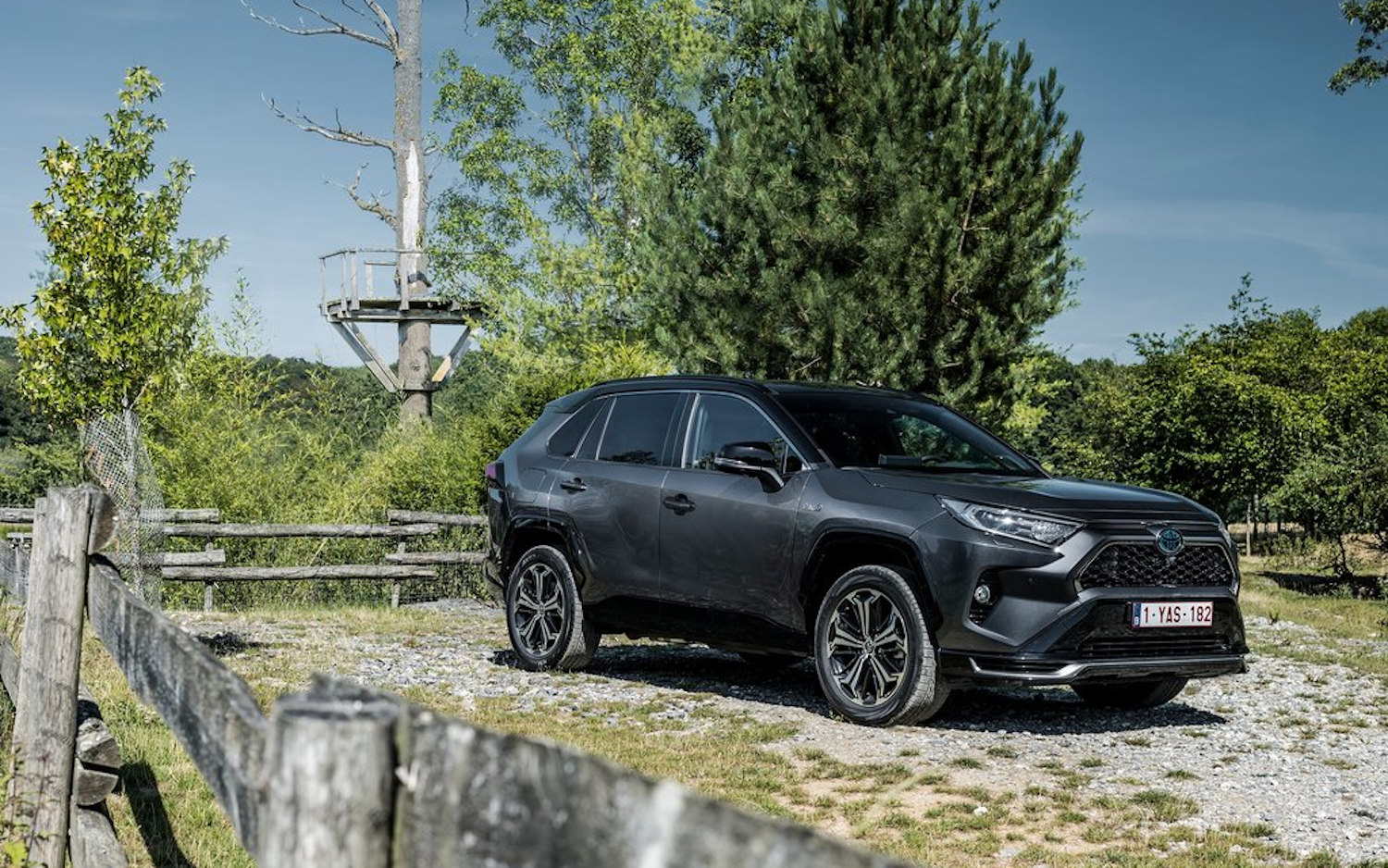
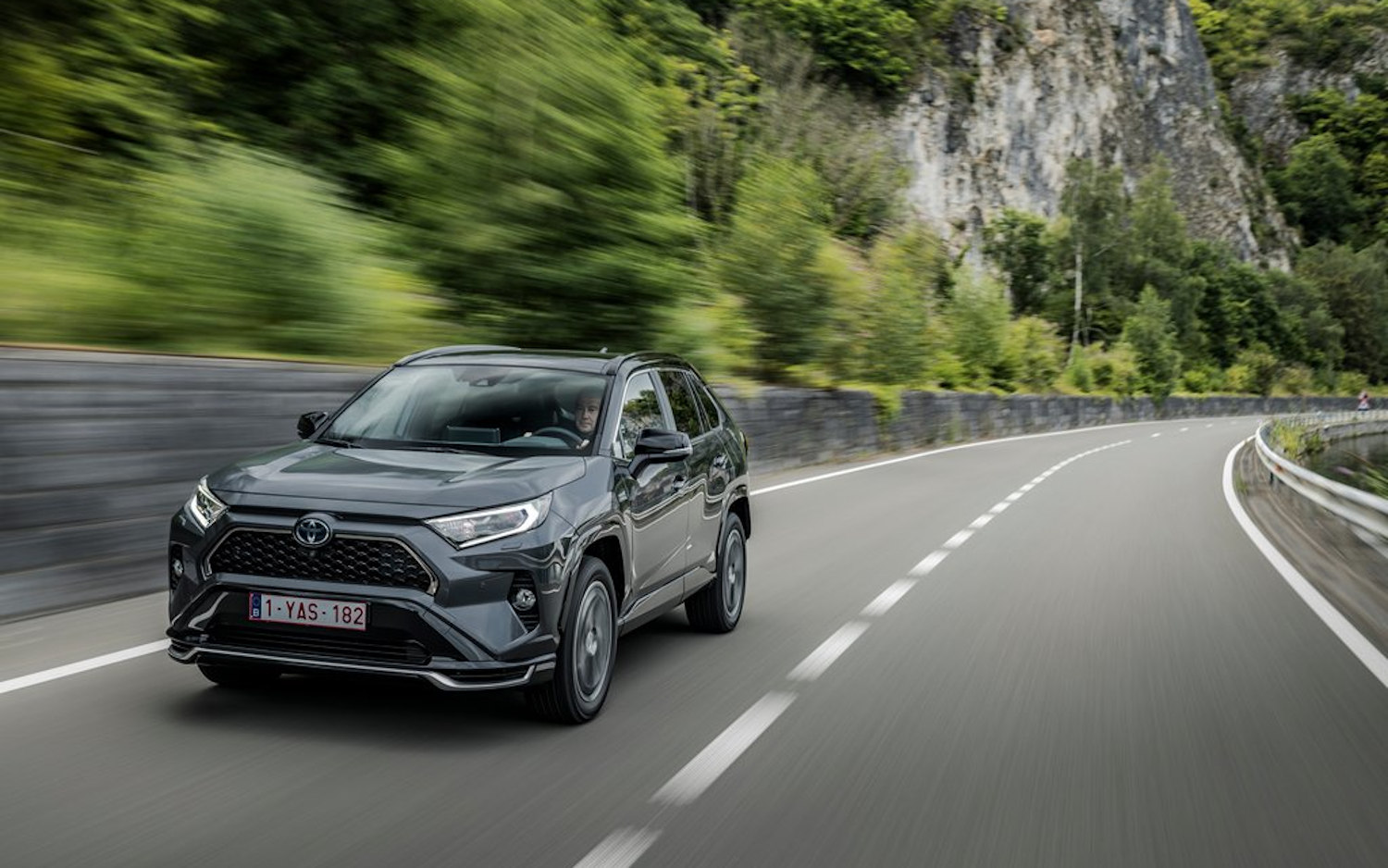
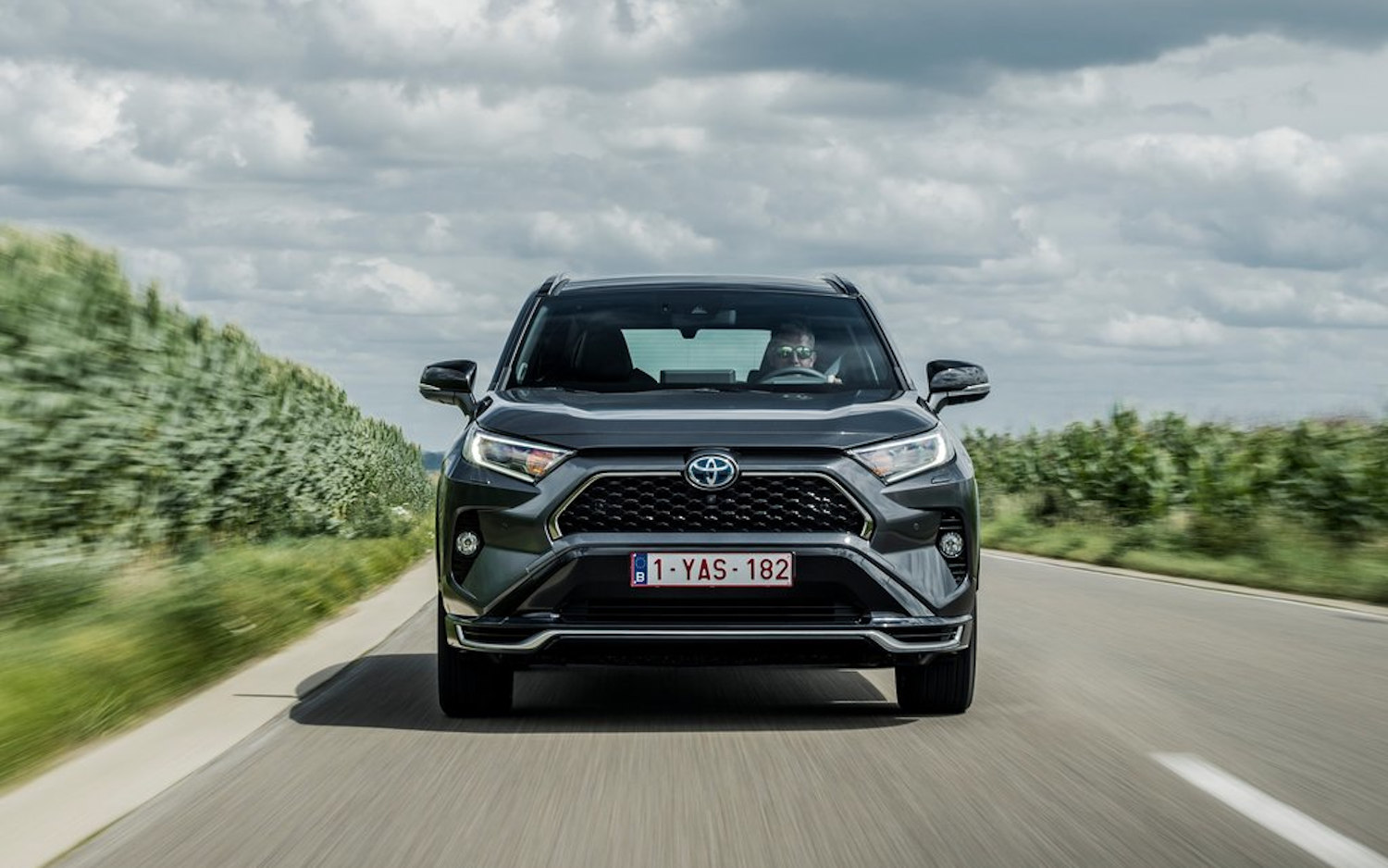
The Toyota RAV4 plug-in hybrid (PHEV) has an impressive all-electric range and low emissions, but the extremely high list price limits its appeal for private buyers and company car buyers alike. The regular front-wheel drive RAV4 hybrid is the sweet spot in the range. It’s fairly ordinary to drive, but strong resale values, astounding economy and a fantastic reliability record make it a tempting option in the large SUV category.
Pros Exceedingly frugal Regular hybrid has slow predicted depreciation Strong reliability record
Cons Terrible infotainment system Rivals are better to drive No seven-seat option
The standard RAV4 Hybrid receives a new mid-range XLE Premium trim for 2021, but the big news this year is the introduction of the plug-in hybrid RAV4 Prime models. The RAV4 Prime is the most powerful RAV4 offered with a total of 302 horsepower between its gas engine and electric motors; it also offers a claimed 42 miles of electric-only driving per charge.
Pros Strong acceleration, driver-assistance tech is standard, roomy cabin.
Cons Prices start above $30,000, uninvolving handling, most desirable features quickly increase the price.