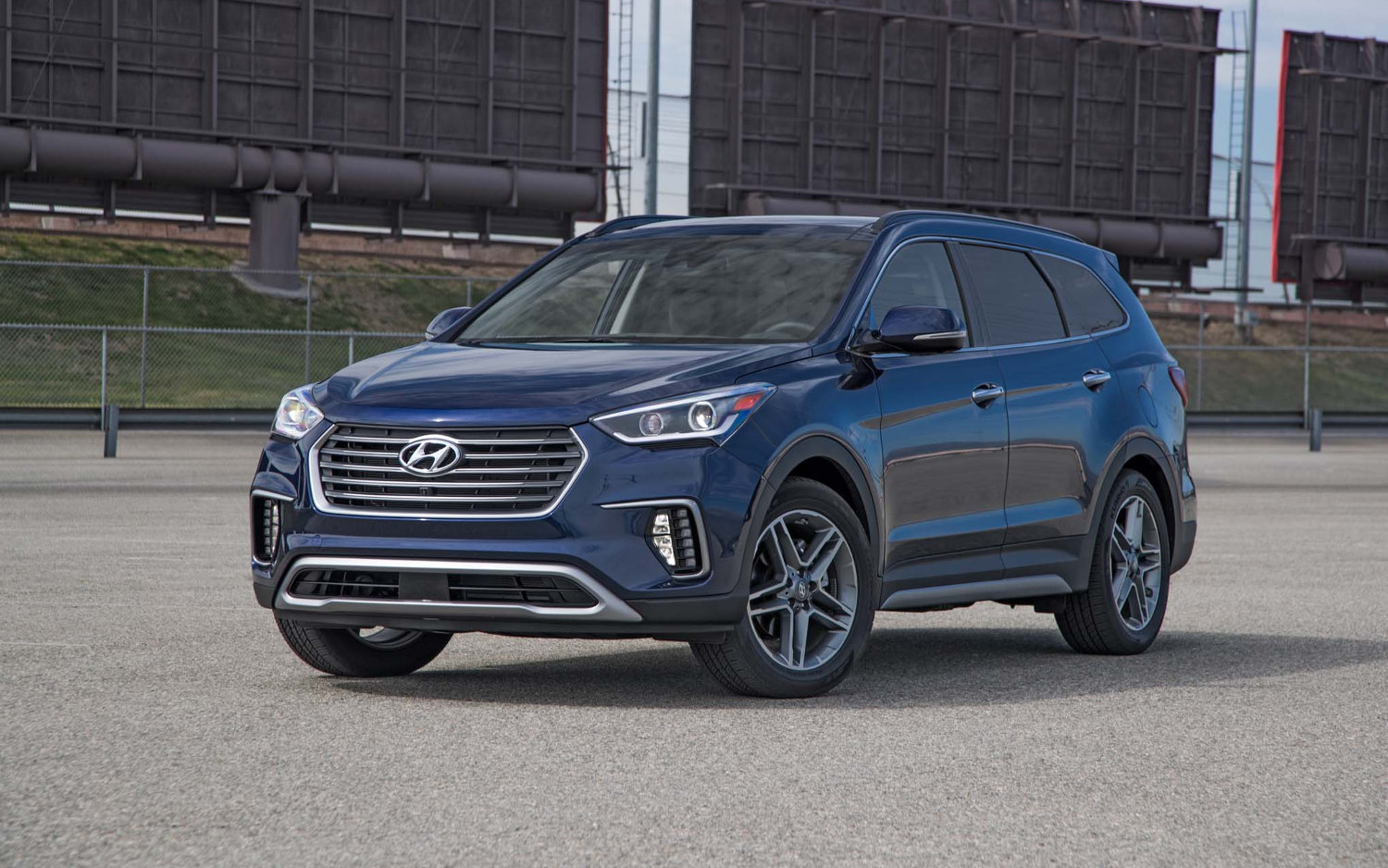
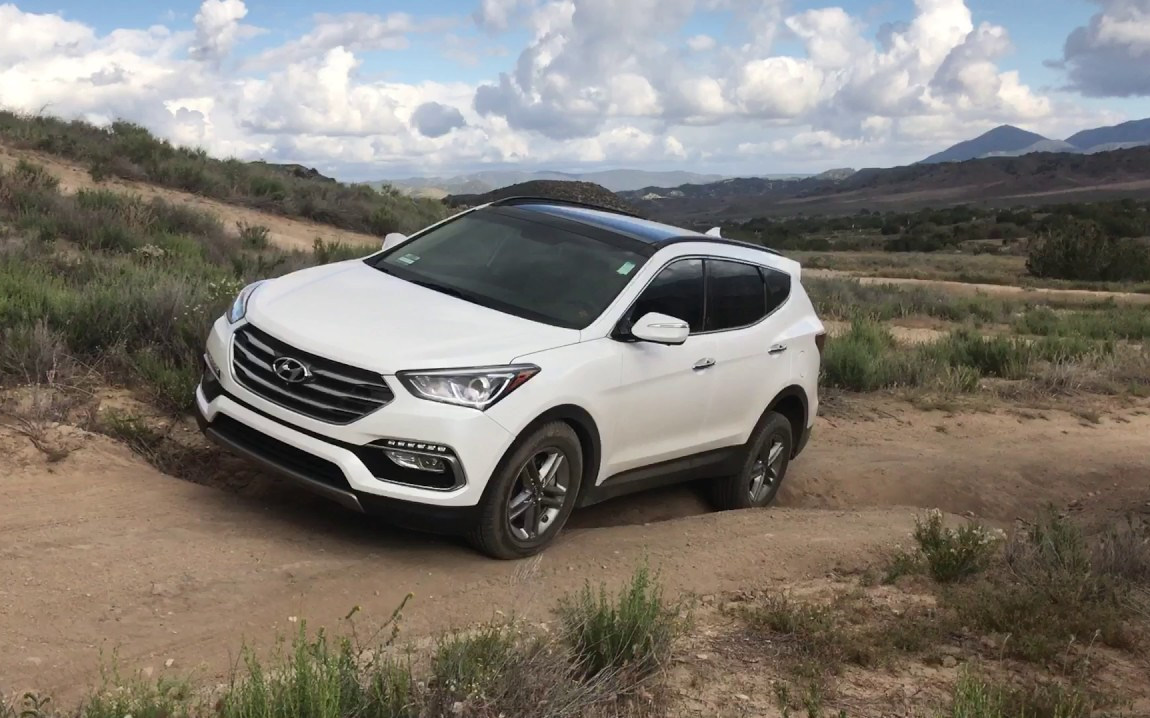
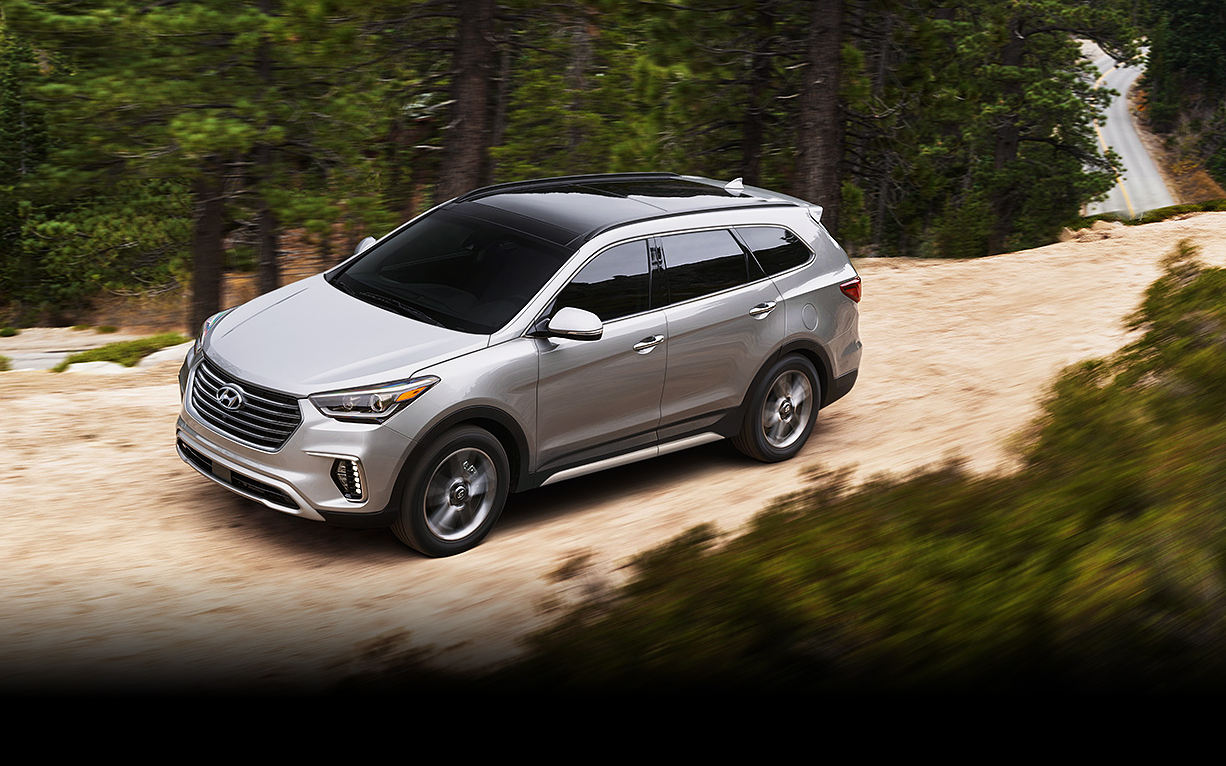
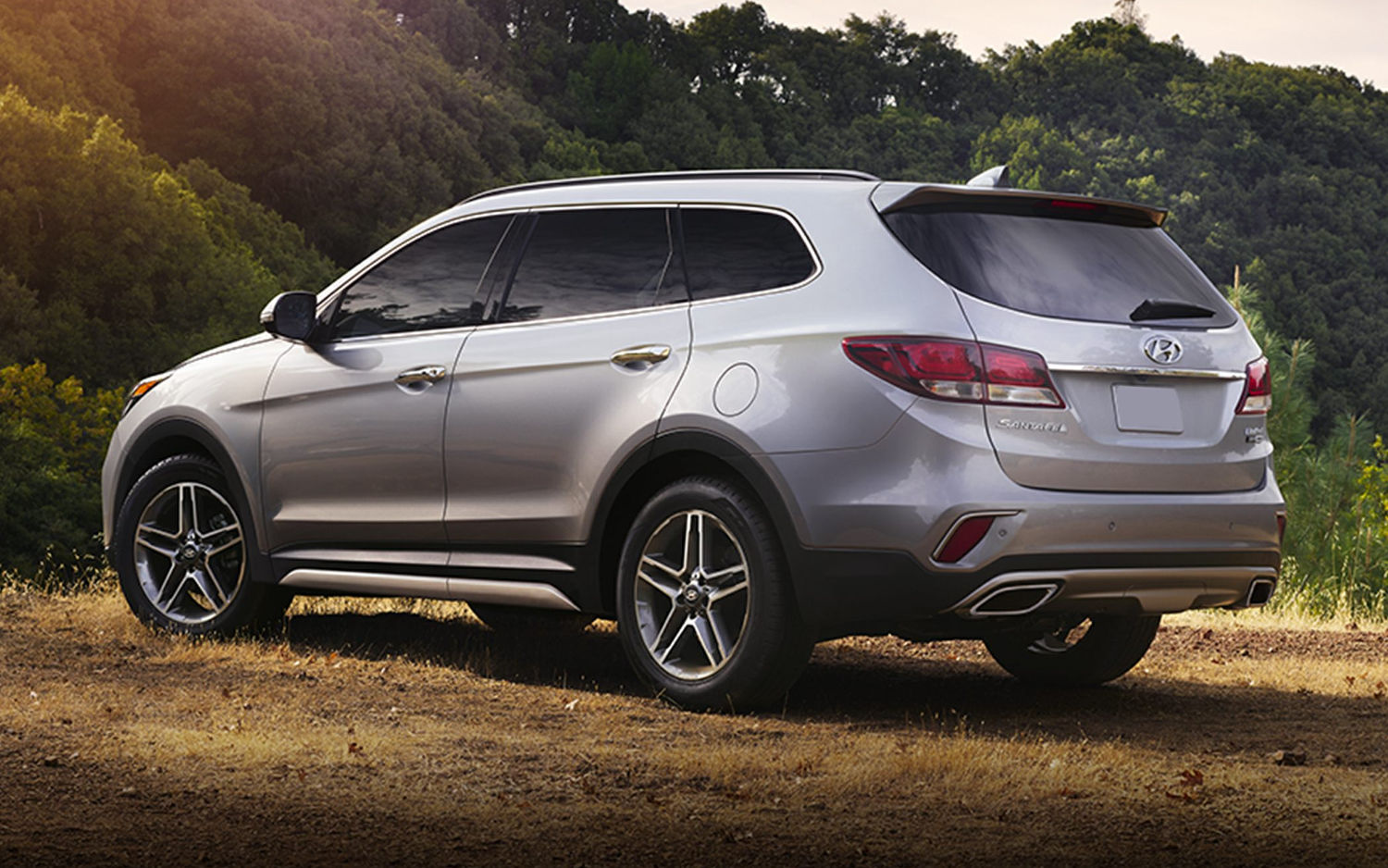
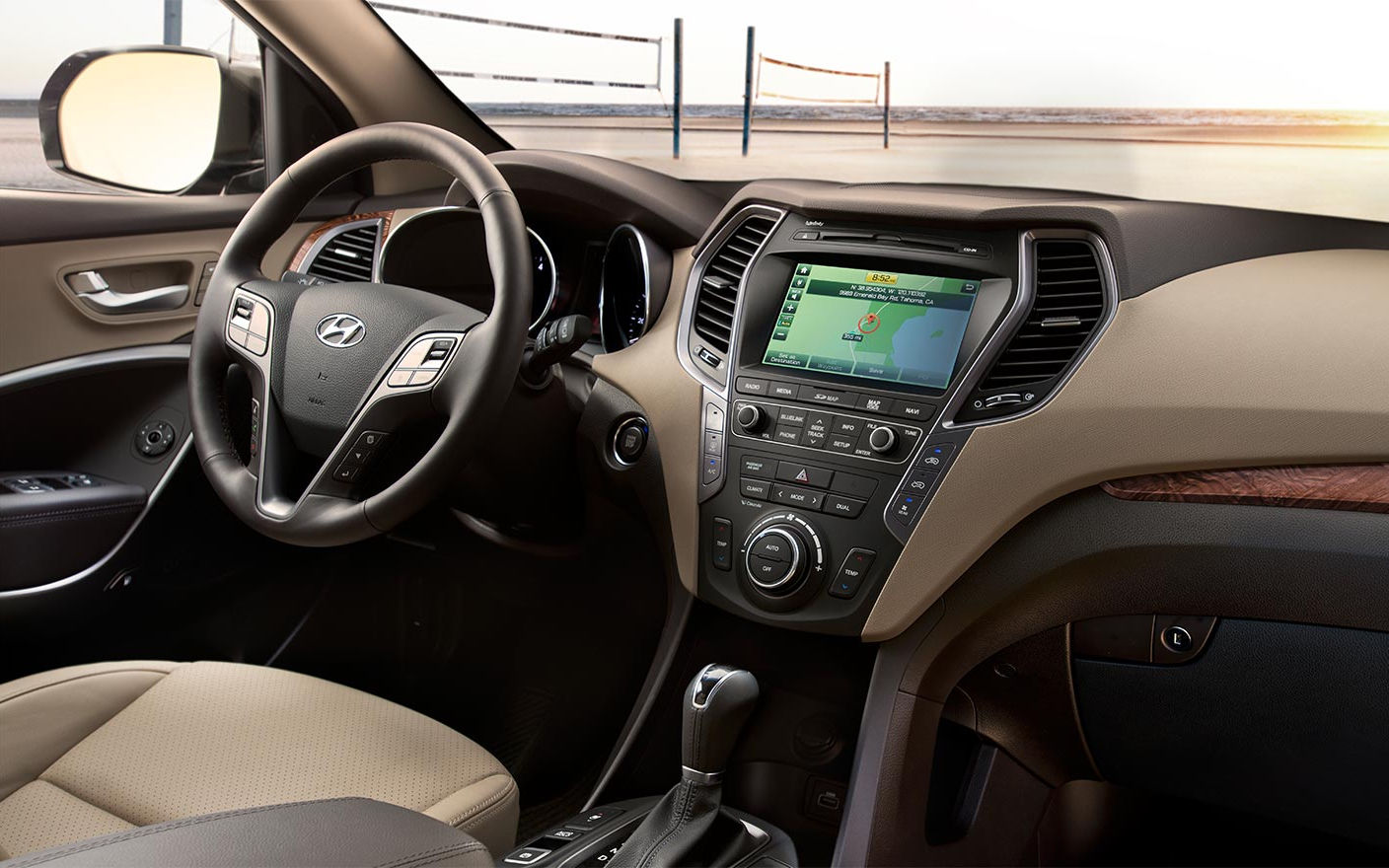
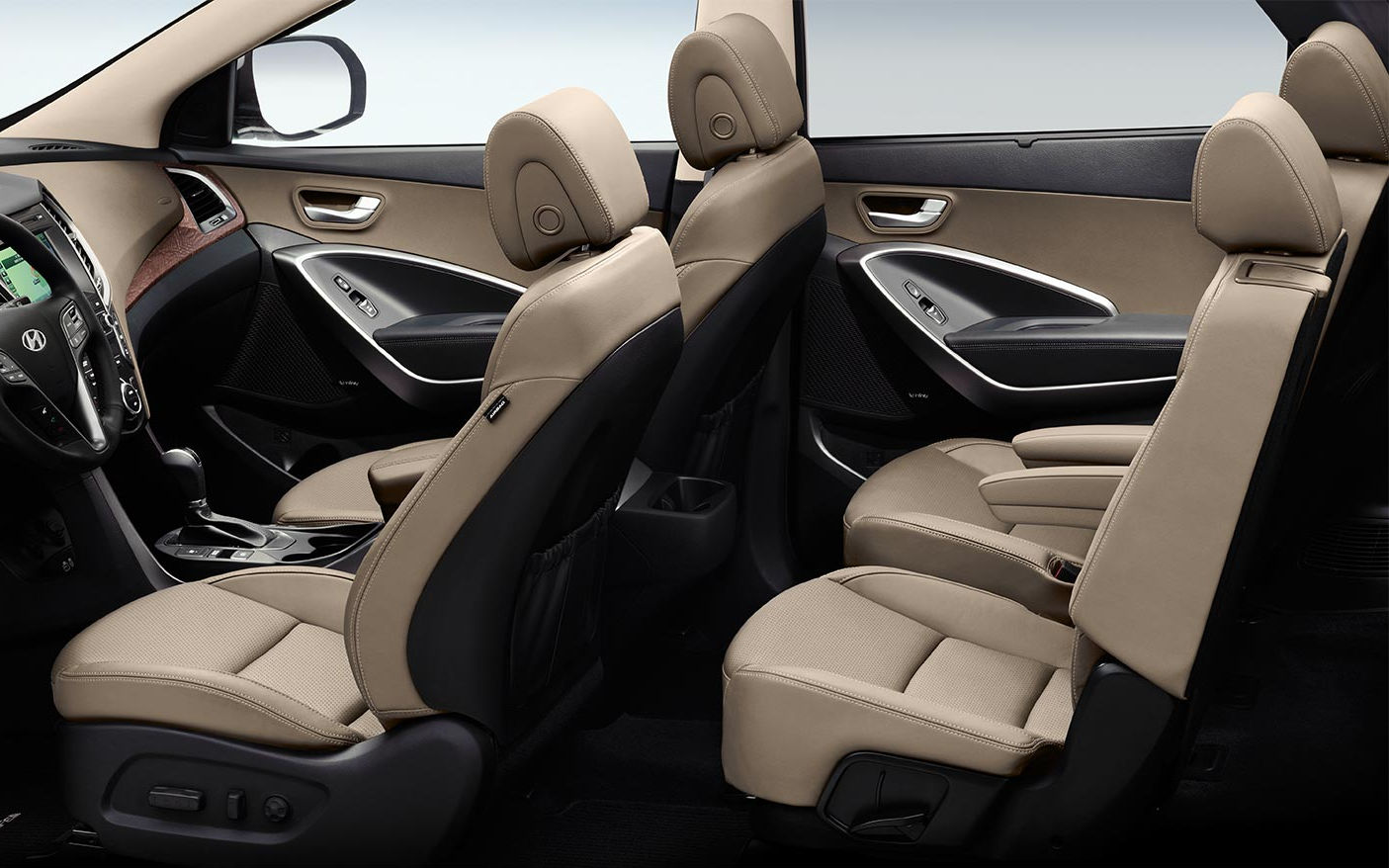
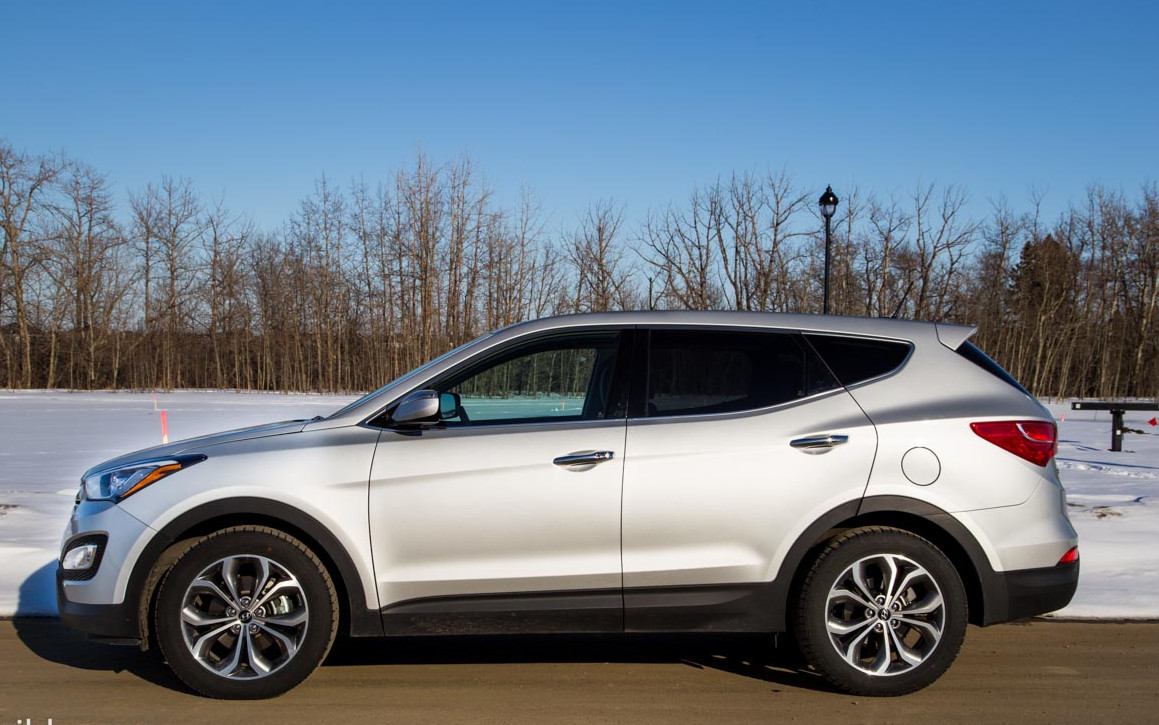
For 2017, the Hyundai Santa Fe returns with refreshed front and rear styling that's highlighted by new LED daytime running lights. Inside, there's a 7-inch touchscreen that's standard for even the base SE trim level and an available USB charging port for the third row. On the safety front, a 360-degree parking camera system, adaptive cruise control, lane departure warning and automatic emergency braking for forward collision mitigation are newly available this year.
Pros Strong V6 engine provides quick acceleration Plenty of standard features for the money Interior features classy design and easy-to-use technology interfaces Warranty coverage is generous.
Cons Cargo capacity isn't as large as some competitors.
The sharper-looking 2017 Hyundai Santa Fe is still a good value for families looking for a three-row hauler—but its powertrain is starting to show its age. For 2017, the Hyundai Santa Fe has received a significant overhaul. The Santa Fe is the larger, three-row crossover SUV that's related to the smaller two-row Santa Fe Sport.
Pros Better look for 2017 Still good value for money Excellent cargo space Standard models still well-equipped Strong V-6
Cons All-wheel-drive penalty is sharp Could use newer transmission Third-row seat space is slight, compared to rivals
The 2017 Hyundai Santa Fe ranks 3 out of 18 Midsize SUVs. The Hyundai Santa Fe has impressive safety, comfort, and infotainment features, and it delivers solid performance, though the Sport model's base engine is average at best. The Santa Fe's cabin is full of technology that will keep drivers and passengers safe, comfortable, and entertained.
Pros Strong V6 engine in Santa Fe Generous list of standard features
Cons Weak base engine in Sport models Underwhelming acceleration
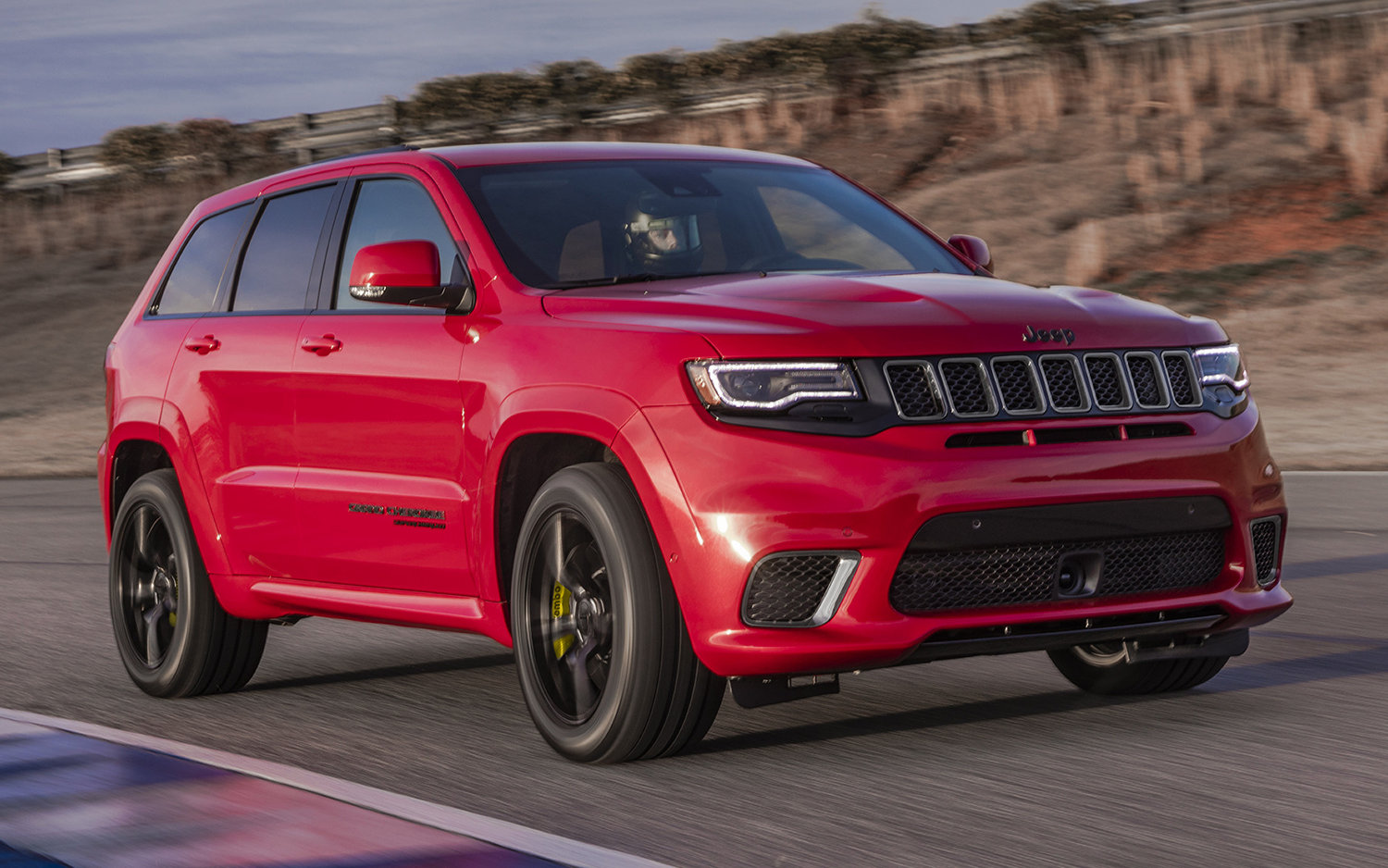
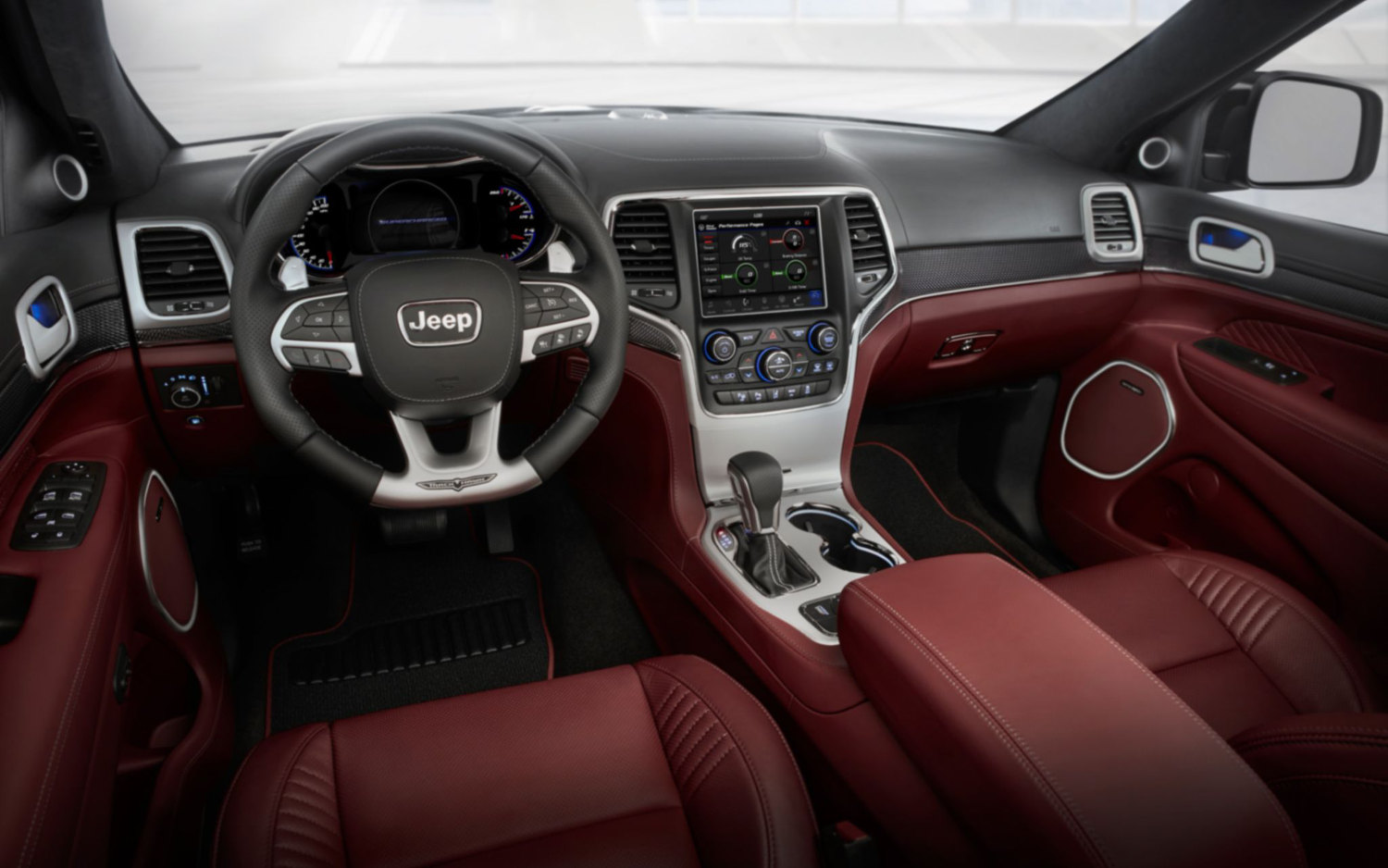
The Jeep Grand Cherokee Trackhawk is the third Fiat Chrysler vehicle to have the unhinged supercharged V-8 stuffed under its hood, and it’s the quiet Hellcat next door. Not literally, of course—have you heard a blown Hemi V-8 at full whack?—but with standard all-wheel drive mitigating the engine’s tire-spinning proclivities, plus its under-the-radar looks, the Trackhawk can at least pass for an upstanding citizen. With more traction than any Hellcat yet, the Trackhawk has quite a lot of poke despite its pork—the engine adds 259 pounds over the already heavy 475-hp Grand Cherokee SRT. Nonetheless, Jeep claims it can reach 60 mph in 3.5 seconds. That time is on par with the nearly 1000-pounds-lighter, automatic-equipped Dodge Hellcats we’ve tested. (The quickest was the Charger, which reached 60 mph in 3.4 seconds.) Per Jeep, the quarter-mile is expected to fly by in 11.6 seconds (at 116 mph!), and, with no electronic governor, the Trackhawk is said to surrender to atmospheric resistance at 180 mph.