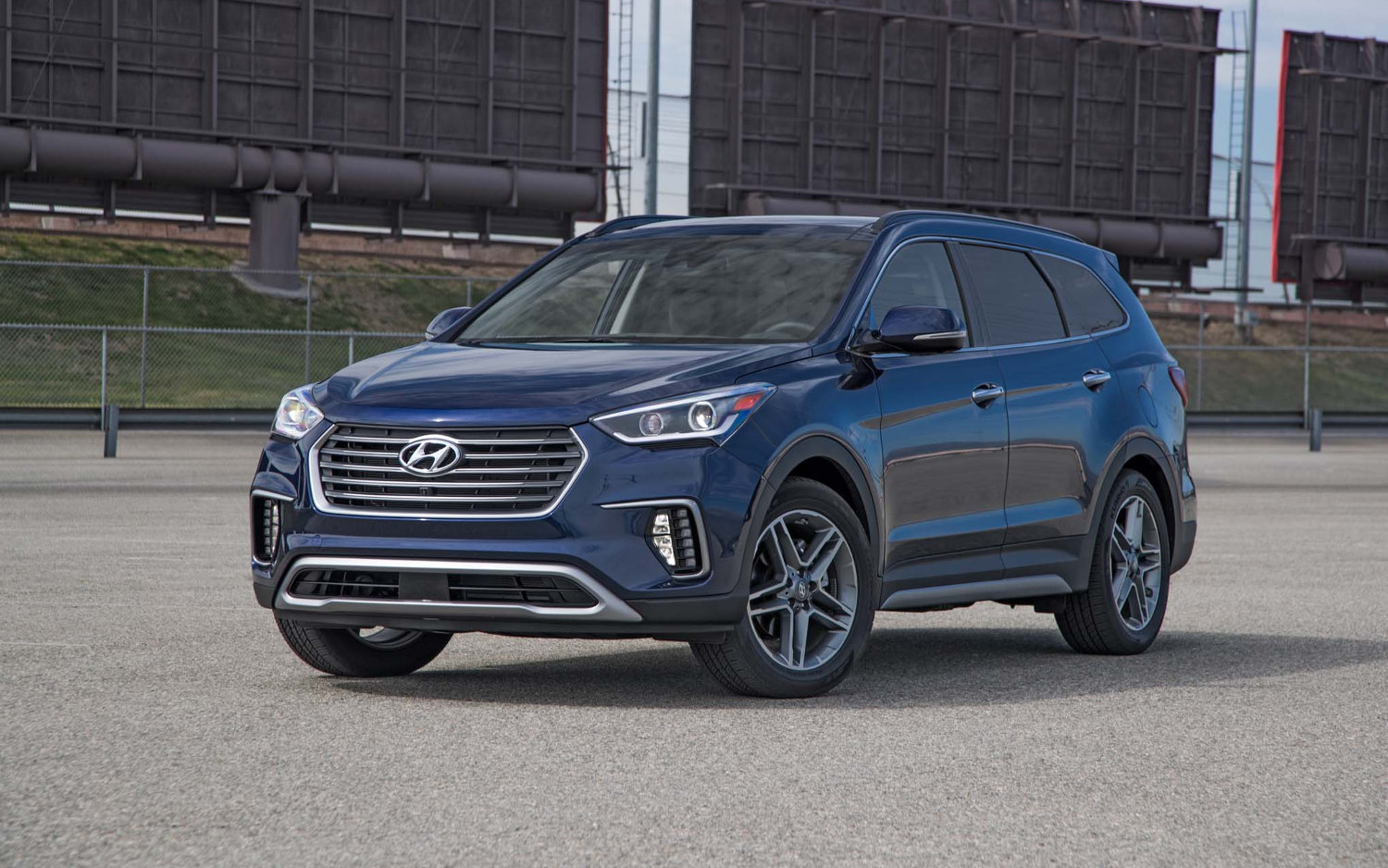
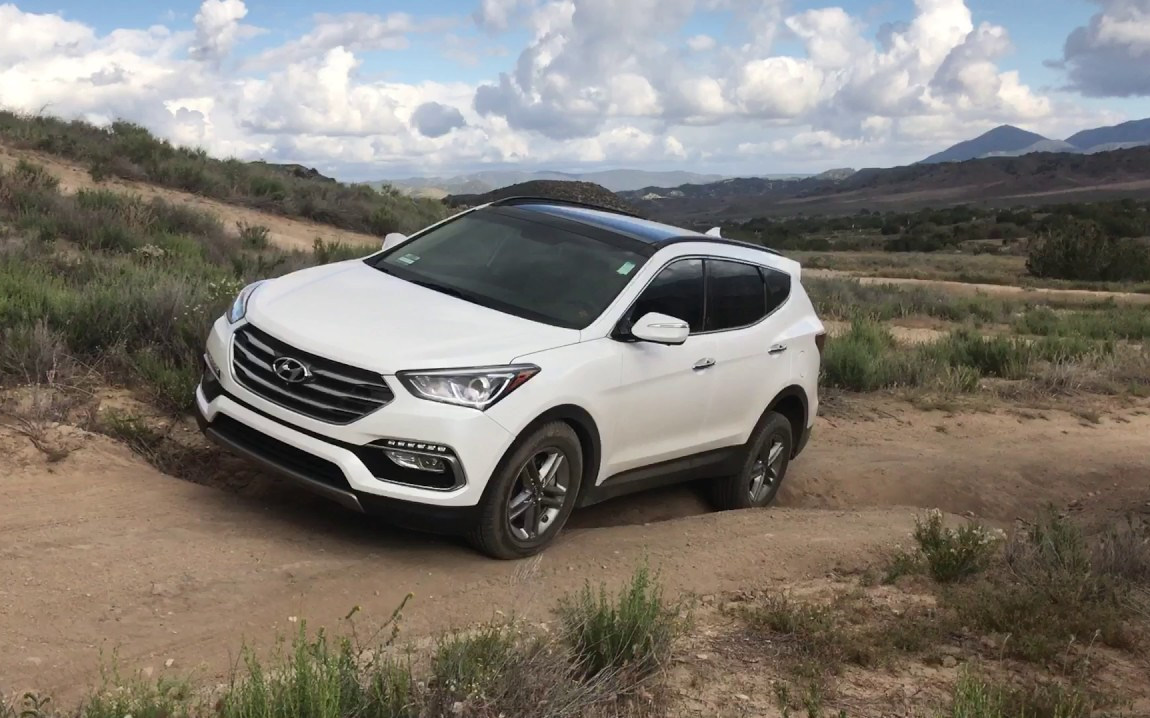
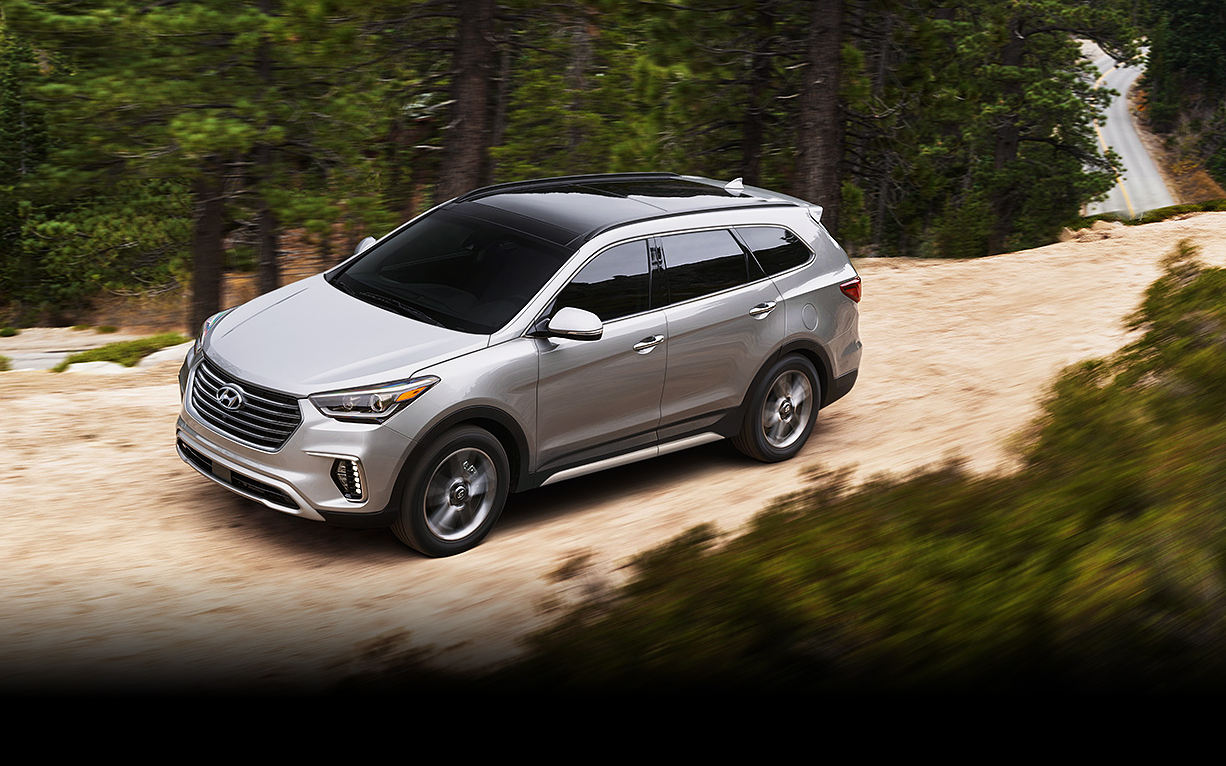
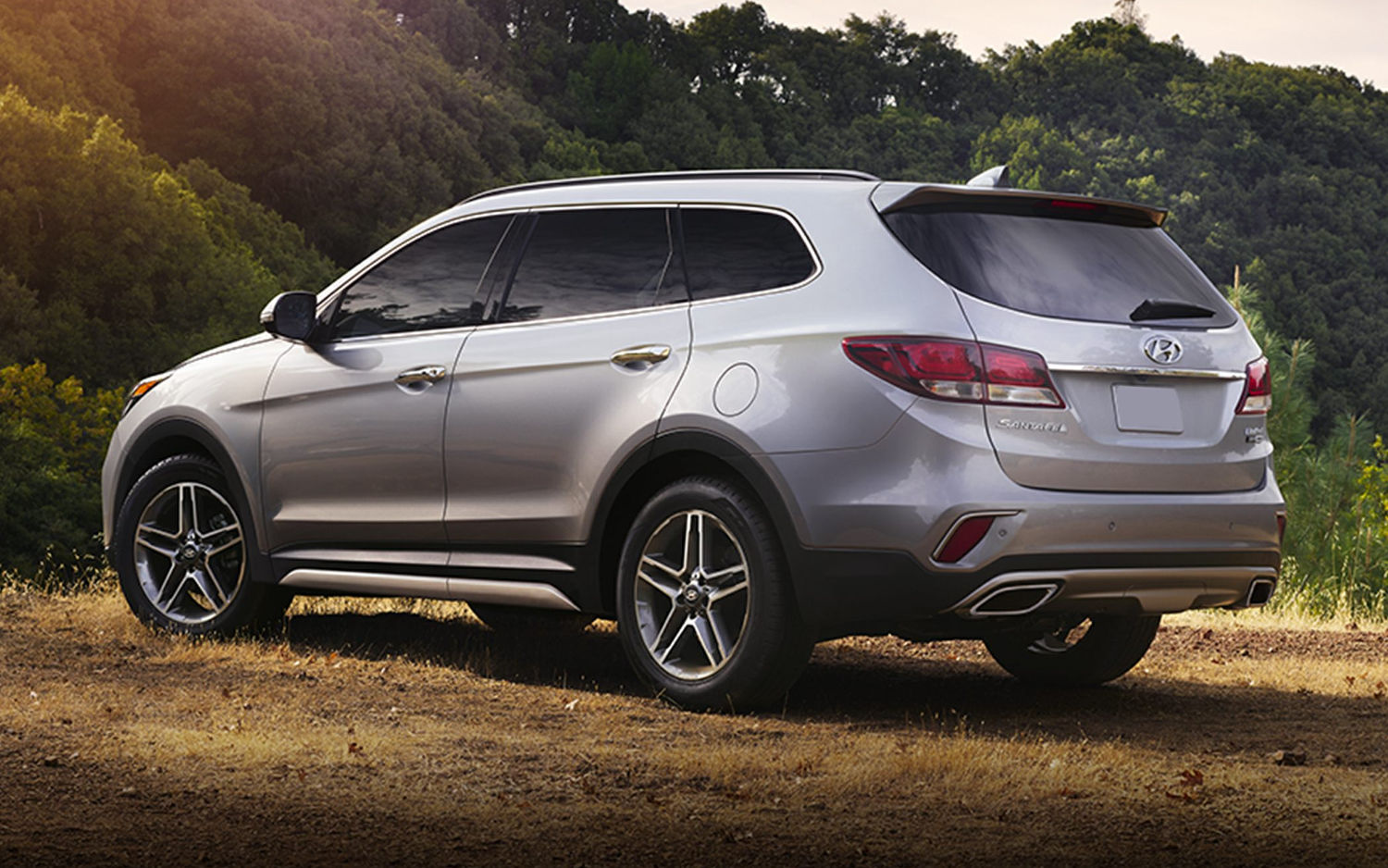
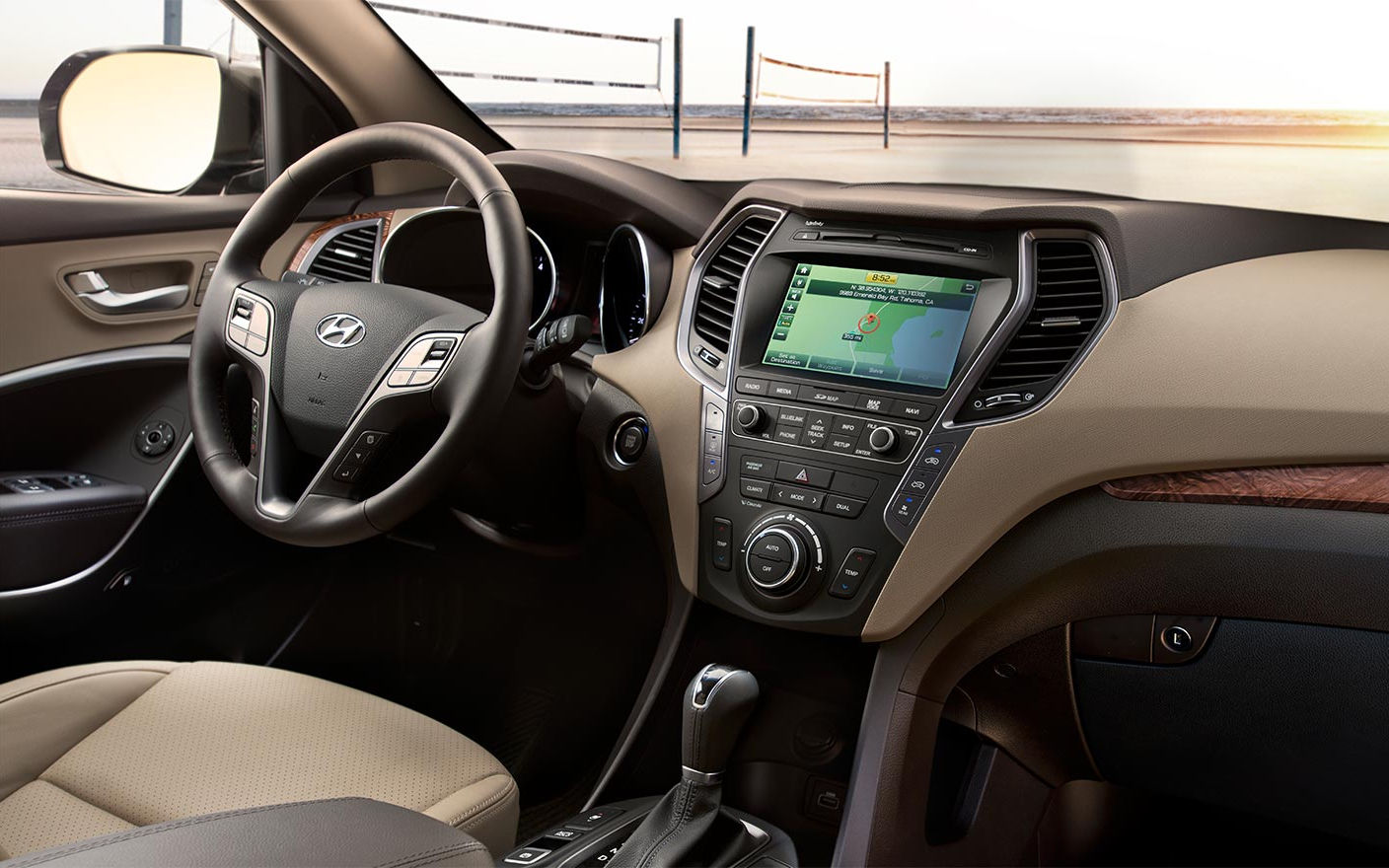
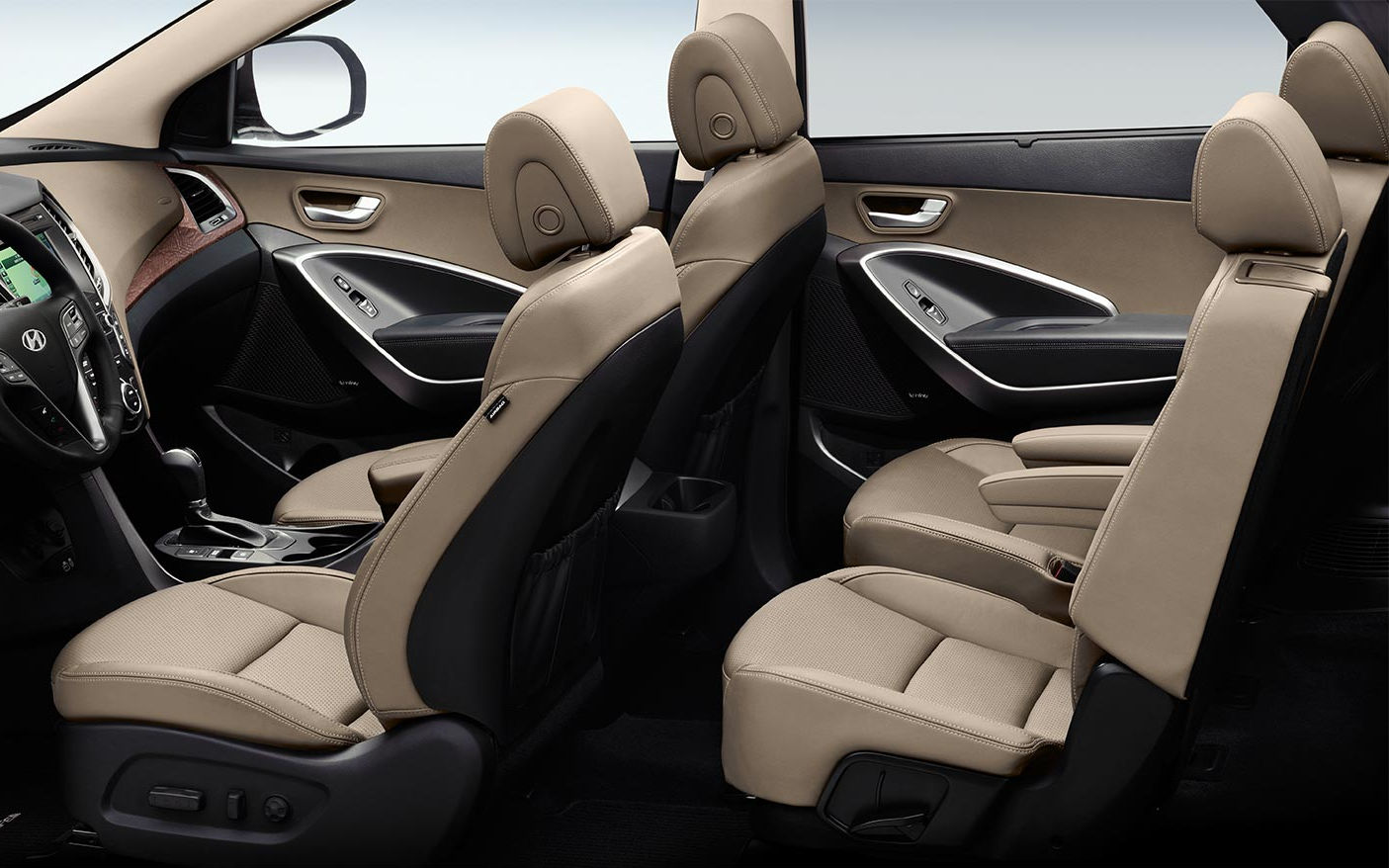
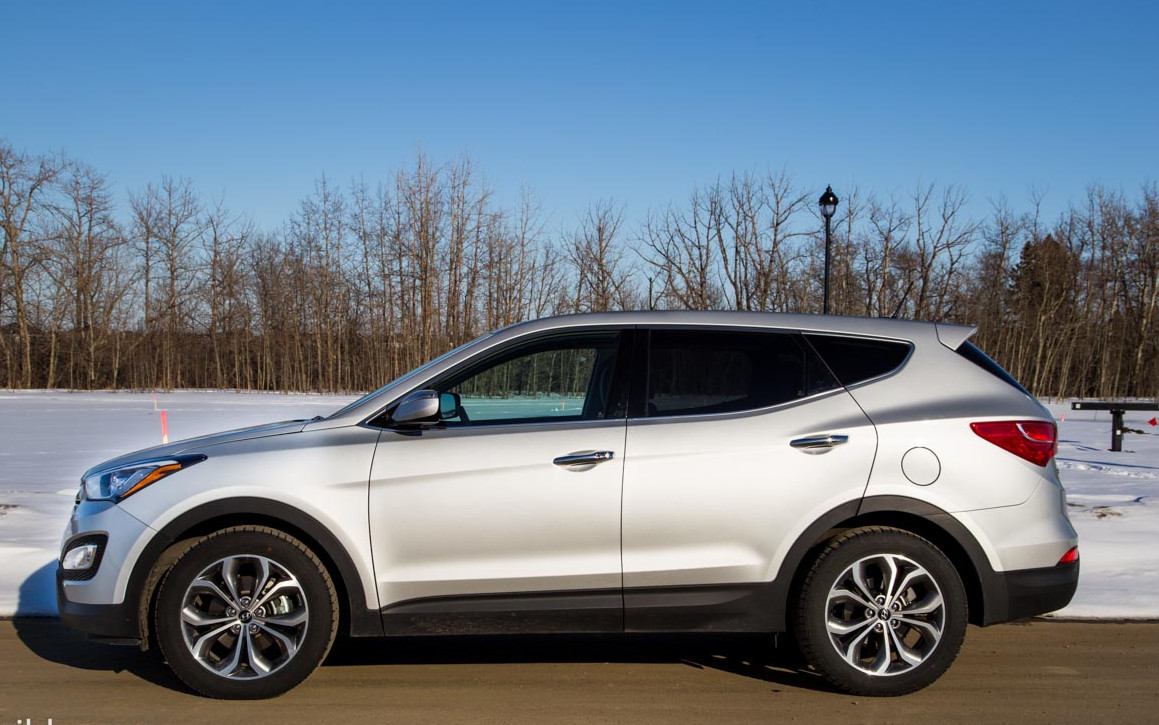
For 2017, the Hyundai Santa Fe returns with refreshed front and rear styling that's highlighted by new LED daytime running lights. Inside, there's a 7-inch touchscreen that's standard for even the base SE trim level and an available USB charging port for the third row. On the safety front, a 360-degree parking camera system, adaptive cruise control, lane departure warning and automatic emergency braking for forward collision mitigation are newly available this year.
Pros Strong V6 engine provides quick acceleration Plenty of standard features for the money Interior features classy design and easy-to-use technology interfaces Warranty coverage is generous.
Cons Cargo capacity isn't as large as some competitors.
The sharper-looking 2017 Hyundai Santa Fe is still a good value for families looking for a three-row hauler—but its powertrain is starting to show its age. For 2017, the Hyundai Santa Fe has received a significant overhaul. The Santa Fe is the larger, three-row crossover SUV that's related to the smaller two-row Santa Fe Sport.
Pros Better look for 2017 Still good value for money Excellent cargo space Standard models still well-equipped Strong V-6
Cons All-wheel-drive penalty is sharp Could use newer transmission Third-row seat space is slight, compared to rivals
The 2017 Hyundai Santa Fe ranks 3 out of 18 Midsize SUVs. The Hyundai Santa Fe has impressive safety, comfort, and infotainment features, and it delivers solid performance, though the Sport model's base engine is average at best. The Santa Fe's cabin is full of technology that will keep drivers and passengers safe, comfortable, and entertained.
Pros Strong V6 engine in Santa Fe Generous list of standard features
Cons Weak base engine in Sport models Underwhelming acceleration
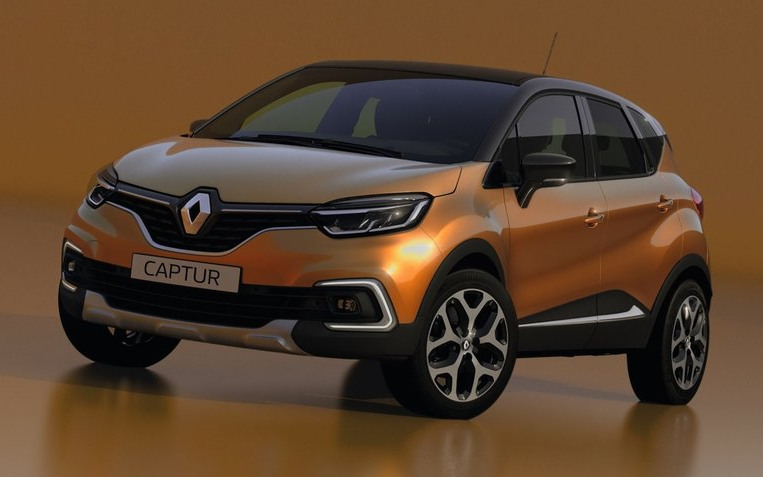
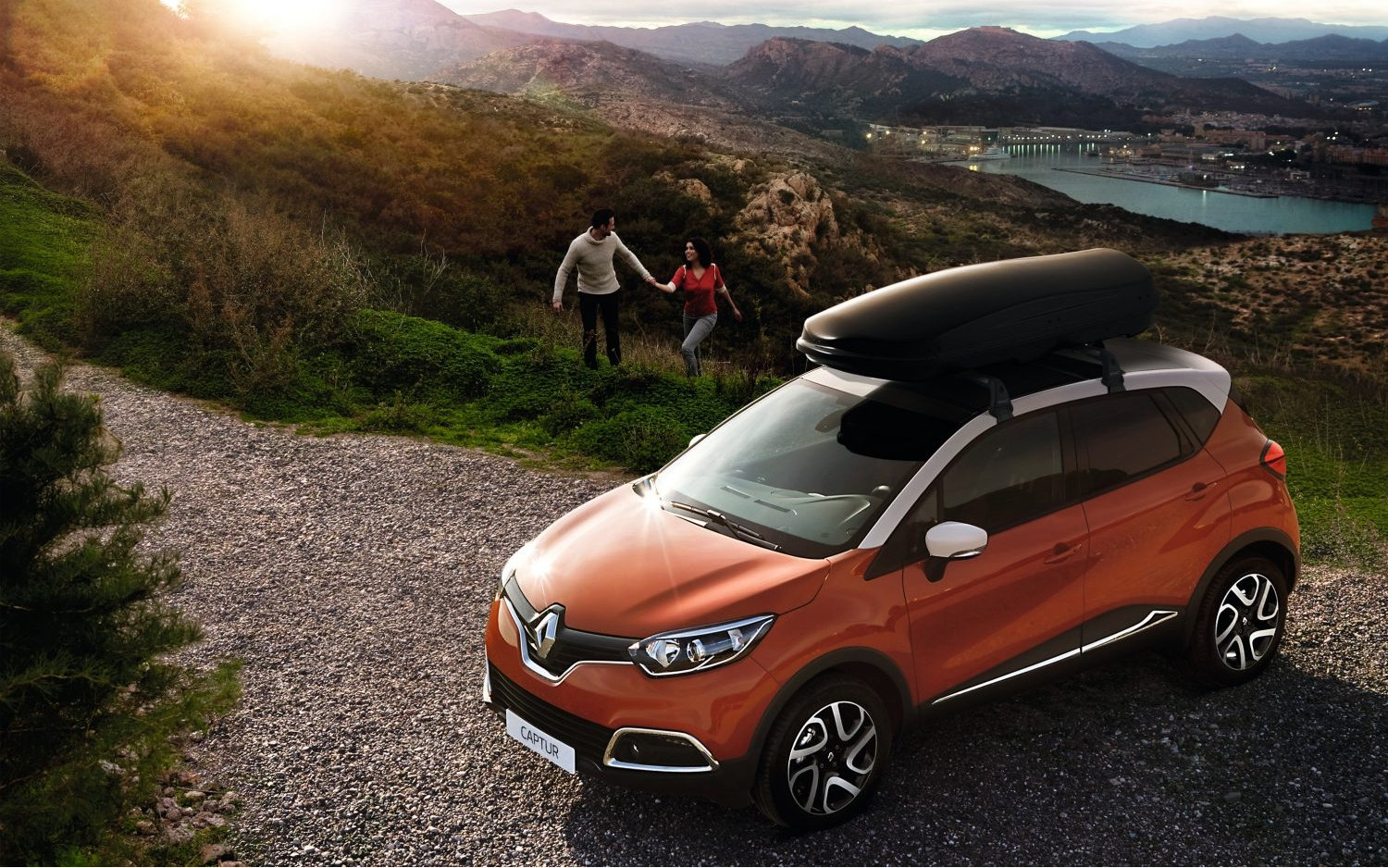
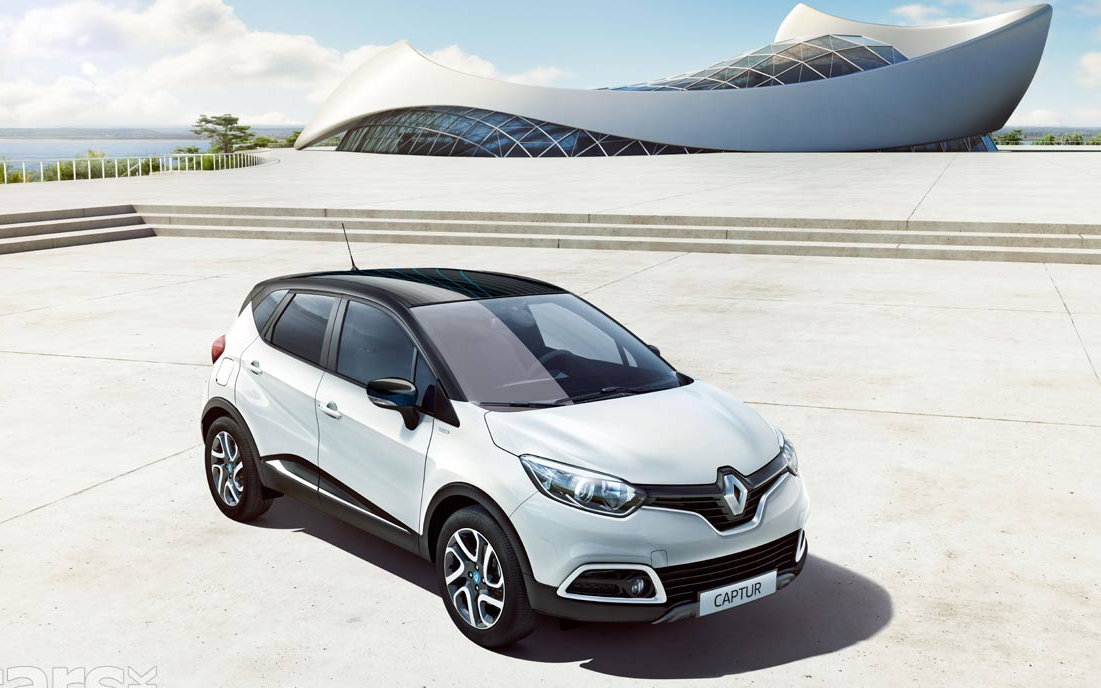
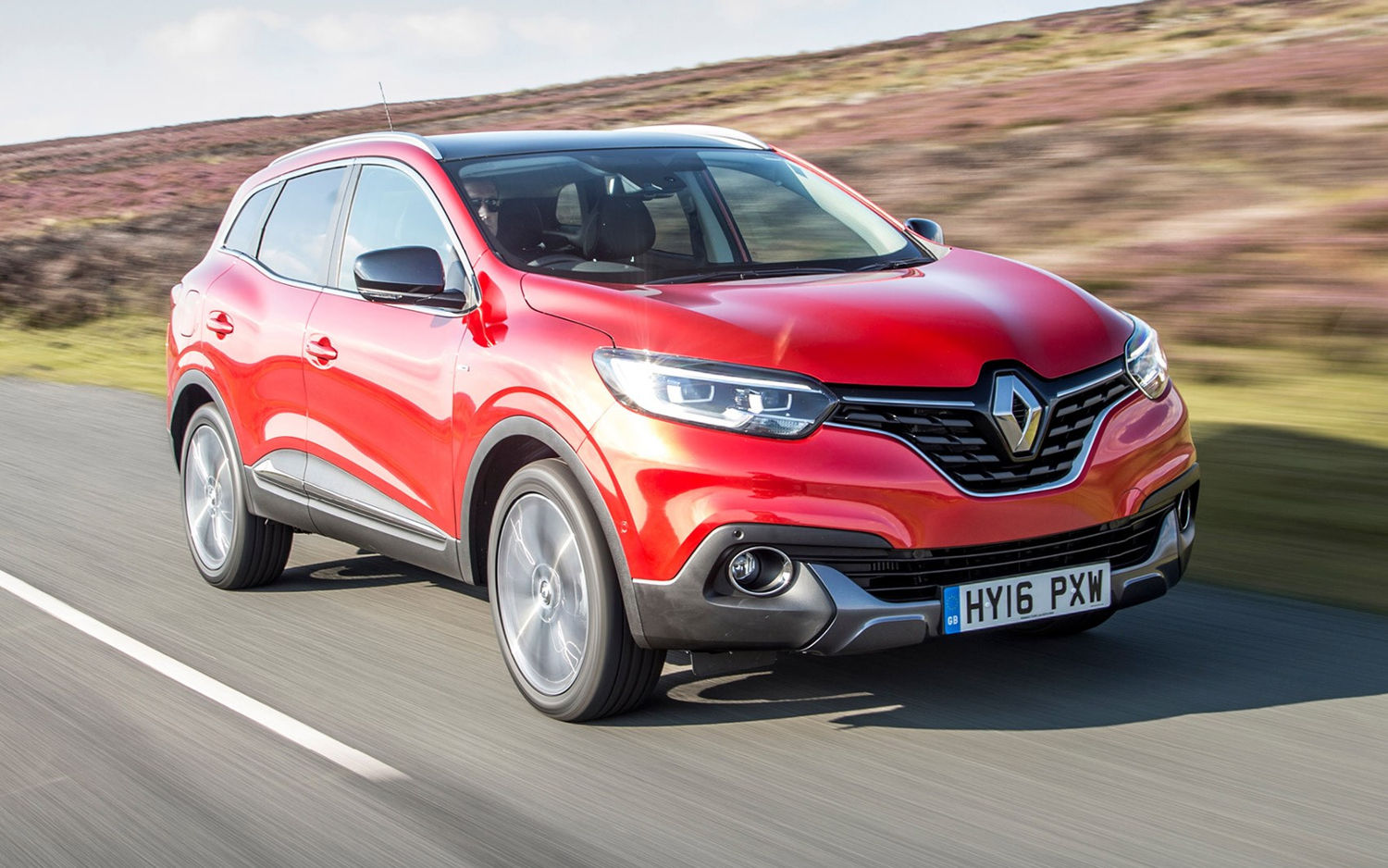
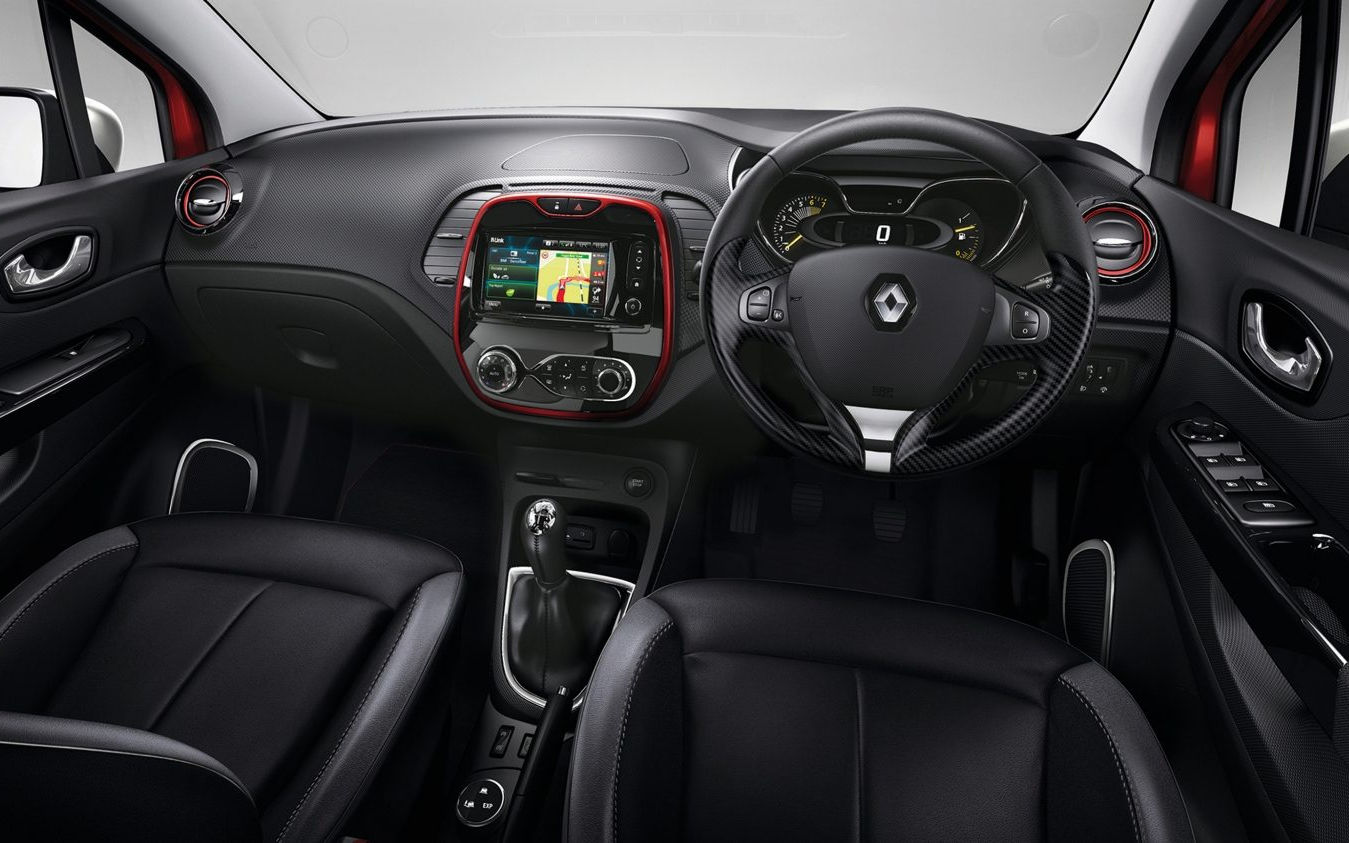
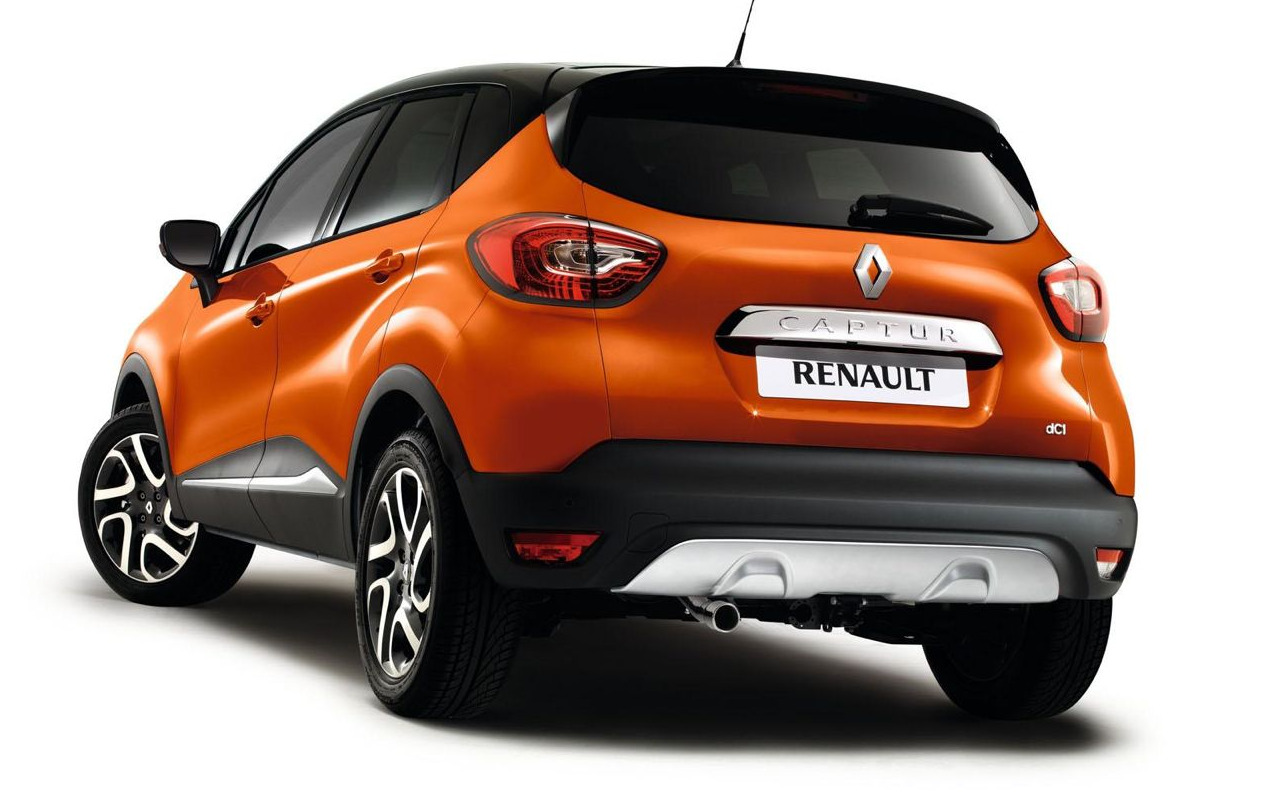
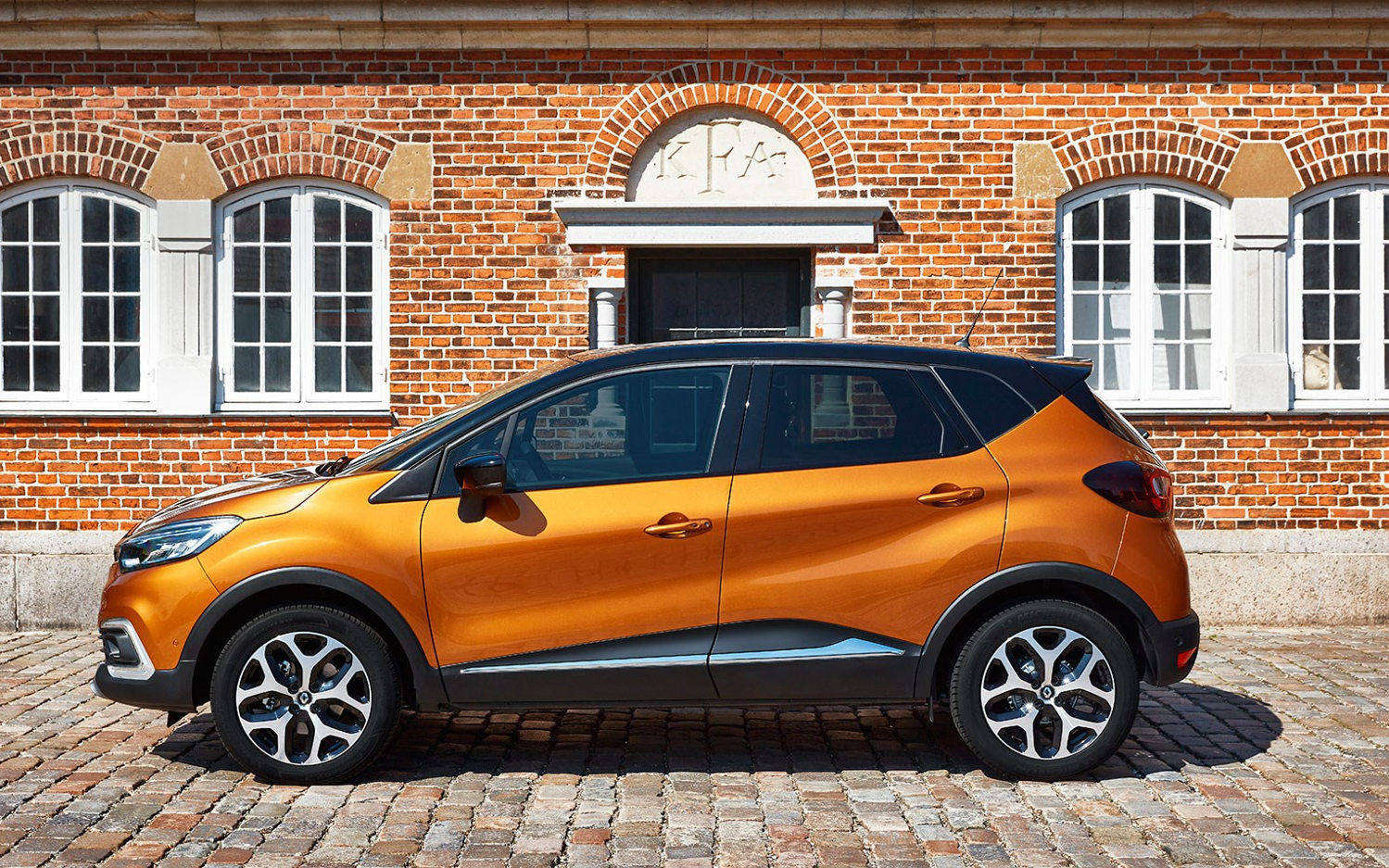
A refreshed version of Renault's popular Captur SUV is revealed at the Geneva motor sporting new features including an updated colour palette, LED lights and the option of a panoramic glass roof.The facelifted Captur will have 30 potential colour combinations, along with six different interior trims, giving it great potential for personalisation. The new Captur has a more upmarket look and a stronger family resemblance to its larger Kadjar and Koleos SUV siblings thanks to a grid-like design featuring upper trim strips either side of the oversized Renault badge.
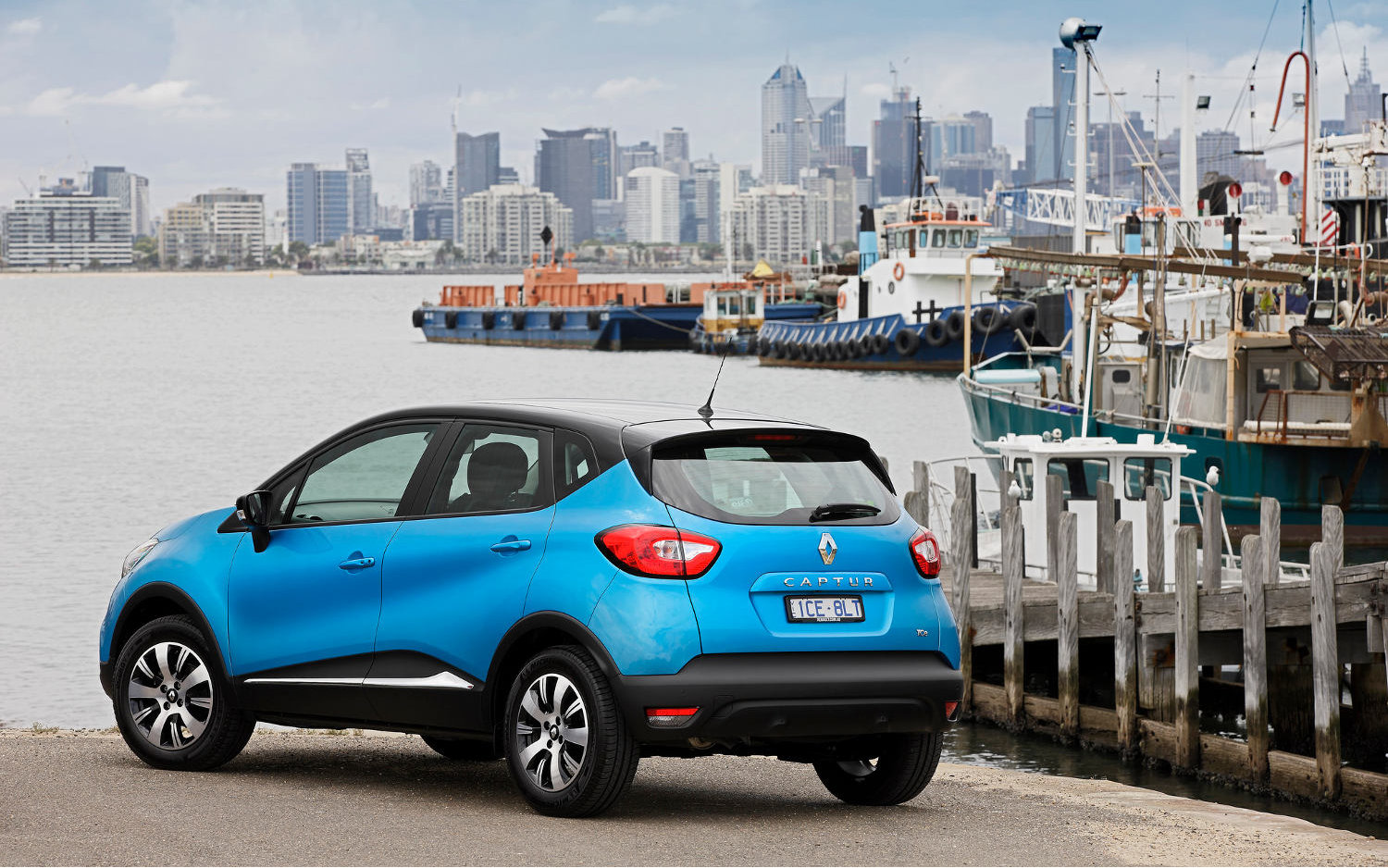
The French brand’s small SUV has been revamped with a range of changes inside and out, in a move that Renault will hope see the Captur remain on the shopping list for compact crossovers – locally, we’re talking: in Europe it was the biggest selling model in that segment last year, with a huge 215,670 sales. The facelifted model comes almost four years after the Captur went on sale globally, and it brings updates to its styling such as new LED headlights on some models with C-shaped LED daytime running lights integrated into the lower bumper. The rear lights, too, are LED and have a similar design. The grille has been redesigned to make it look more like the bigger Kadjar (not sold here), with a chrome strip highlight. There are skid plates on the front and rear bumpers, too. There are four new wheel options available – two 16-inch designs, and two 17-inch spinners. For those who like to let the light shine in, there’s a new optional fixed glass roof.
In essence, the Renault Captur is a Clio with a smattering of SUV traits and the style factor turned up. The result is a high-riding small hatchback that benefits from the added practicality of a sliding rear bench seat, plus supermini-like running costs and a variety of colourful interior and exterior themes that include a contrasting colour roof. The Captur was one of the first small SUV rivals to Nissan’s groundbreaking Juke, and it remains one of the best offerings in the class. Increasingly, buyers in this market also want to personalise their cars, and Renault offers a vast array of ways to customise your Captur, be it with different paint options or styling packs designed to make the Captur look like a rugged SUV.