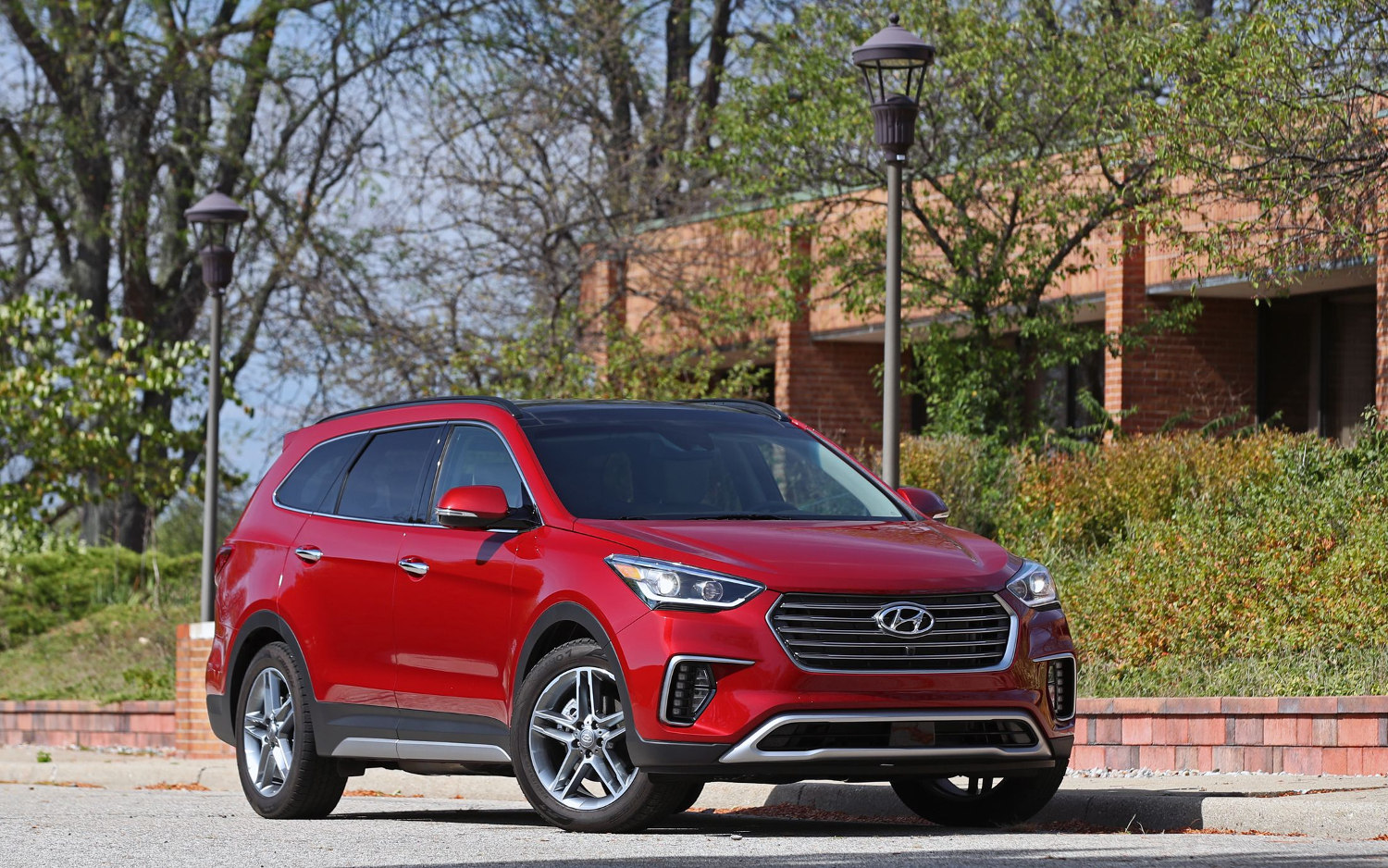
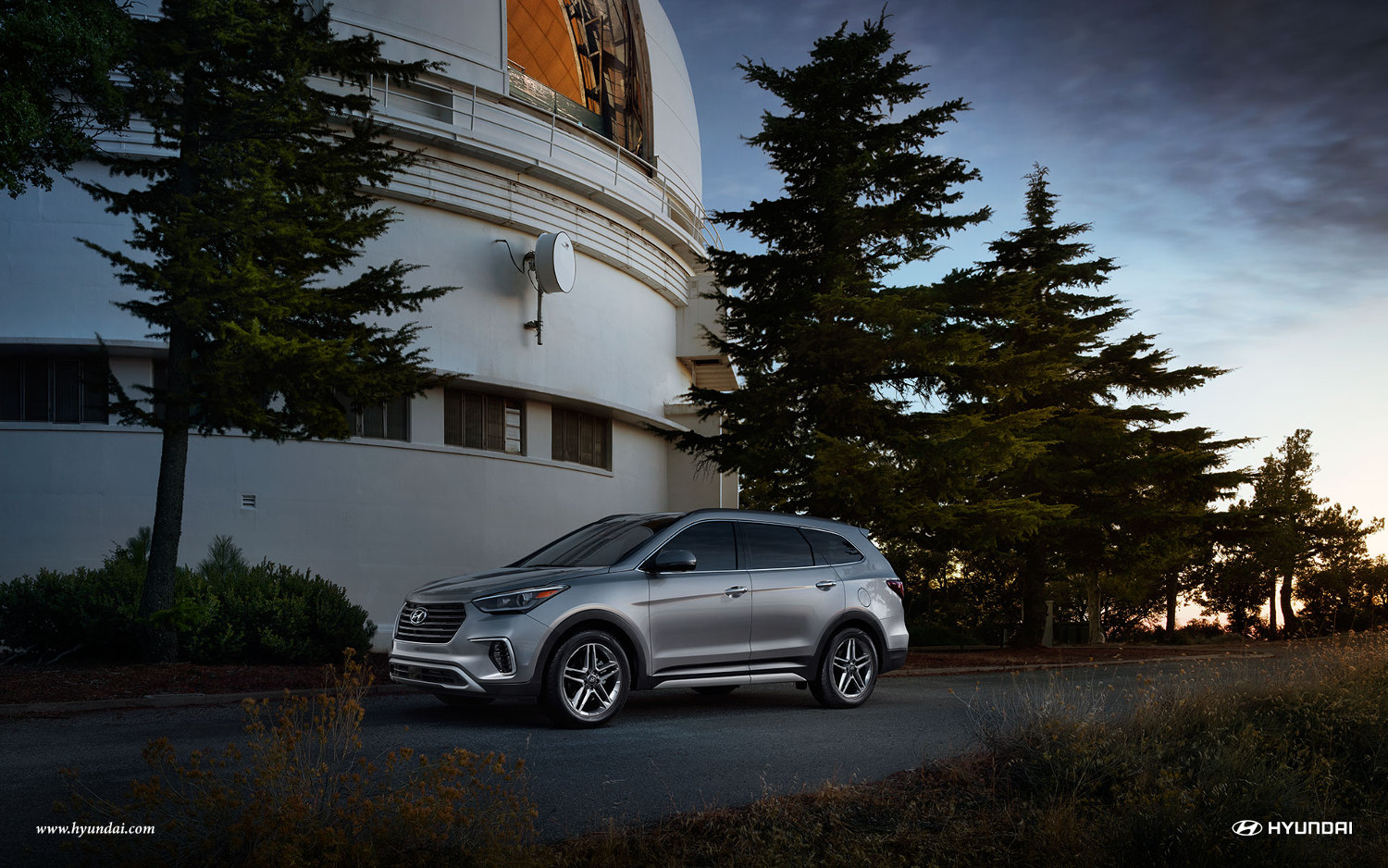
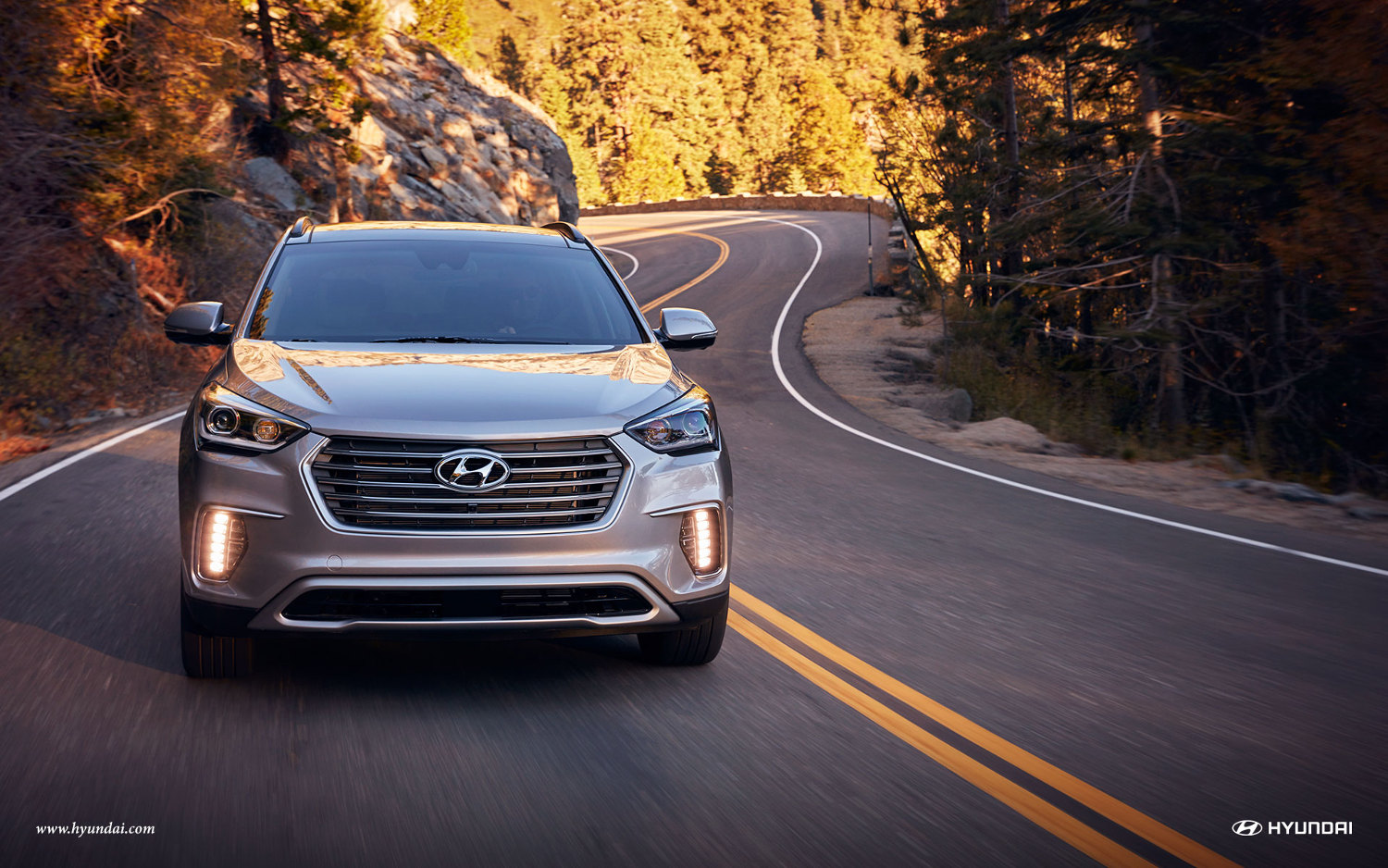
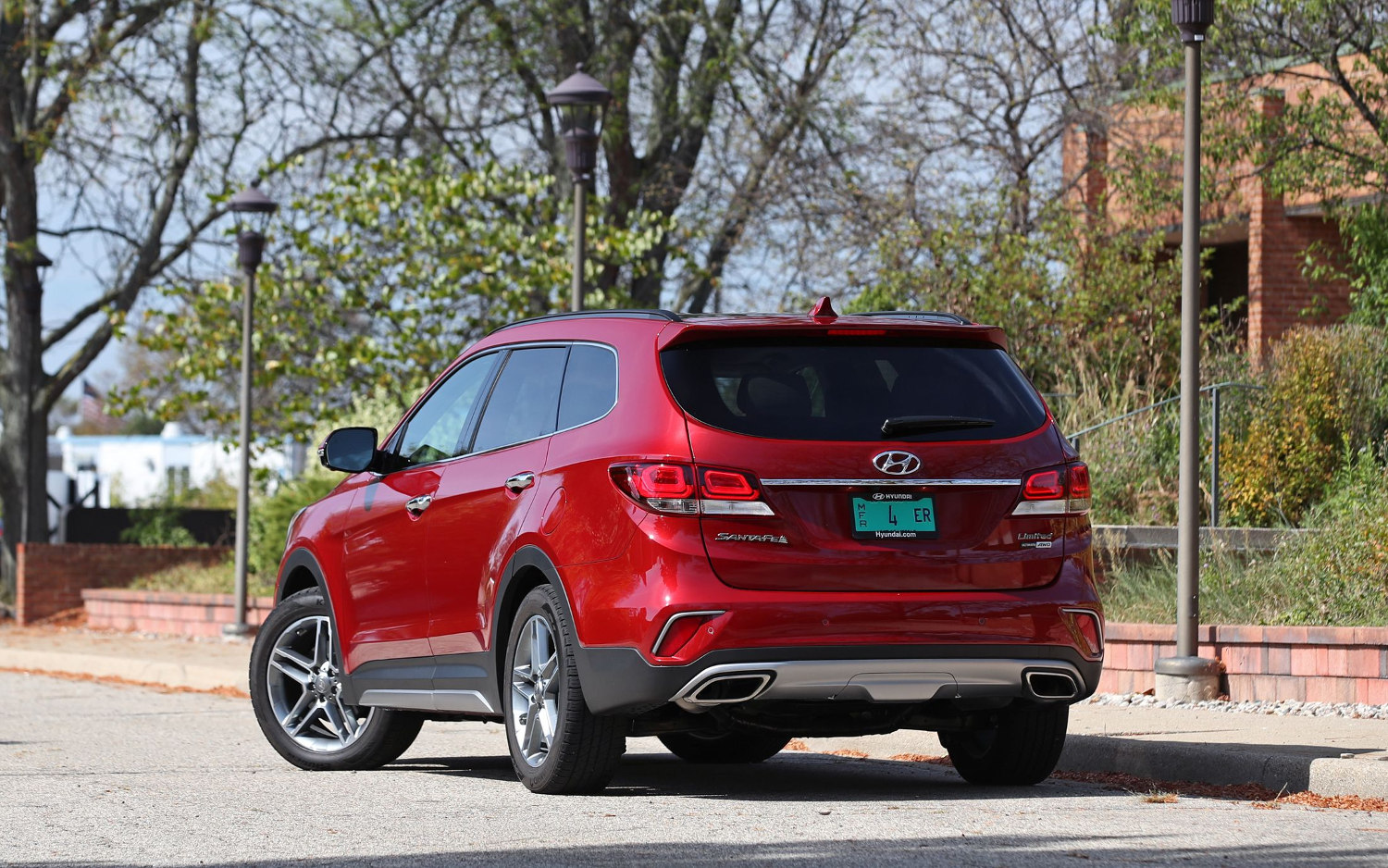
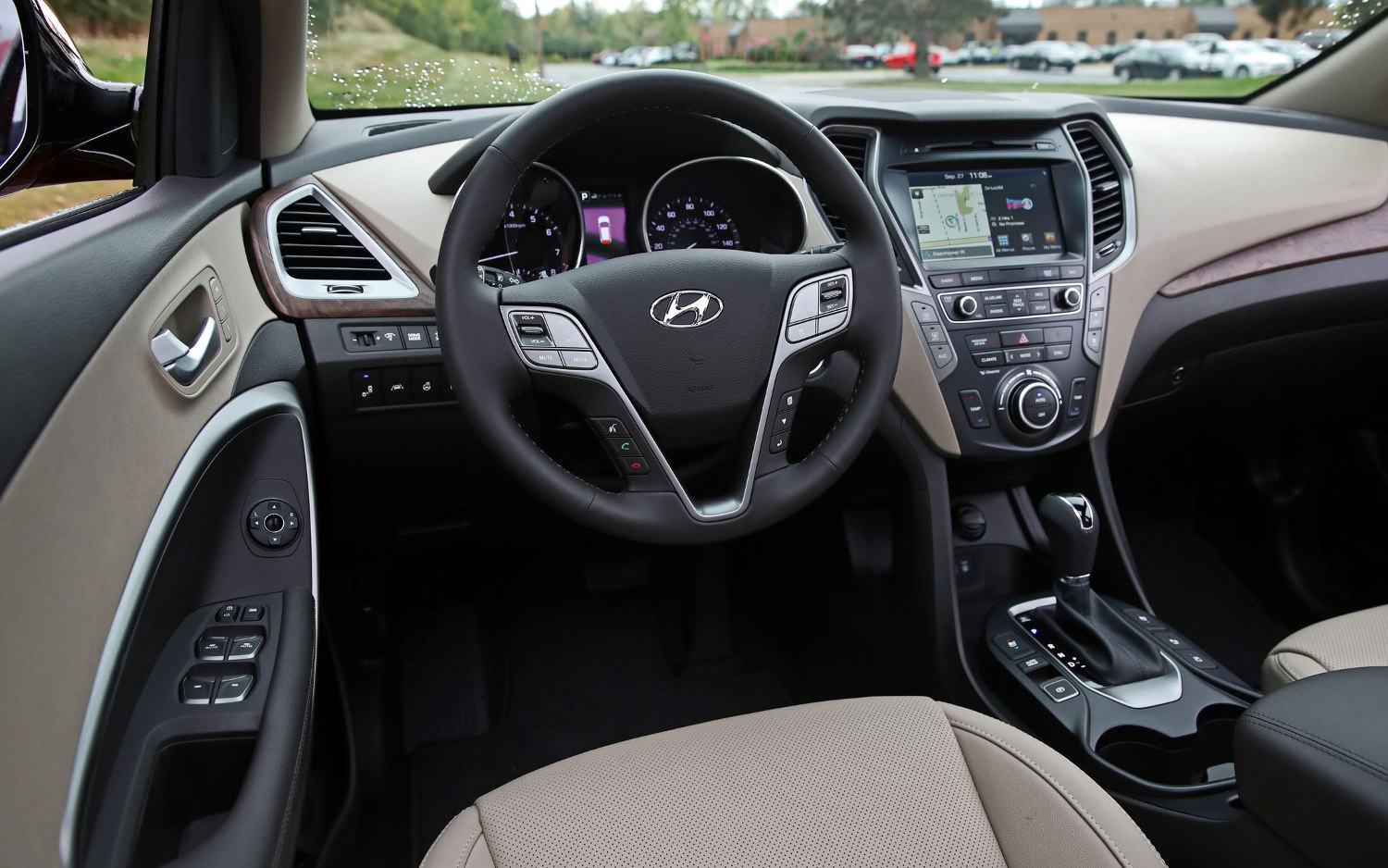
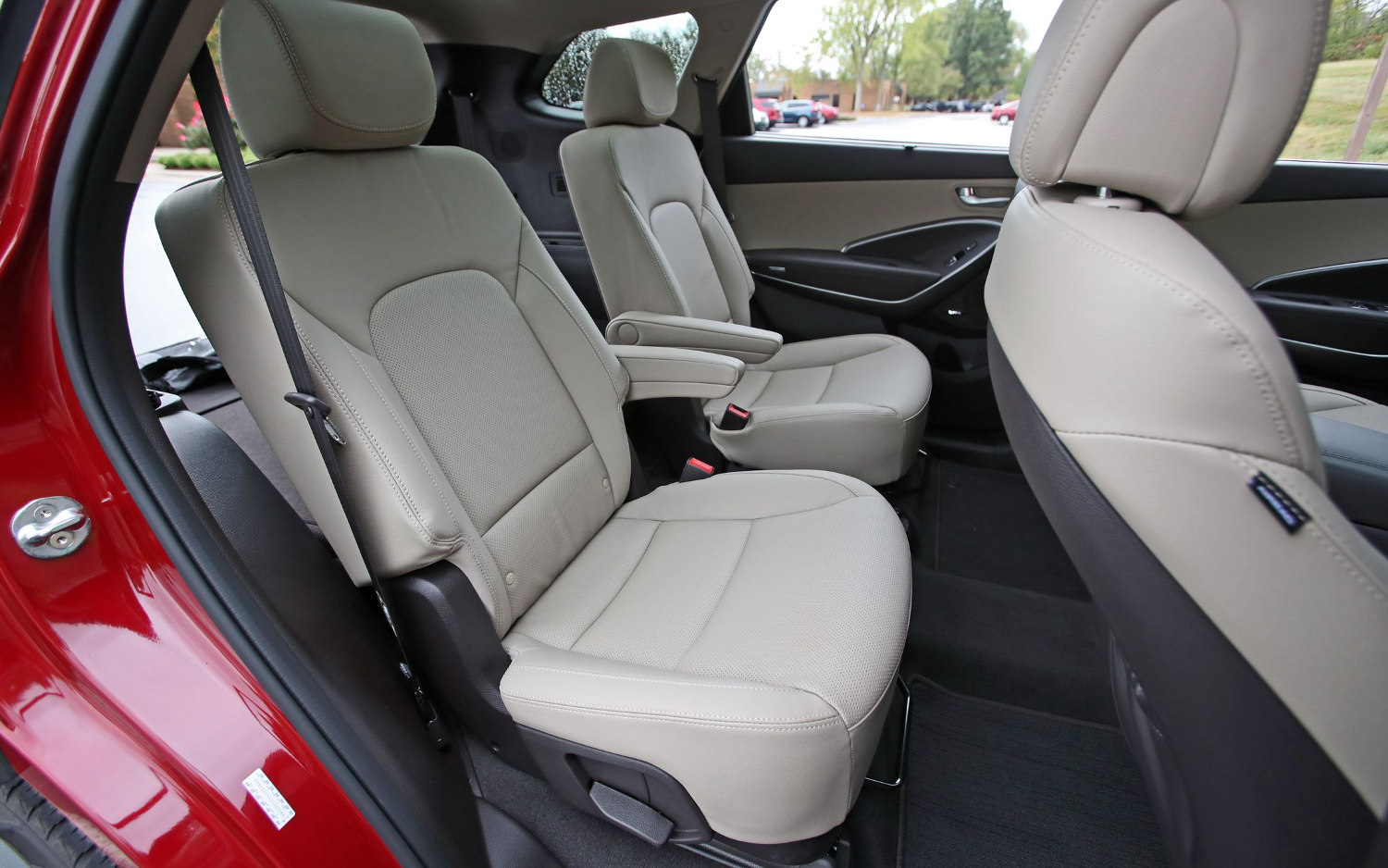
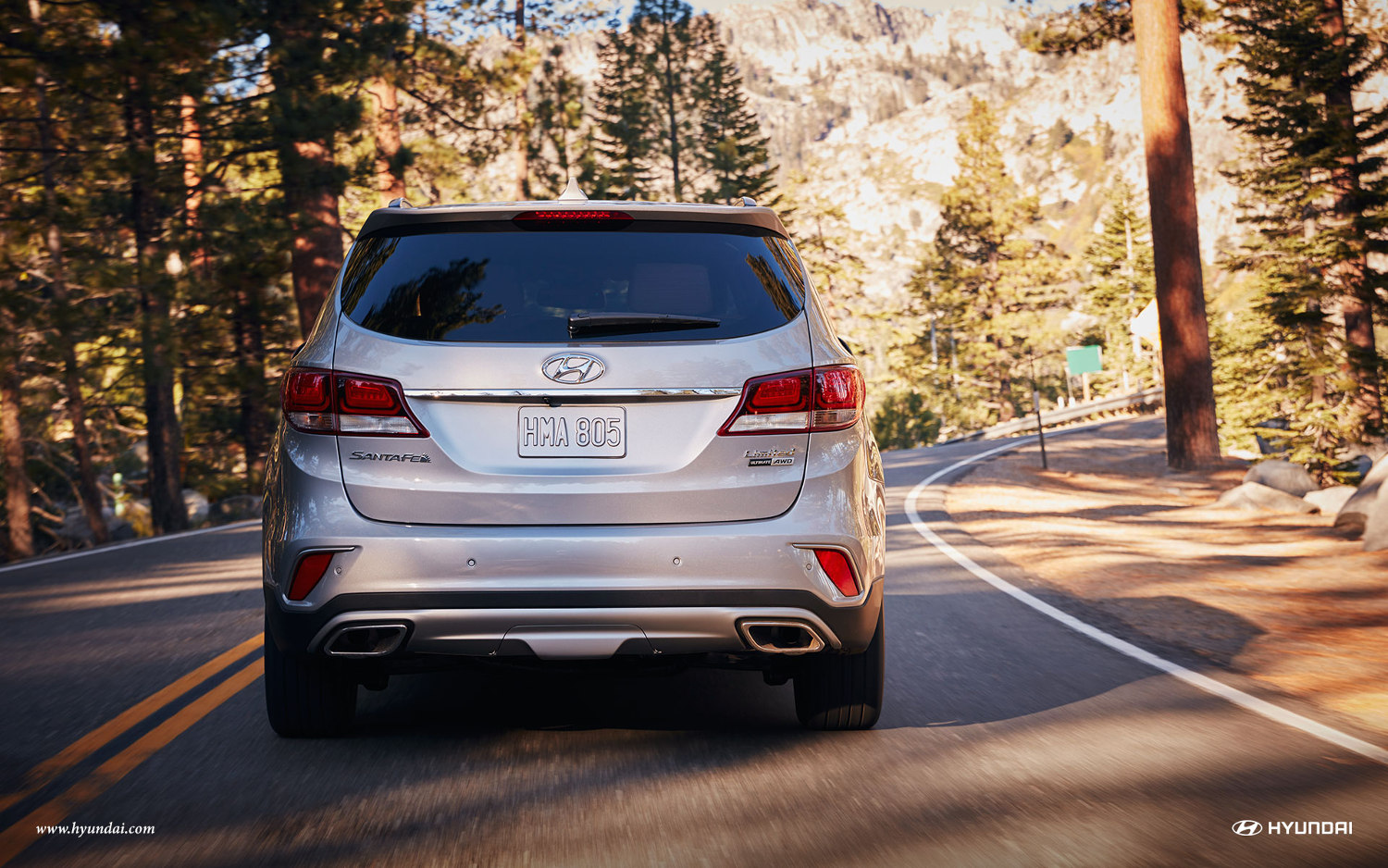
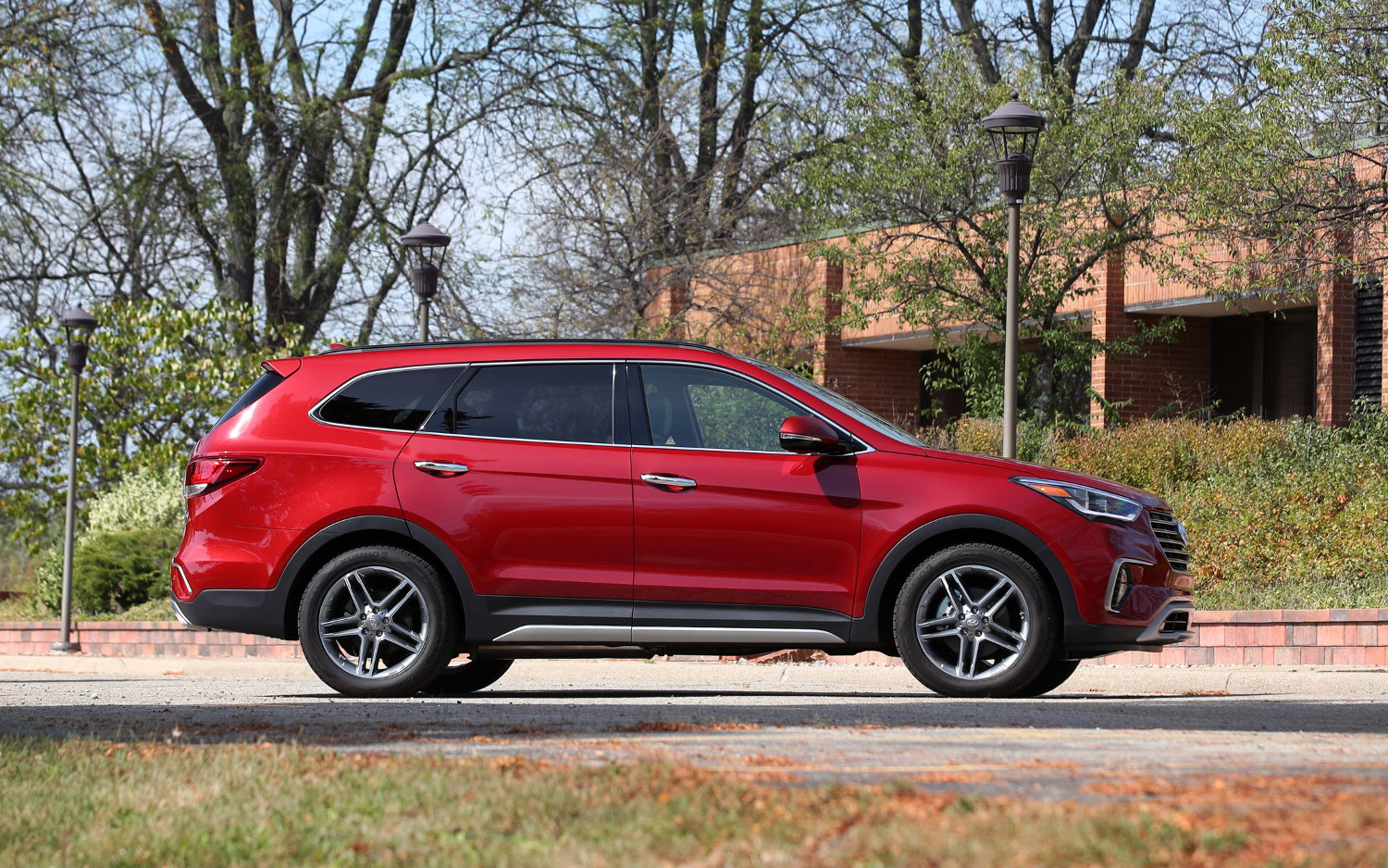
The 2018 Hyundai Santa Fe has a small third-row seat, but delivers on almost every major crossover-SUV talking point.
Pros No major flaws A very good value Excellent passenger space Well-equipped, across the board Smooth 6-cylinder delivery
Cons Stiff mileage penalty for AWD Six speeds may be too few Slim third-row space
The 2018 Hyundai Santa Fe ranked #14 in Midsize SUVs. Currently the Hyundai Santa Fe has a score of 8.2 out of 10 which is based on our evaluation of 57 pieces of research and data elements using various sources.
Pros Class-leading warranty and buyer's coverage Enthusiastic V6 and turbocharged four-cylinder engines Fuel-efficient standard engine in Santa Fe Sport
Cons Meager amount of cargo room
With only three trim levels and one option, picking the right Santa Fe isn't too difficult. We think the sweet spot is the SE Ultimate, which comes with the comfort and safety features you'll want along with a larger entertainment and navigation system and a surround-sound audio system
PROS Plenty of standard features for the money Easy-to-use entertainment interface Generous warranty coverage
CONS Fuel economy is slightly below par Limited availability of advanced driver safety aids Cargo capacity falls short of some competitors
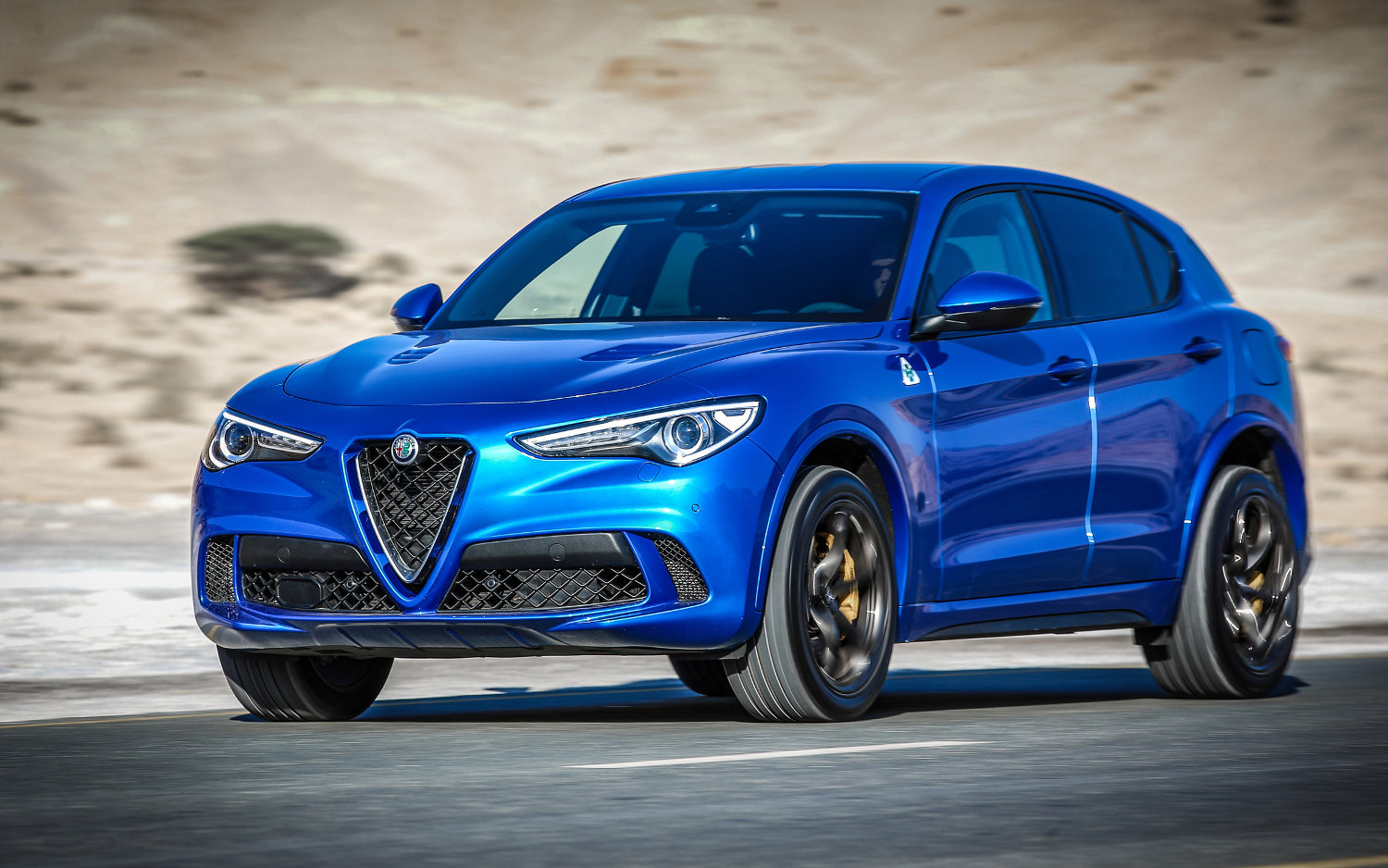
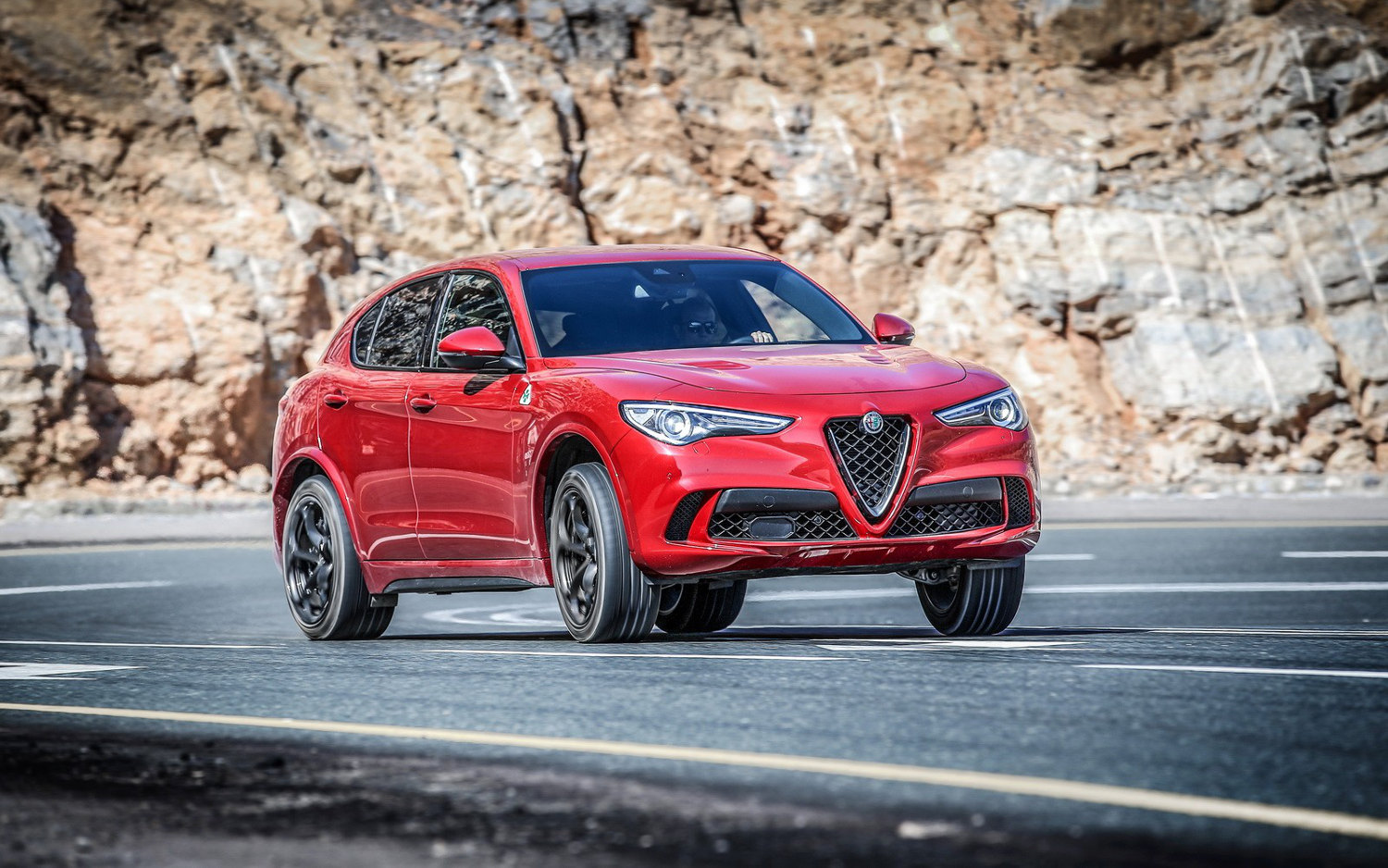
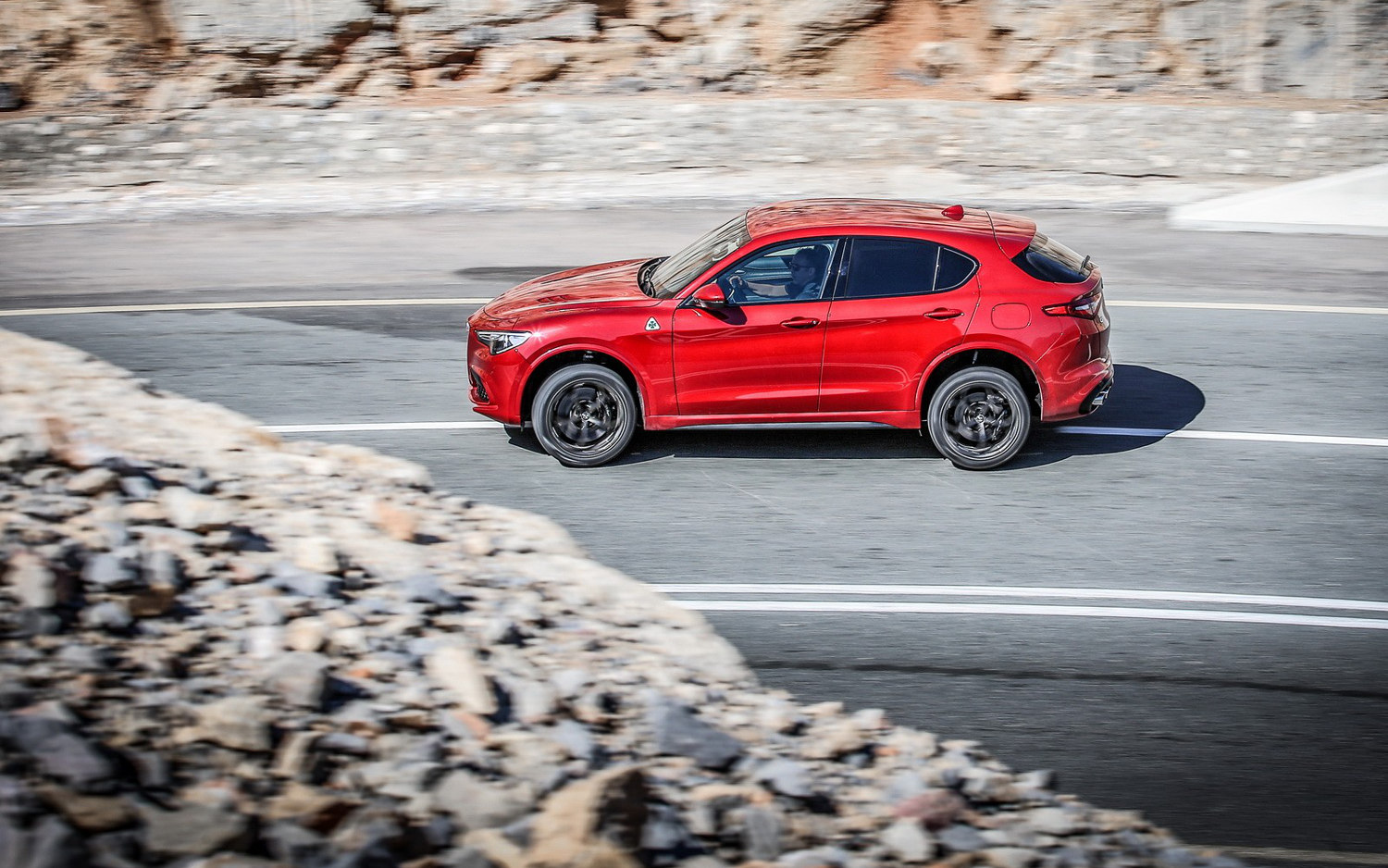
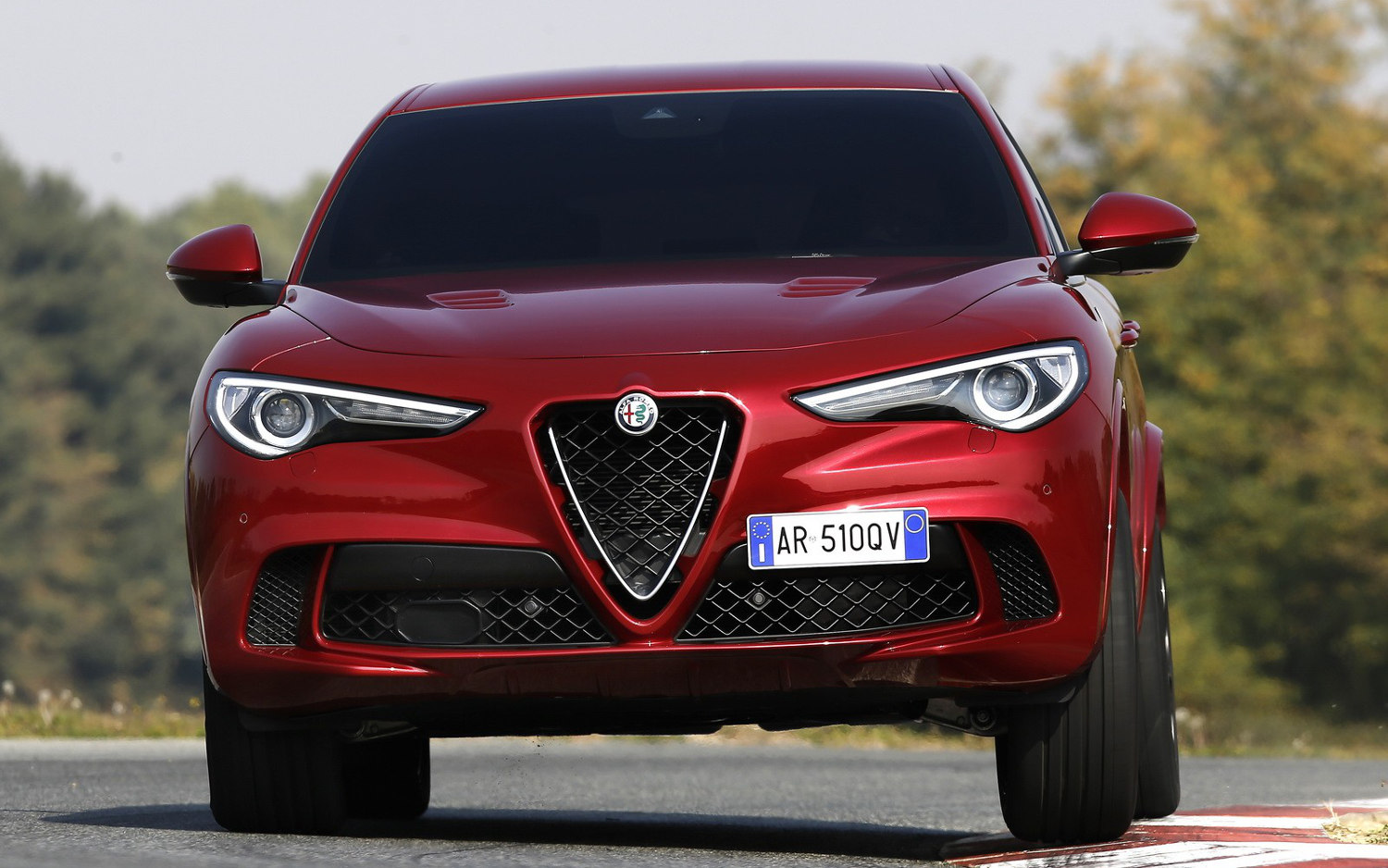
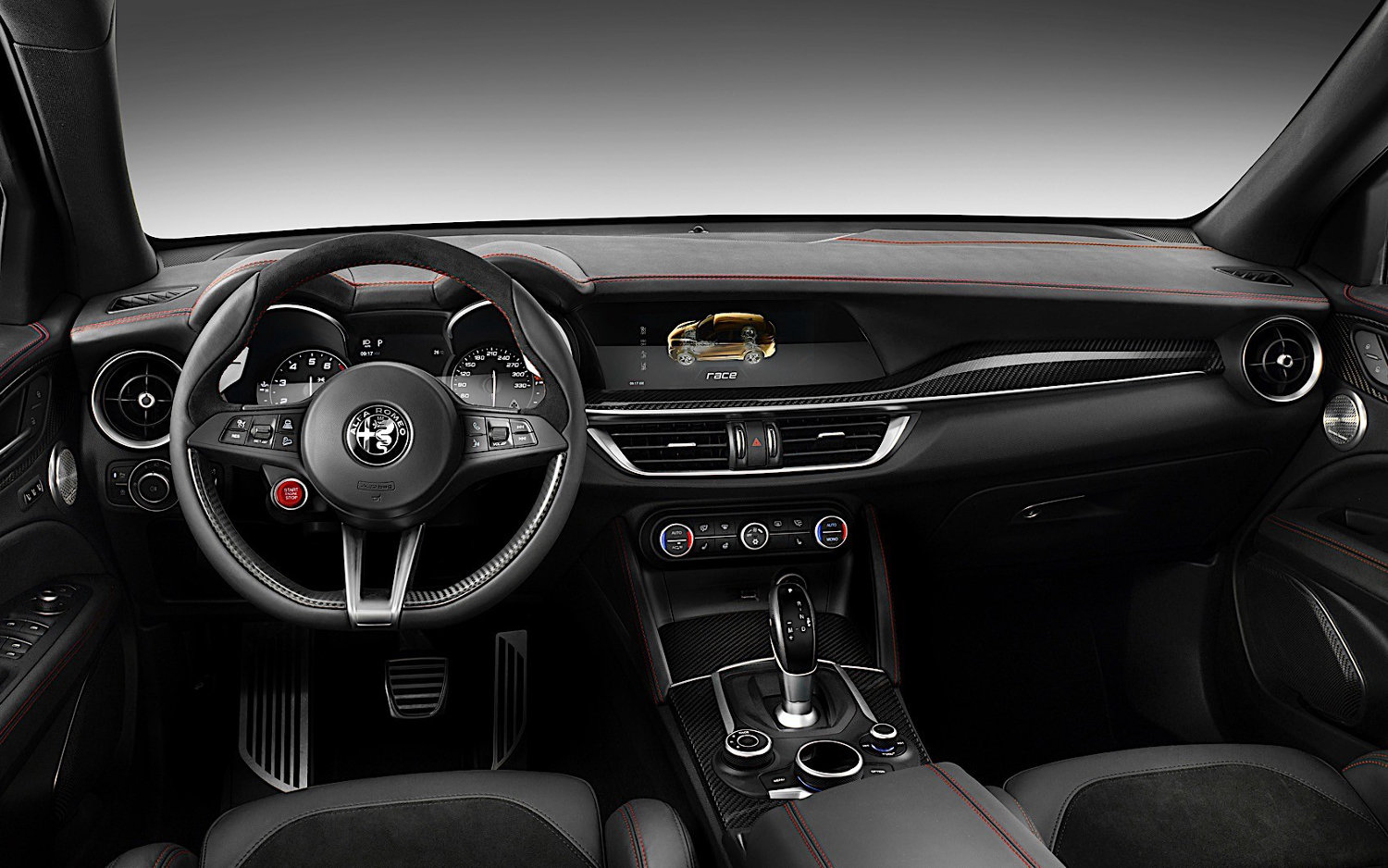
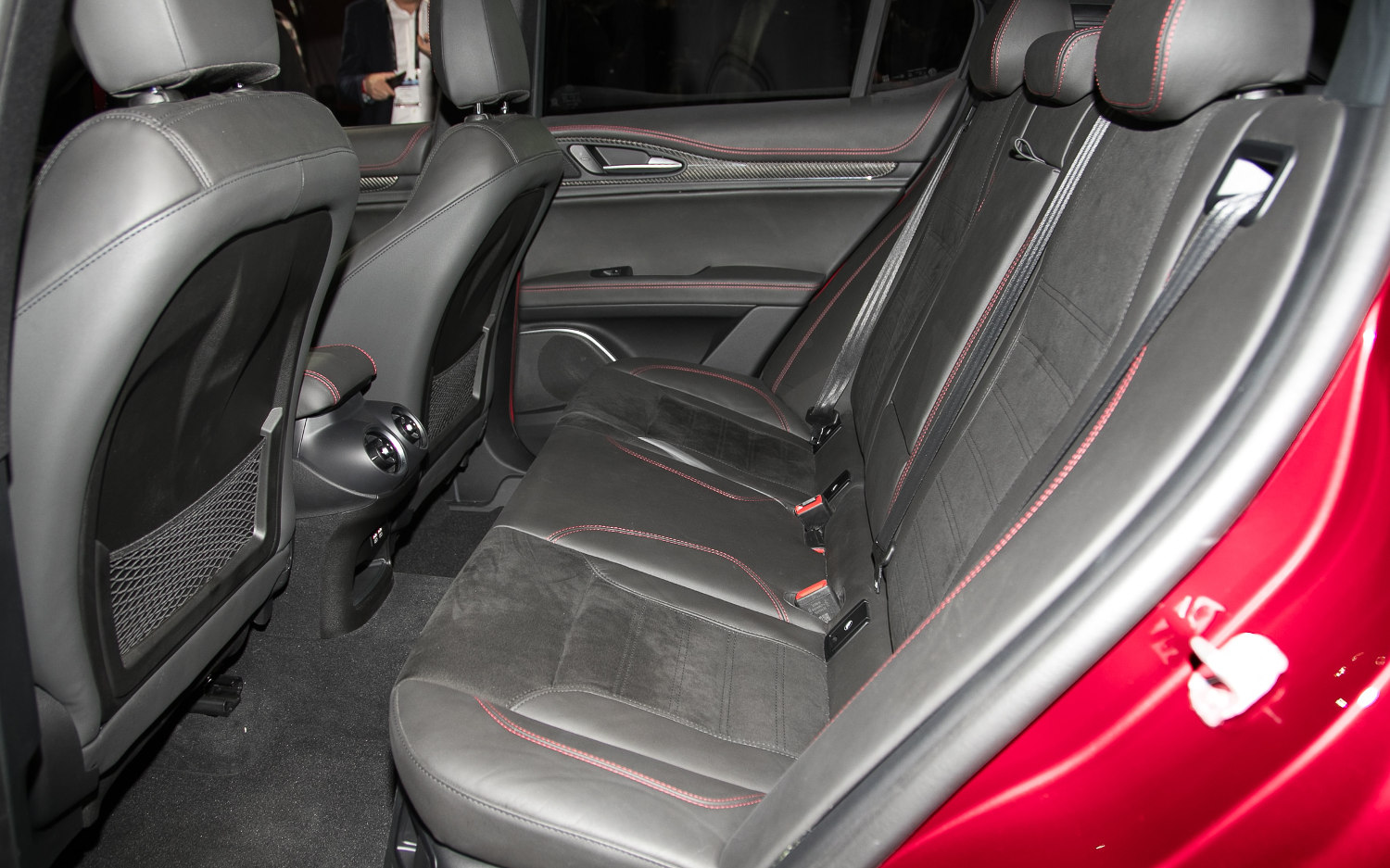
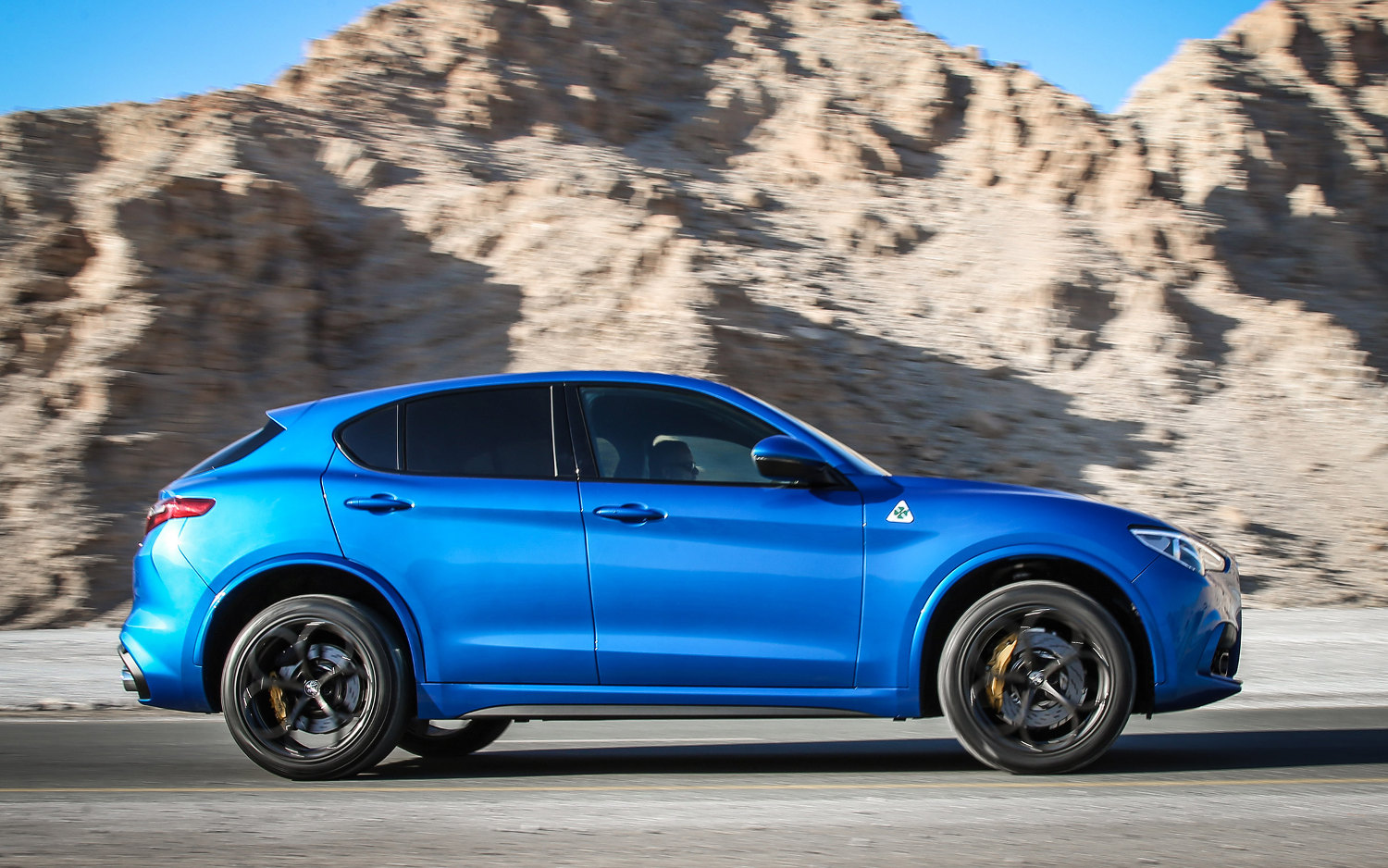
Named after a famous winding pass in the Italian Alps, the Stelvio is perfect for carving up canyons. A turbo 2.0-liter four makes 280 hp and pairs with an eight-speed automatic and all-wheel drive. For more power, the Quadrifoglio flaunts a 505-hp 2.9-liter turbo V-6; an adaptive suspension is standard. Alfa claims a zero-to-60 time of 3.9 seconds. Inside, the Stelvio offers an optional 900-watt Harman/Kardon audio system, but we’re pretty sure that sweet engine is all you’ll want to hear. Assembled at Alfa’s Cassino plant in Frosinone, Italy, the Stelvio is built on the same platform as the Giulia and will be offered in three trim levels: Stelvio, Stelvio Ti, and the high-performance Stelvio Quadrifoglio, which has enough distinct features and tuning to be considered a separate model. While the Stelvio and Stelvio Ti both rely on a 280-hp turbocharged 2.0-liter inline-four for motivation, the high-performance Quadrifoglio utilizes the 505-hp 2.9-liter turbocharged V-6 from the Alfa Romeo Giulia Quadrifoglio. Aluminum is used extensively in the construction of every Stelvio, including the front and rear subframes, the suspension components (control arms in front, multilink in the rear), the doors, and the fenders; the rear crossmember is partly made of composite plastics to pare more weight.
If you want a crossover that sacrifices as little of the conventional-car driving experience as possible, then the Alfa Romeo Stelvio should be given serious consideration. It’s a great car in its own right, but given it is Alfa’s first SUV, it’s borderline brilliant on first acquaintance. All Stelvios ride on double wishbones at the front and multi-link at the rear (Alfa says it’s ‘four-and-a-half-link’), as well as what Alfa says is the most direct steering set-up in the segment. Q4 four-wheel-drive is standard, albeit with a rear-bias to the power distribution: 100% in normal driving conditions and up to 50% pushed to the front when circumstances demand it. You can also option in a mechanical LSD at the rear if you’re planning on hot laps (as if!).
Alfa Romeo has high hopes for the Stelvio Quadrifoglio; the model will even offer carbon fiber shell racing-style seats made by Sparco as well as carbon ceramic Brembo brakes. To save fuel, the Quadrifoglio's V-6 employs cylinder deactivation that allows it to run on just three cylinders during low load situations.
Pros Italian style Promise of serious performance Gorgeous interior Base model offers solid specs
Cons No RWD may be a lose in smile states Big gap between 4-cylinder and twin-turbo V-6 Too little, too late?