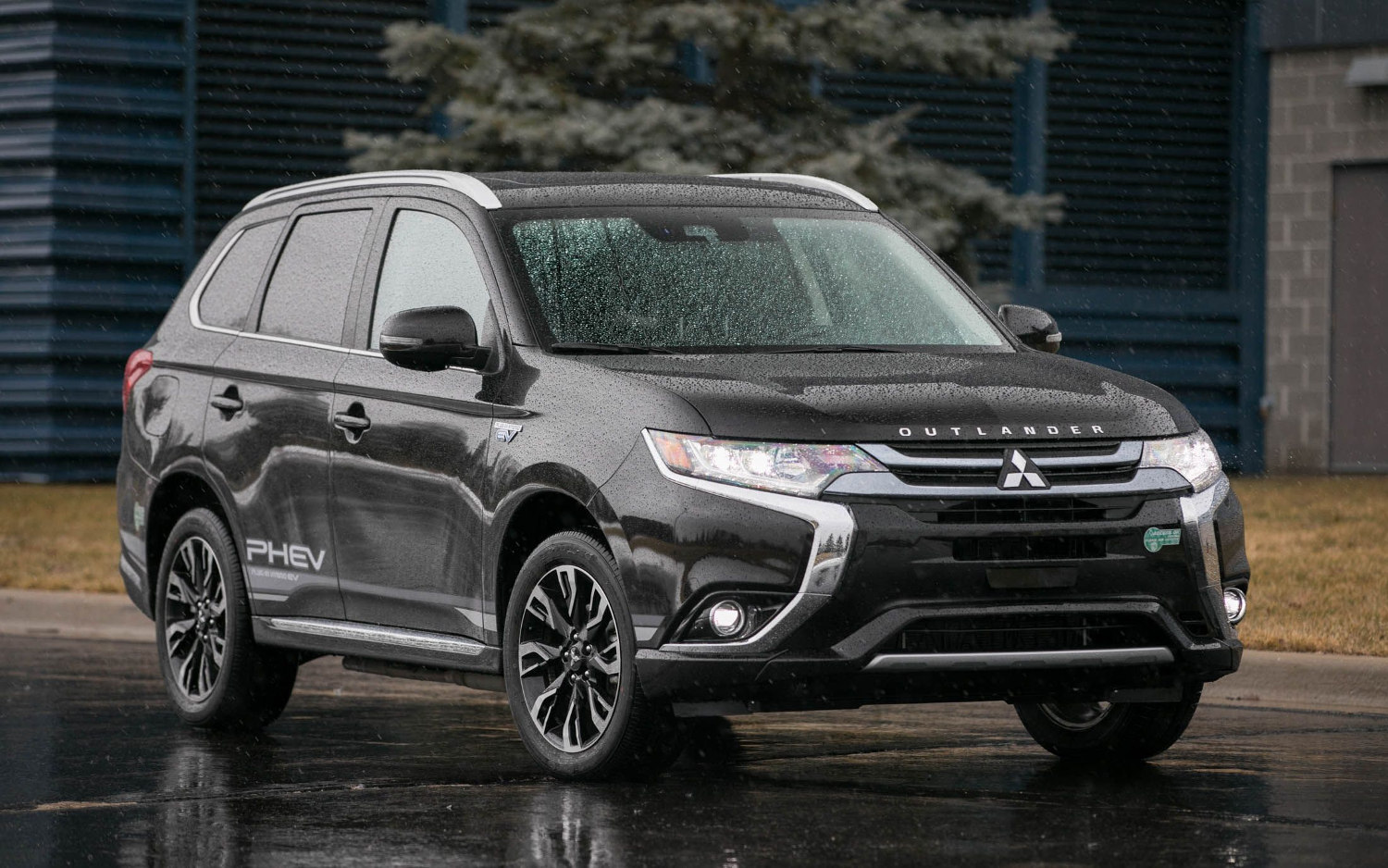
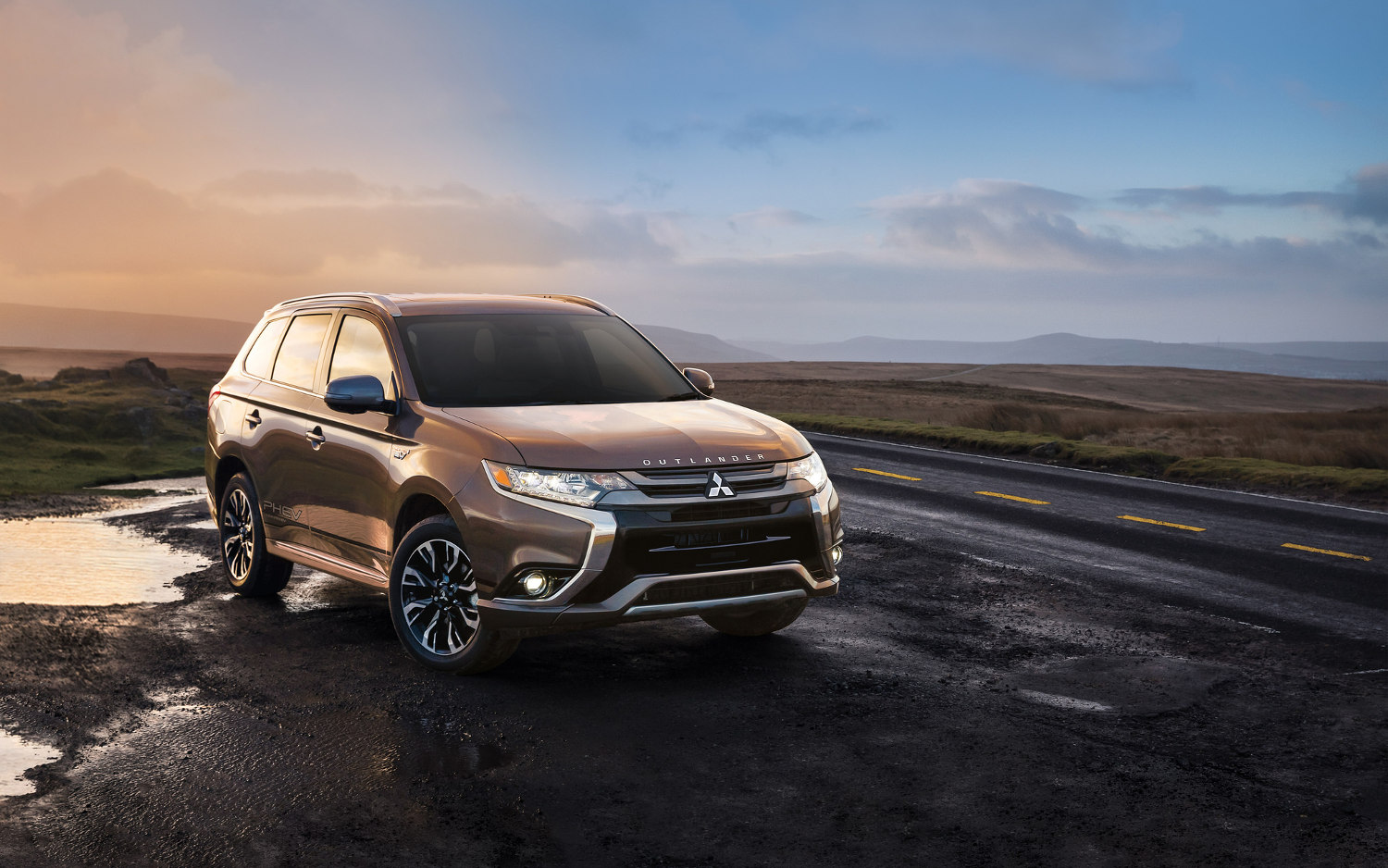
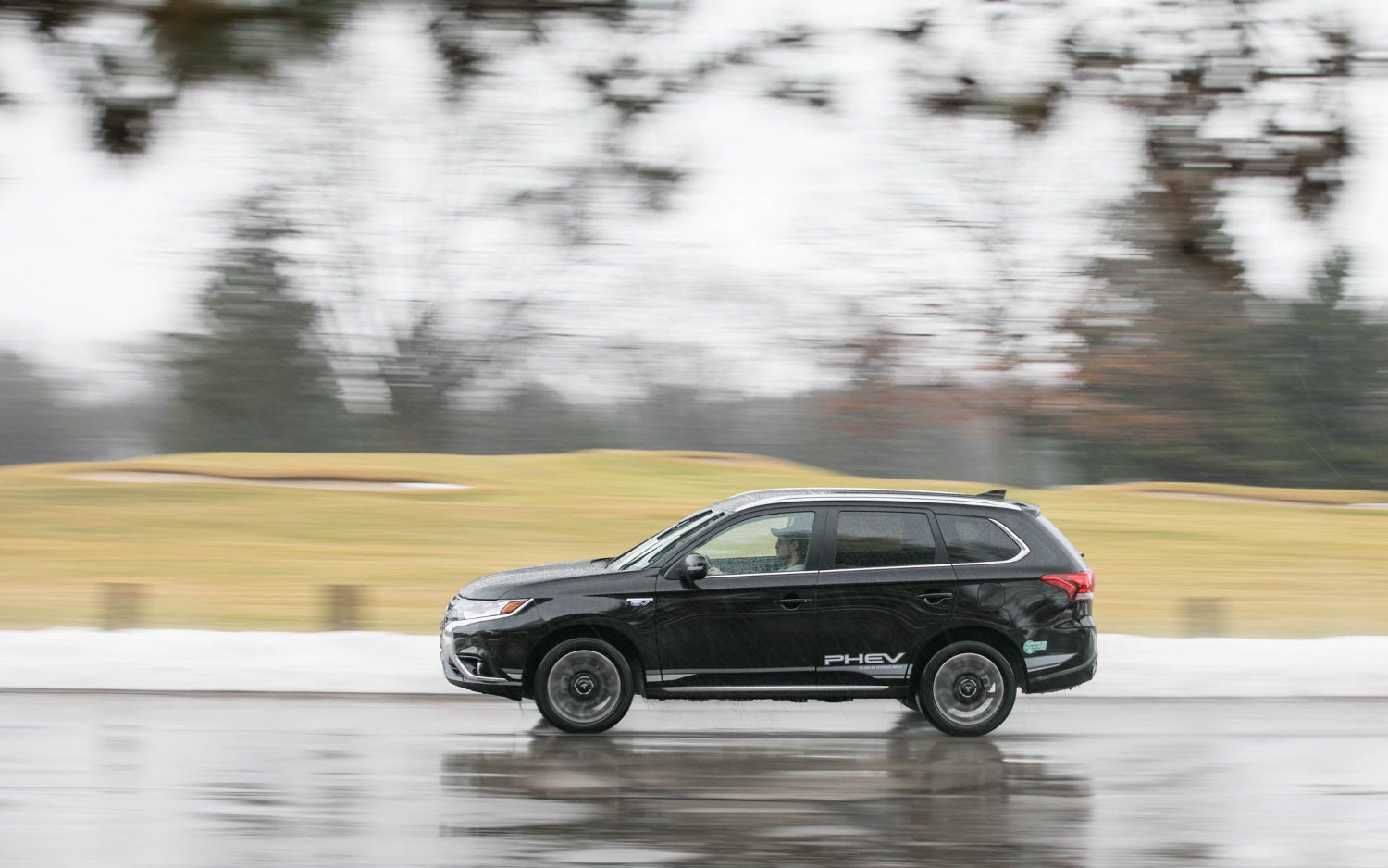
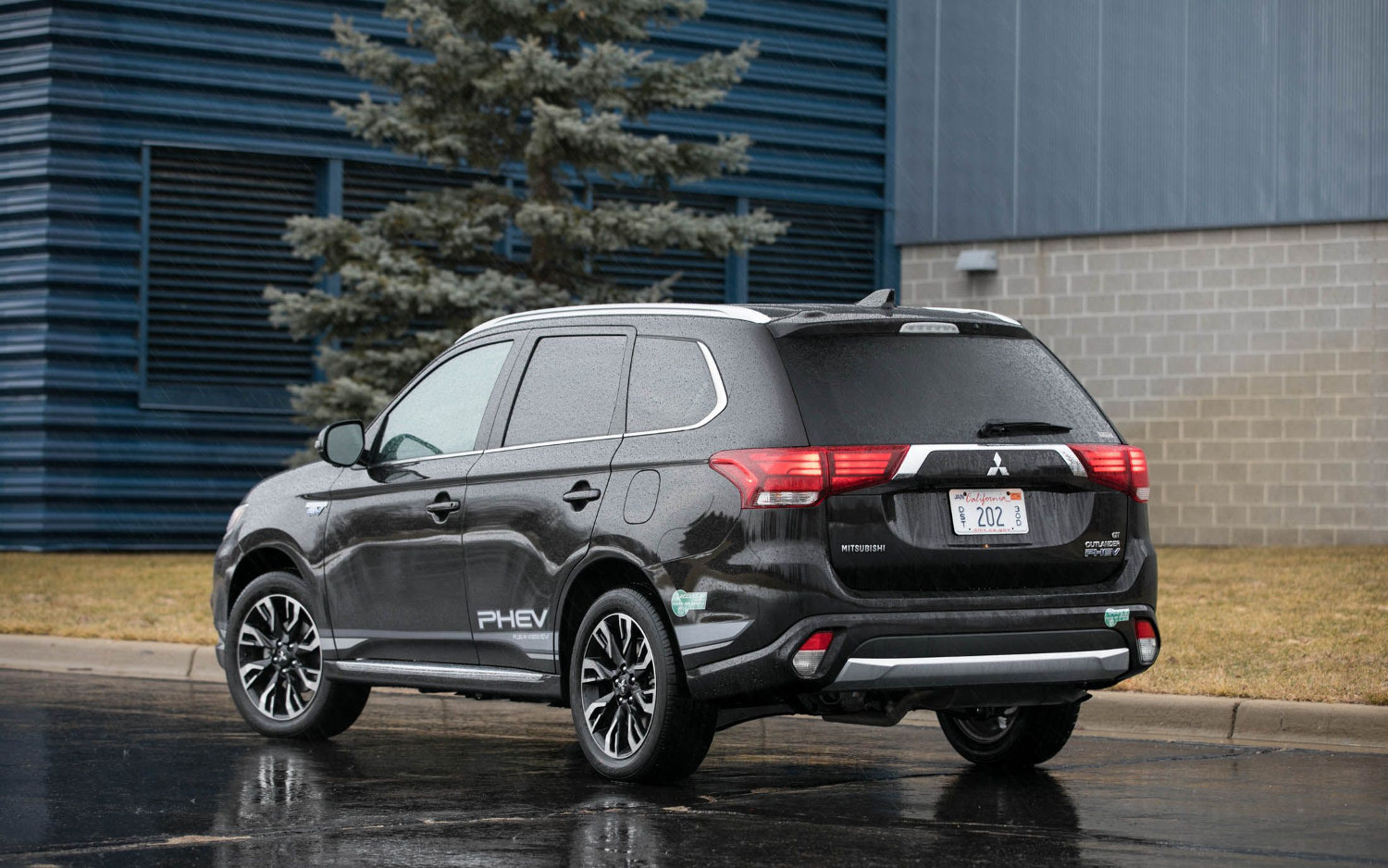
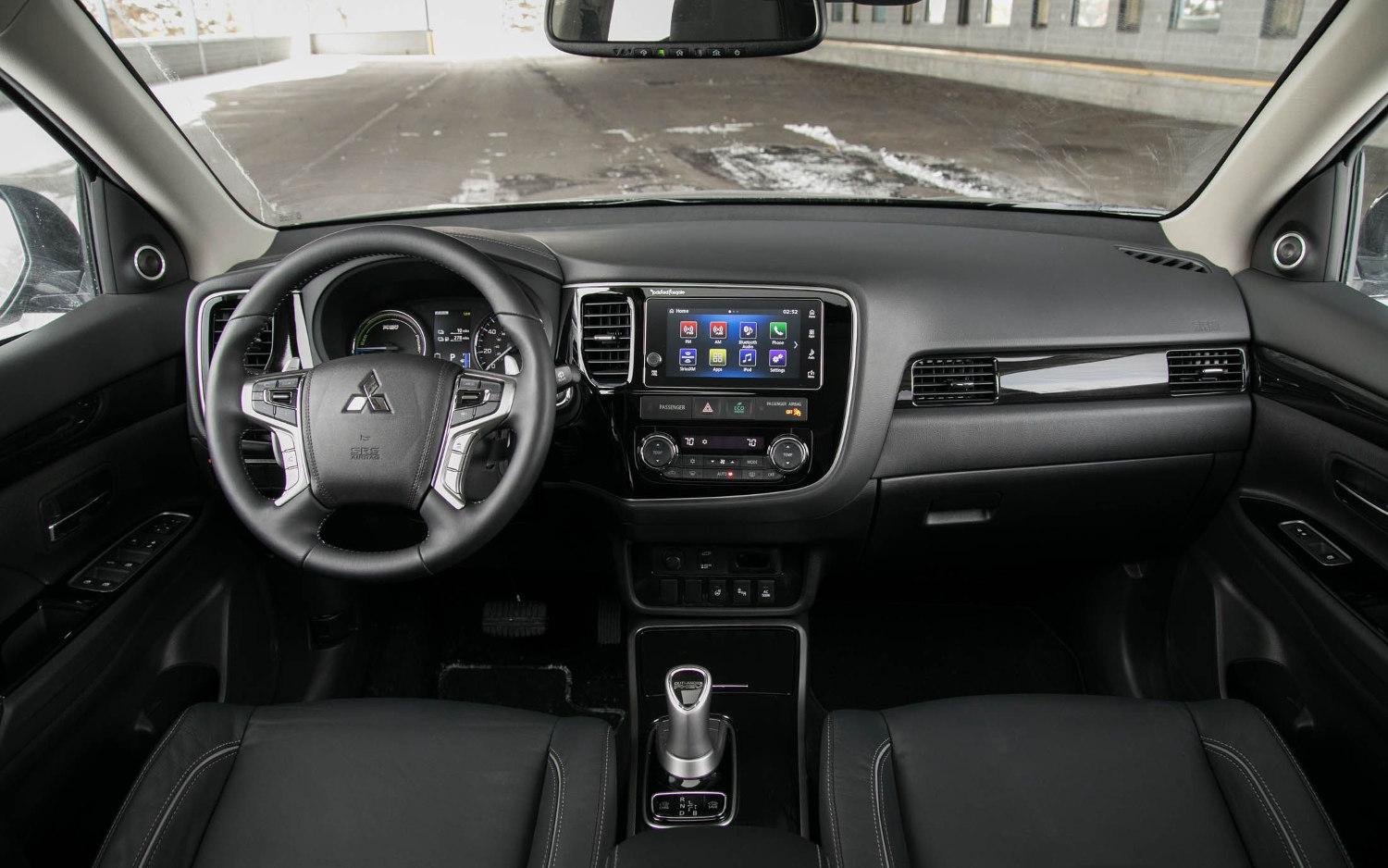
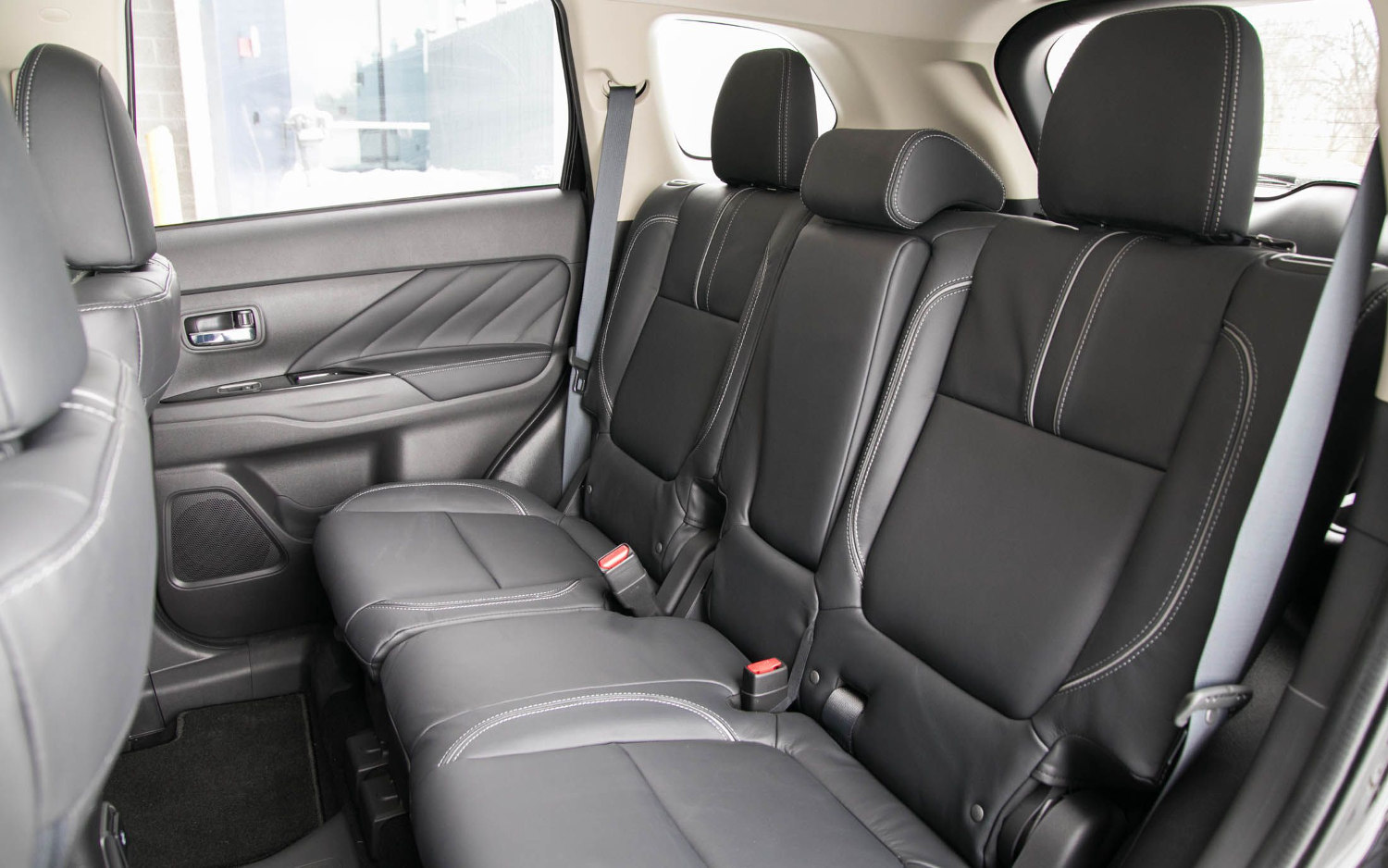
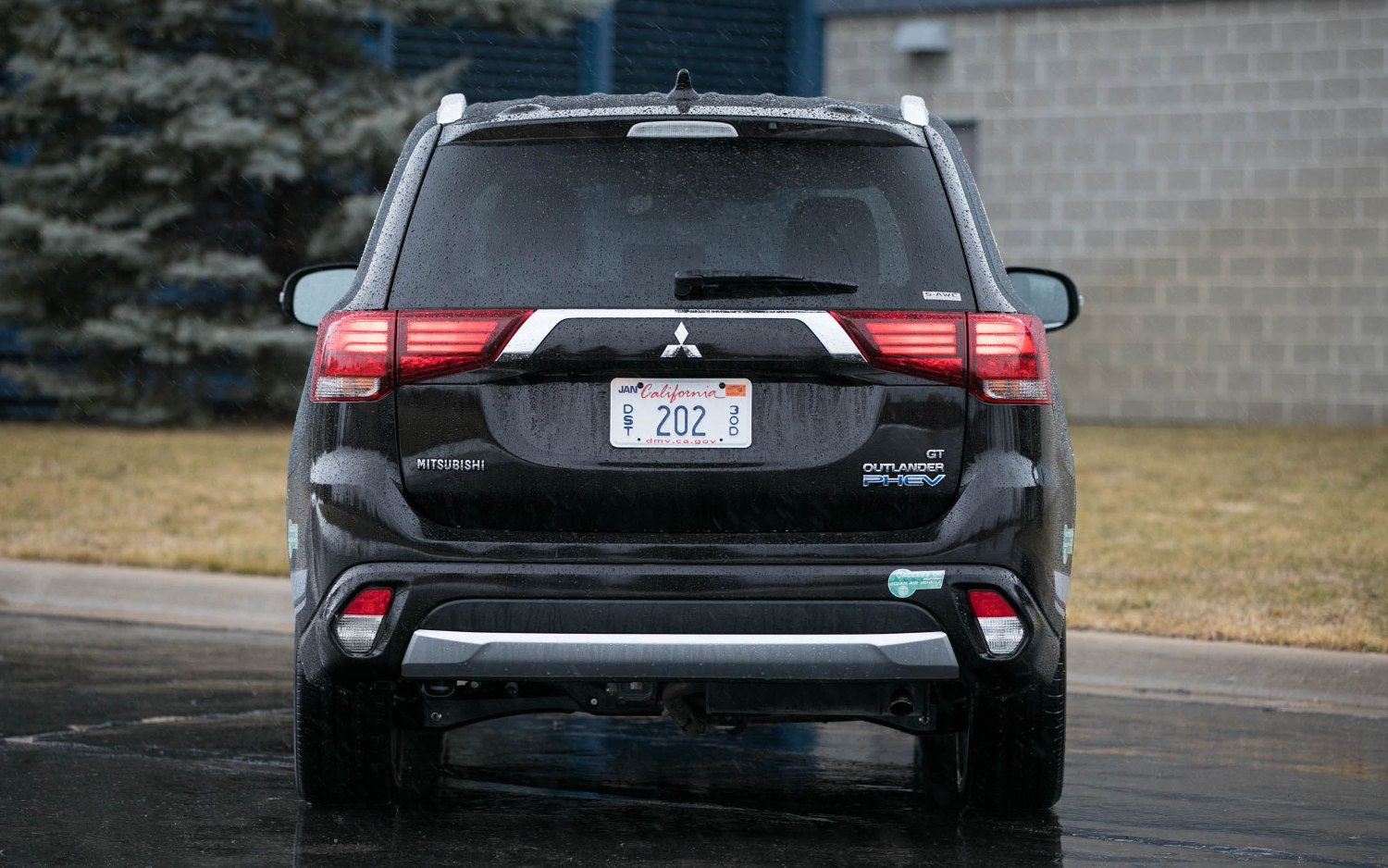
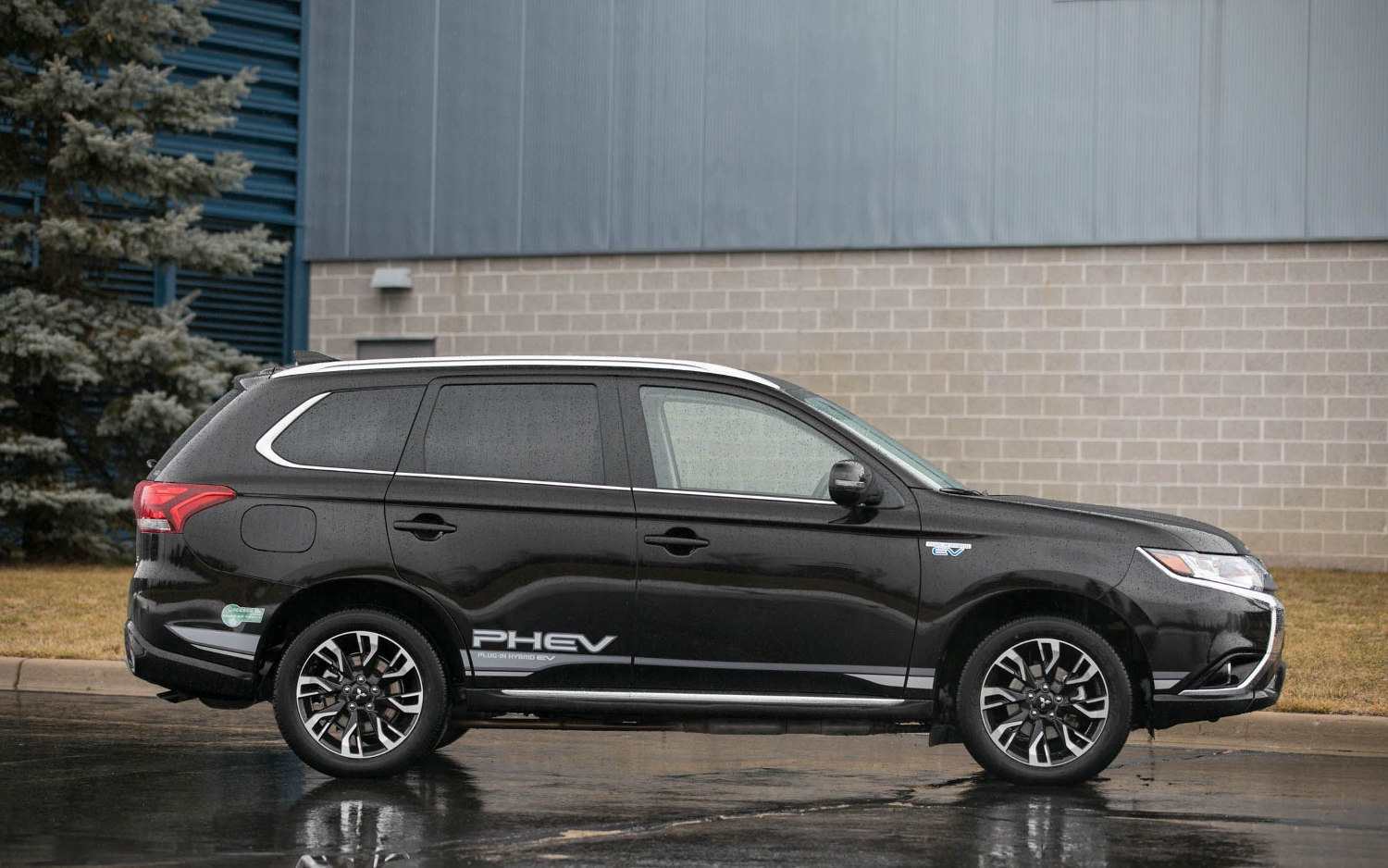
Although based on an existing design, the 2018 Mitsubishi Outlander PHEV is an all-new plug-in hybrid vehicle.We think it's worth springing for the GT trim once you figure in a standard federal tax rebate for plug-in hybrid vehicles.
PROS Delivers plug-in SUV utility without luxury SUV price Offers a generous list of standard features Sophisticated all-wheel drive offers stability on slippery surfaces Generous warranty coverage
CONS Limited Mitsubishi dealer network Lower ground clearance hinders off-road ability Regular fuel economy is underwhelming Small gas tank limits overall range
Mitsubishi’s technology flagship, the Outlander plug-in hybrid, has arrived in the United States nearly five years after it was originally due. The vehicle itself might look rather dated (as does the rest of the Outlander lineup), but the technology within is most definitely not.
Pros Drives electric (mostly), speedy fast charging, two AC outlets comfortable ride, quiet cabin.
Cons Antiquated design, queasy on the back roads, cheap-feeling cabin materials, off-canter engine revs.
The Mitsubishi Outlander PHEV is a roomy SUV that’s very economical for short journeys if you can plug it in to charge the battery – it’s just a shame it looks a bit drab and doesn’t drive that well
Pros Cheap to run on short journeys Quiet around town Roomy back seats
Cons Terrible infotainment system Unsettled on bumpy roads Drab interior
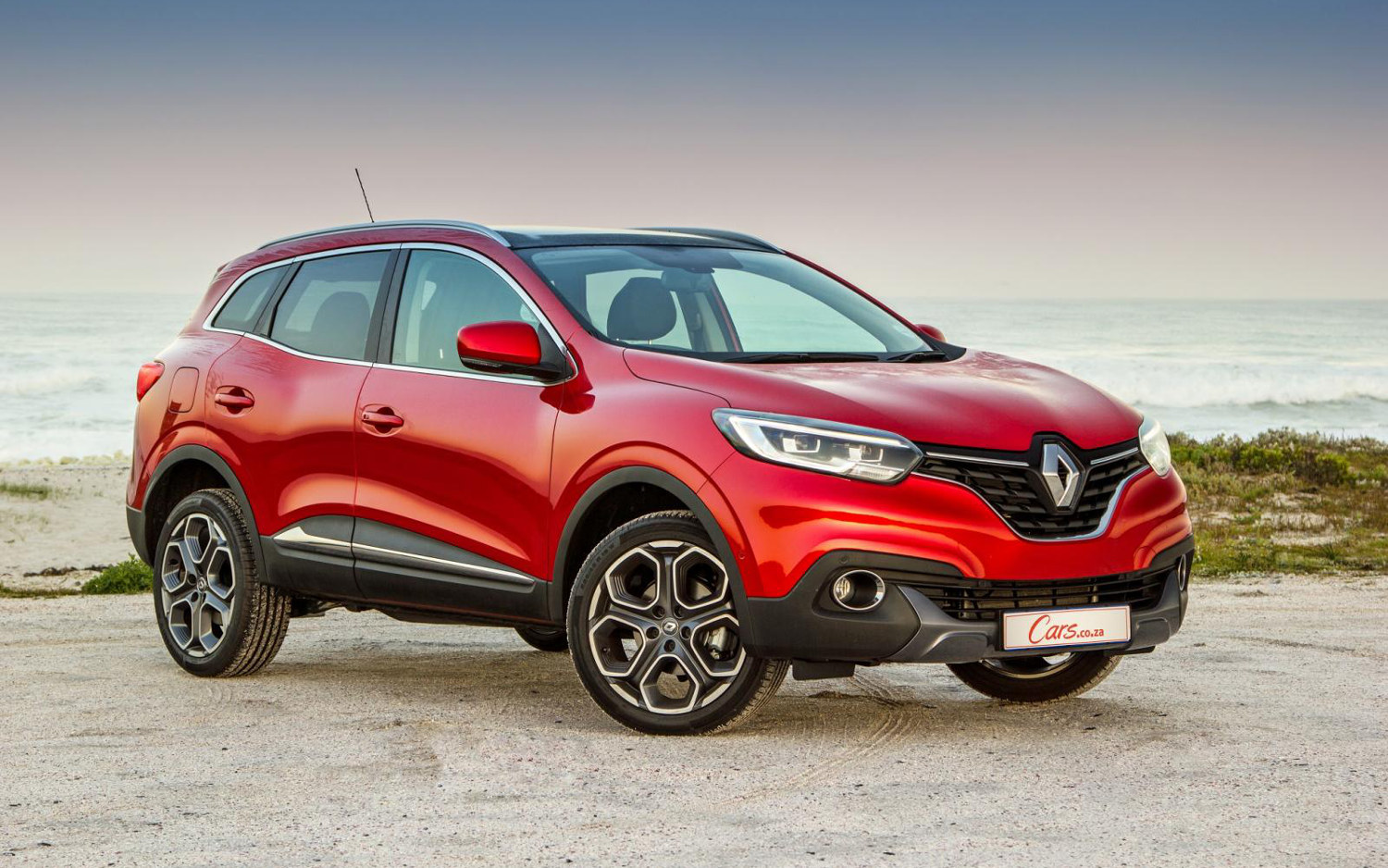
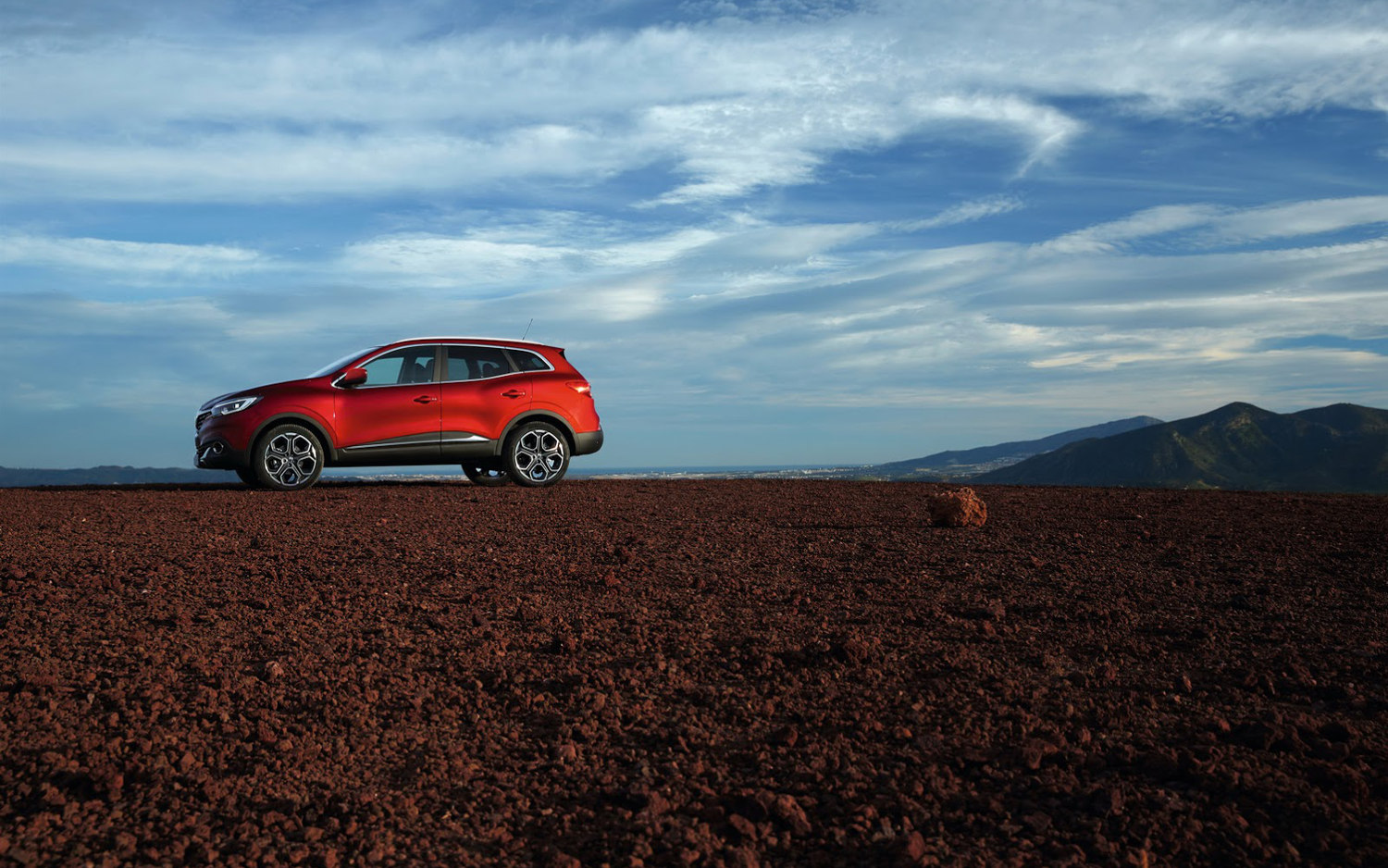
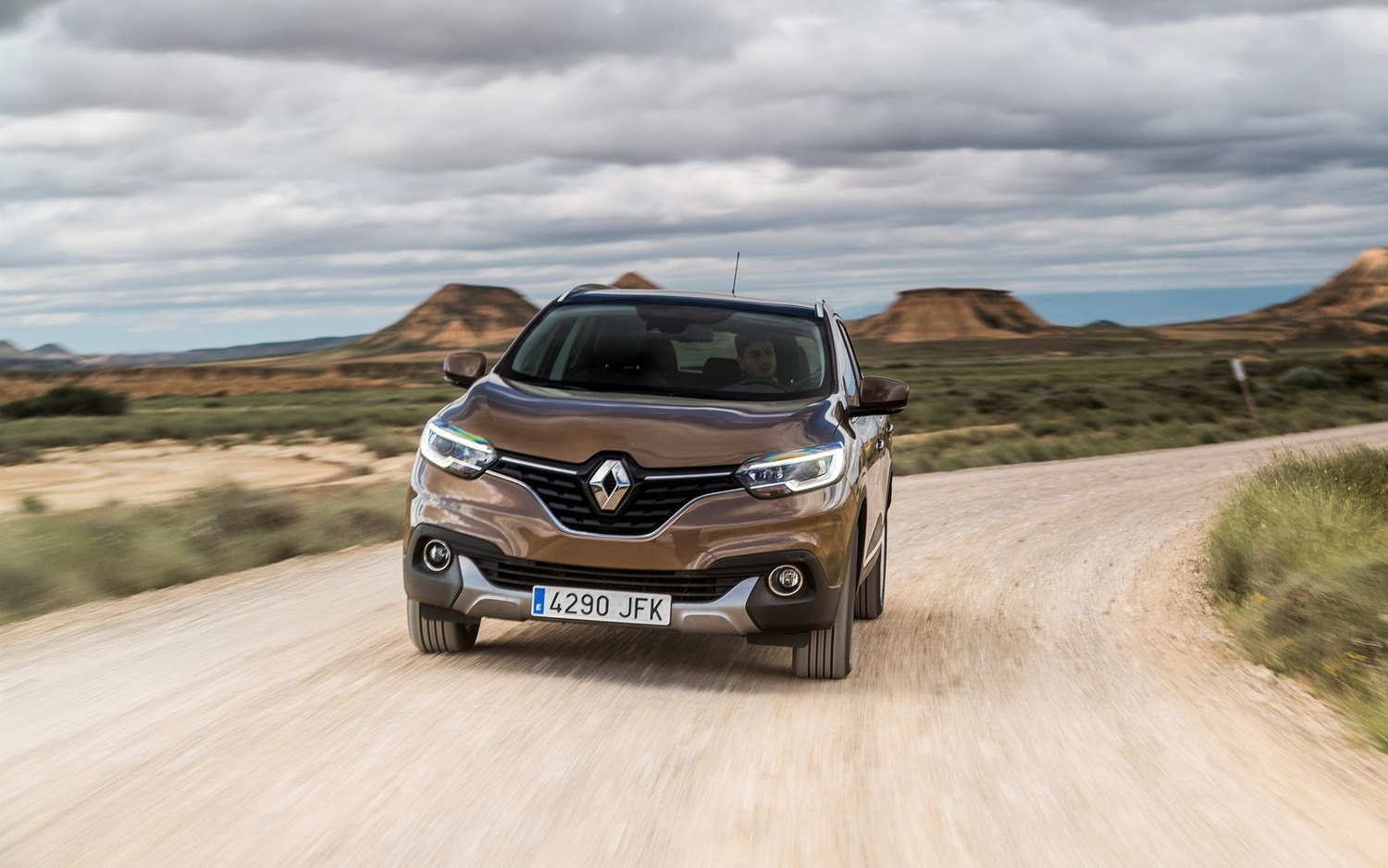
The Renault Kadjar is a stylish crossover that's based on the same platform as the Nissan Qashqai. But, while the Qashqai took undisputed class honours when it arrived in early 2014, the game has moved on, and the Renault equivalent betters it in almost every area. However, the Renault just falls short of the all round appeal of the SEAT Ateca. There's a single body style for the Kadjar, and it slots into the Renault range above the Captur. Both of these models will be joined by the larger Koleos SUV later in 2017. There are four trim levels to choose from: the entry-level, air con-equipped Expression+, the mid-spec Dynamique and Dynamique S, while at the top of the range is Signature trim. Cars in top-spec trim are expensive, but they do boast a generous amount of kit, including a Bose stereo, 19-inch alloy wheels, and touchscreen nav is included on Dynamique models and above. The Kadjar earned a five-star rating when it was tested by Euro NCAP, just like the Nissan Qashqai. All but the entry-level model has lane departure warning and traffic sign recognition as standard. Autonomous emergency braking, which will automatically apply the brakes if a collision is imminent, is an option on all trim levels.
The Renault Kadjar is a family crossover that not only rivals the Honda CR-V, Mazda CX-5 and Volkswagen Tiguan, but is also a worthy alternative to best-selling hatchbacks such as the Ford Focus and Volkswagen Golf. The Kadjar shares many parts with the Nissan Qashqai, but its body is a bit bigger. This means you get slightly more passenger space and a larger boot. The Renault’s interior also packs a high-tech infotainment system and an eye-pleasing dashboard.
Pros Competitive price Practical cabin Excellent fuel economy
Cons Just one petrol engine High-end models are expensive Sunroof reduces rear headroom
As a small SUV, the Kadjar is also a rival to the Kia Sportage, Seat Ateca and Skoda Yeti, but it's the aforementioned Nissan that it has most in common with, because it uses the same platform and engines. This means Kadjar buyers can choose from turbocharged 1.2-litre petrol and 1.5- and 1.6-litre diesels, although the 1.6 is the only option if you want four-wheel drive. In terms of interior space, the Kadjar and Qashqai are closely matched, and both offer a high-riding driving postion that gives you a good view down the road. However, the Kadjar's styling is closer to that of its smaller SUV sibling, the Renault Captur.