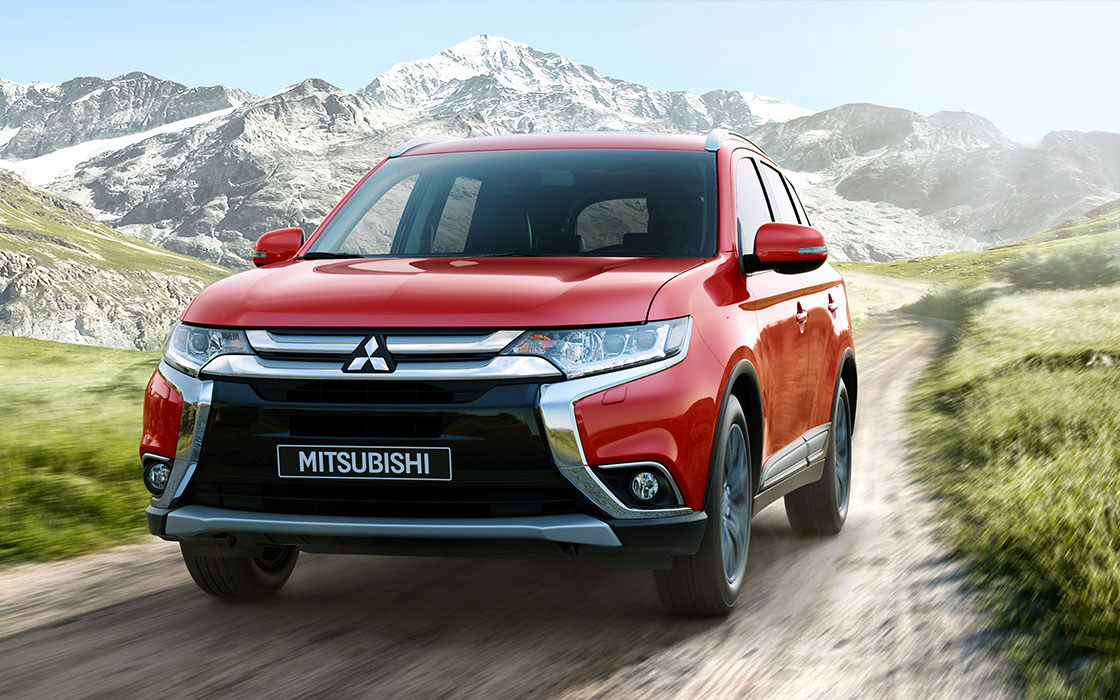
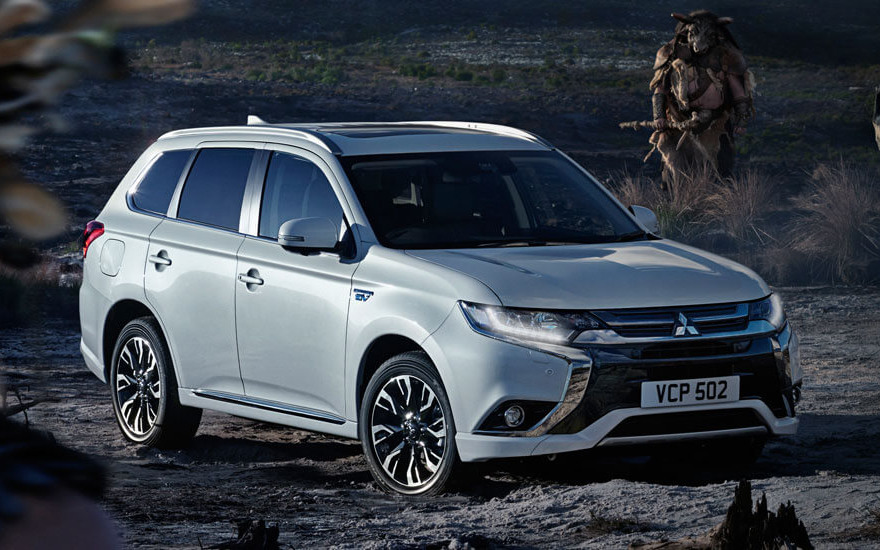
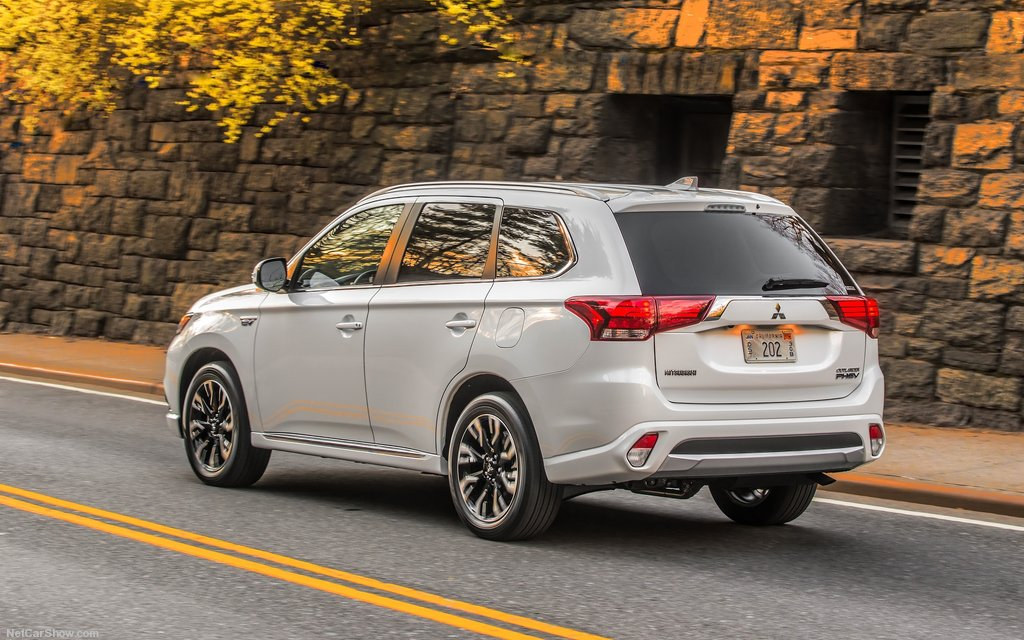
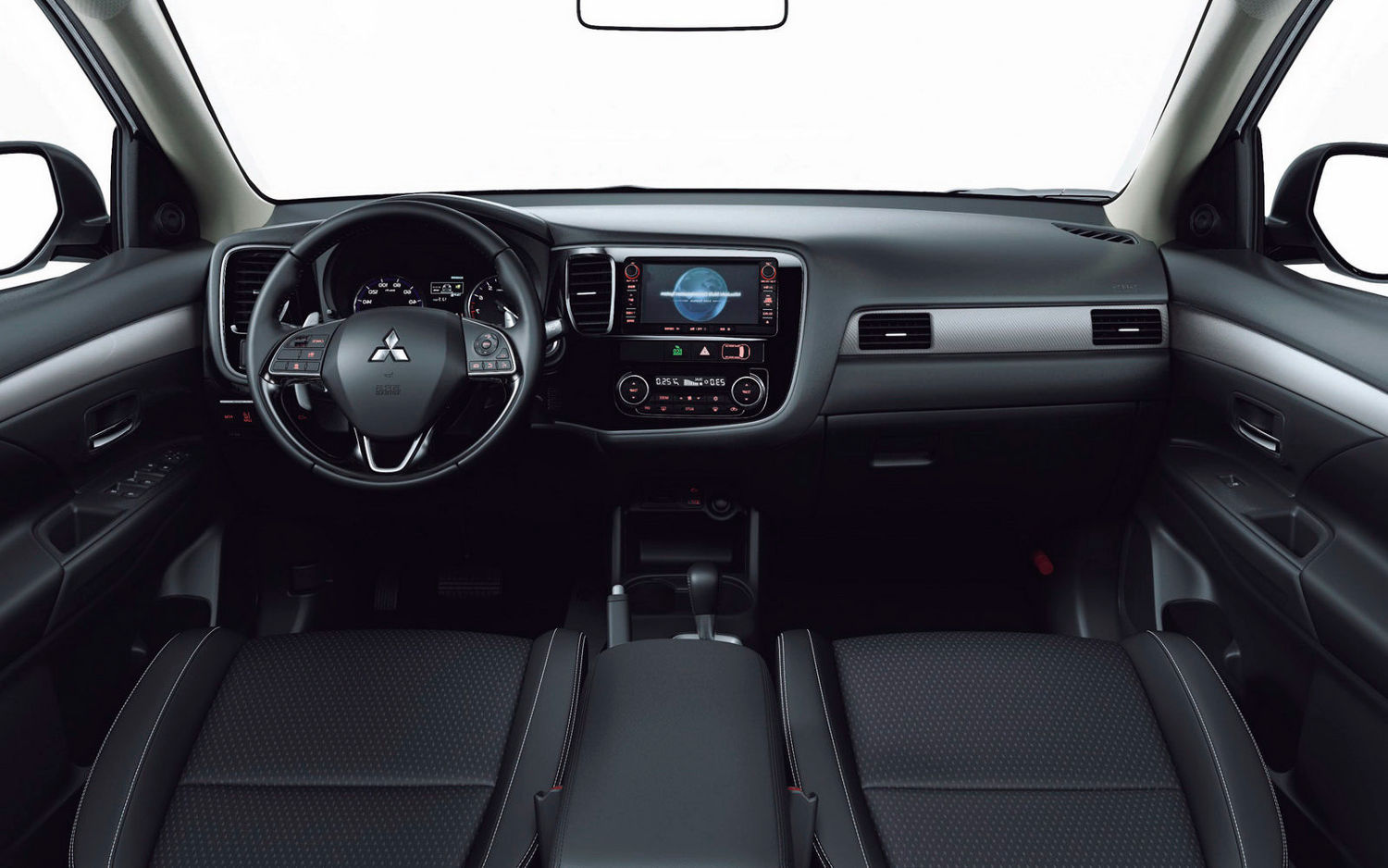
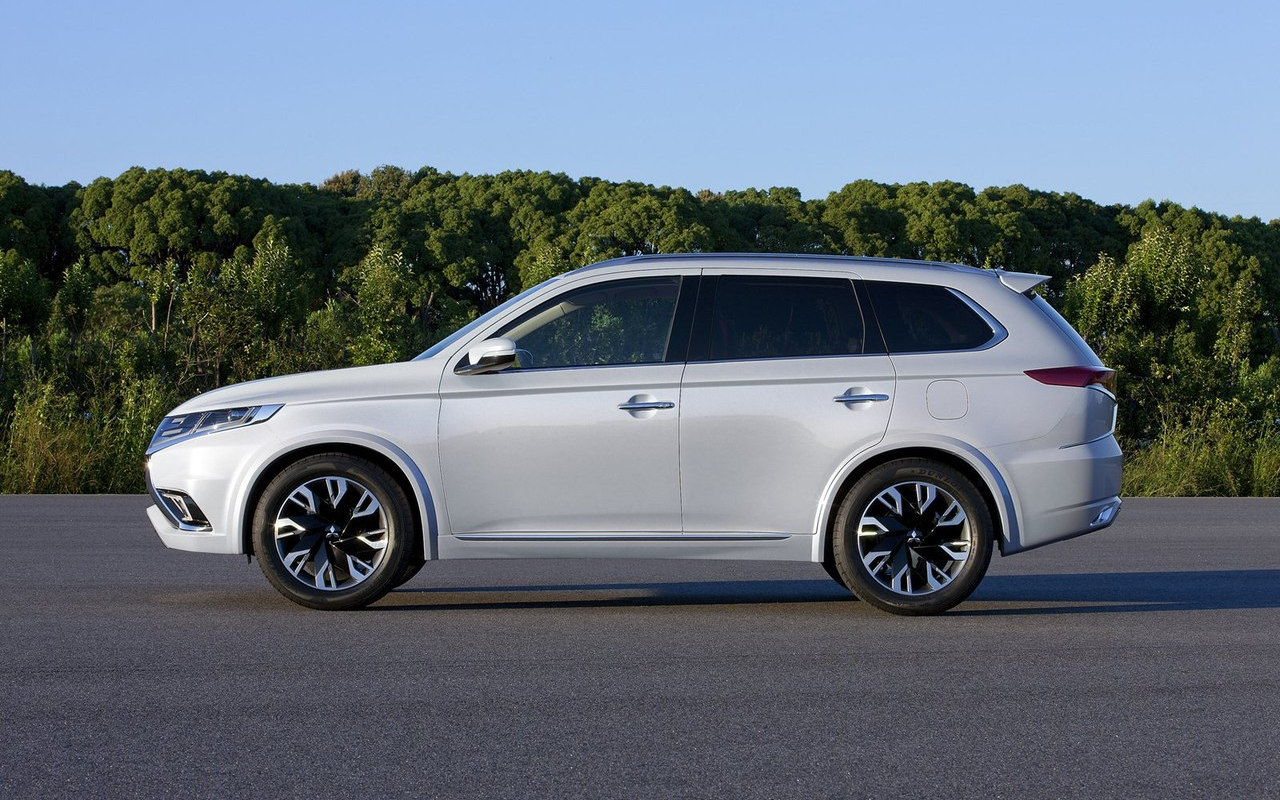
The Mitsubishi Outlander PHEV is a company car tax marvel. Although it’s based on the regular diesel-engined version of the Outlander, this PHEV model is a petrol-electric hybrid, which means ultra-low CO2 emissions and low benefit-in-kind car tax. Essentially it can be driven by either its naturally aspirated 2.0-litre petrol engine, or its electric motors powered by its batteries alone, or a combination of the two. Those batteries can be charged on the move, or the PHEV can be plugged into the mains. As a result, against conventionally powered rivals such as the Skoda Kodiaq and Nissan X-Trail, the Outlander will potentially save company car taxpayers thousands of pounds in tax payments over their ownership. Because it can run on pure electric too, many people will be able to charge at home and travel to work and back using no fuel at all.
The 2017 Mitsubishi Outlander PHEV has been revised to provide better driveability, better handling, increased fuel efficiency and, with the high-grade Exceed, all the safety kit you need.
Pros Country ride and bump absorption is now excellent Cabin retains a premium, yet value-for-money feel Seamless transition between power modes under all driving conditions
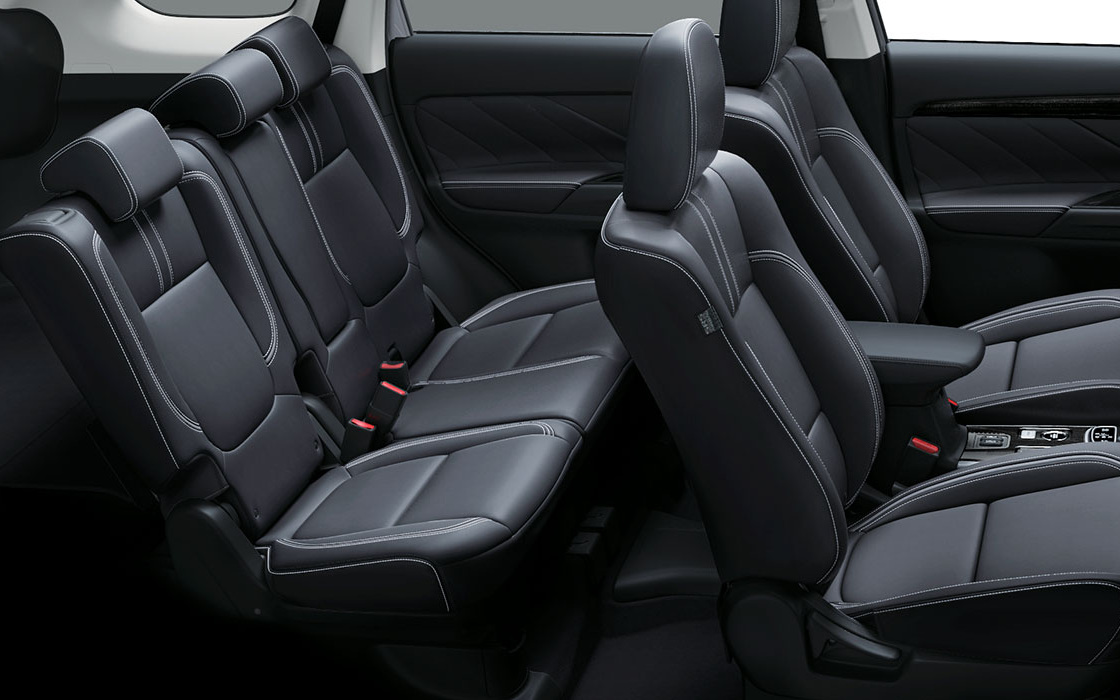
Cons Urban ride can be a little sharp at times Price has crept up, putting it even further away from regular Outlander No seven-seat option is an opportunity missed
The Mitusbishi Outlander PHEV is more than just a flag waver for plug-in hybrid vehicles. It is a marker in the sand for the Japanese car maker. Though the on-road experience may not be thrilling, the Outlander PHEV is very much the equal of other medium SUVs: comfortable to ride in, quieter than most traditional internal combustion competitors, and missing none of the space and flexibility that make SUVs so popular. Day-to-day running powered by electricity and the freedom to venture well beyond city limits on petrol power make the Outlander PHEV a flexible family choice, and the lack of oddball aero styling means there's no chance of being branded a fanatical eco-warrior - all of which makes the Outlander PHEV an enticing, if slightly pricey, prospect.
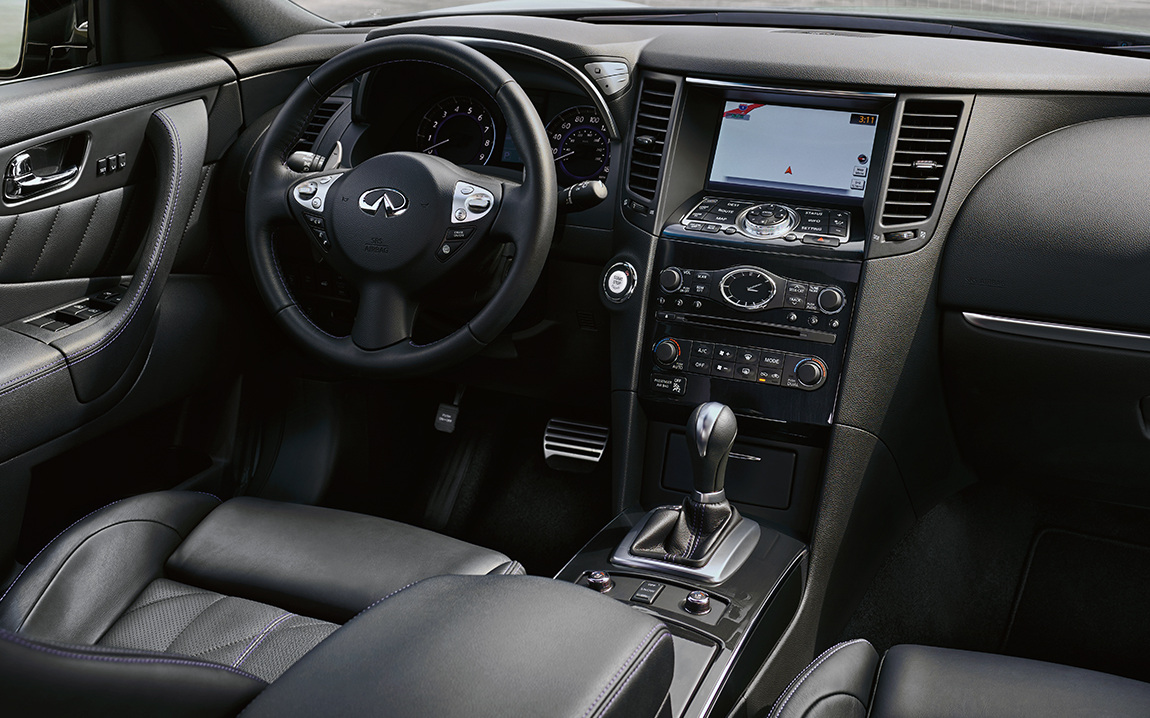
The 2017 Infiniti QX70 ranks 17 out of 22 Luxury Midsize SUVs. The 2017 Infiniti QX70 is all about driving dynamics, offering powerful engine performance and sharp handling. However, you won't get the rear-seat or cargo space that many other SUVs offer. Though tech features are user-friendly, the interior design looks dated compared to rivals.
Pros Powerful engine Engaging handling User-friendly infotainment system
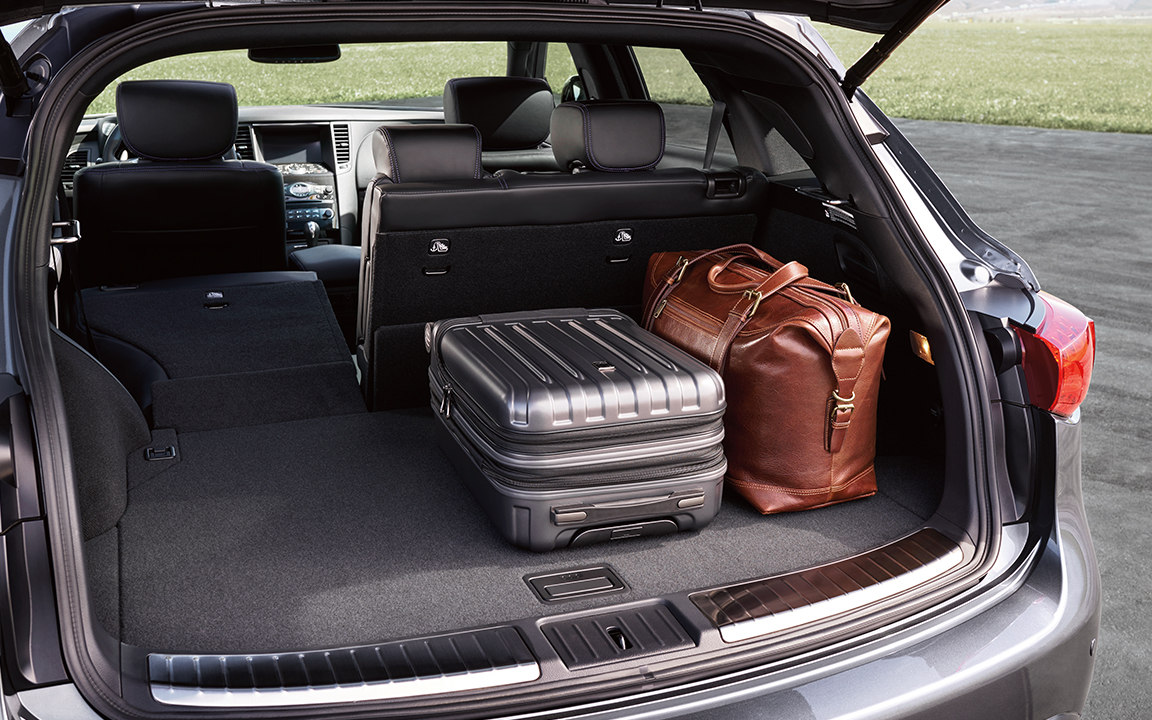
Cons Below-average cargo capacity Cramped rear seats Some outdated tech features and design touches
A new Limited package replaces last year's Deluxe Touring option and adds some cosmetic upgrades, but otherwise the QX70 returns unchanged. The 2017 Infiniti QX70 is a performance SUV that gives you more sport than utility. It also has unique styling and a luxurious interior. But after several years on the market, it's beginning to show its age against newer competitors.
Pros Sharp handling that makes it feel more like a sport sedan than a tall SUV Plenty of passing power from the standard V6 engine Well-trimmed interior has high-quality materials throughout.
Cons Less forgiving over rough surfaces than most luxury SUVs Rear passenger and cargo space are small for the class Technology interface is noticeably dated compared to newer competitors Only one engine option offered.
It's starting to look and feel dated, but the QX70 provides a healthy dose of thrills and, surprisingly, value. Formerly called the FX, the 2017 Infiniti QX70 makes some deliberate sacrifices for style and performance to be one of the most driver-focused crossovers available. It's certainly dated up against fresher rivals, but the QX70 focuses instead on delivering excellent driving dynamics in a way matched by few other vehicles of its ilk.
Pros Terrific chassis Flexible engine and transmission Styled like nothing else
Cons Cramped interior Poor fuel economy Expensive safety options