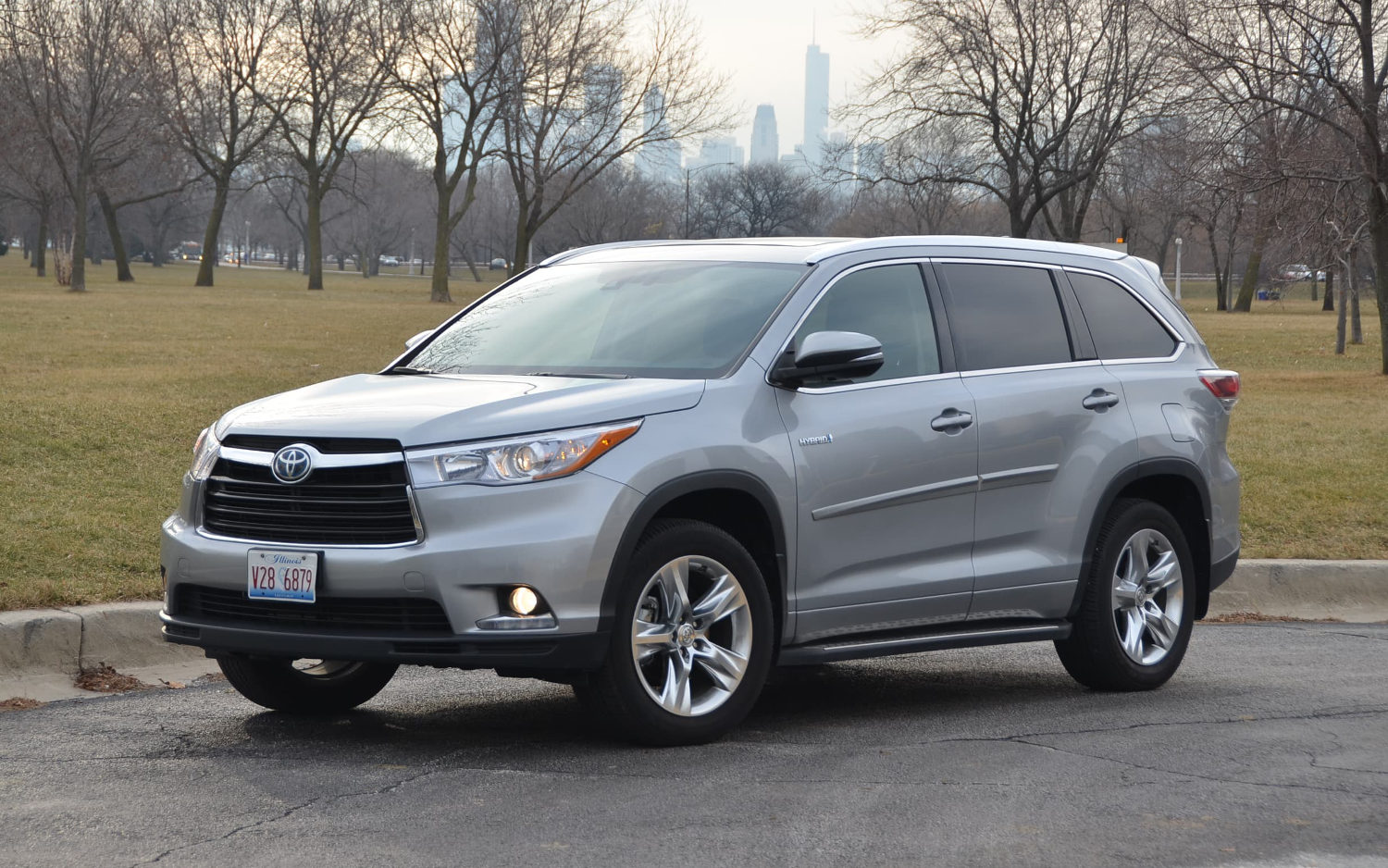
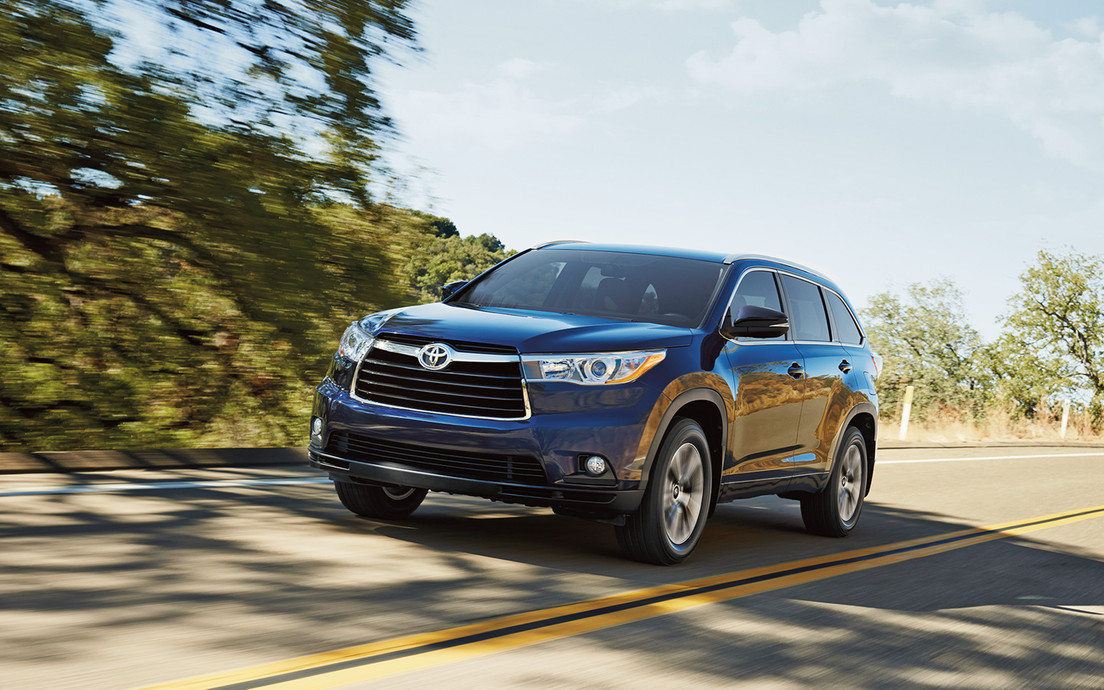
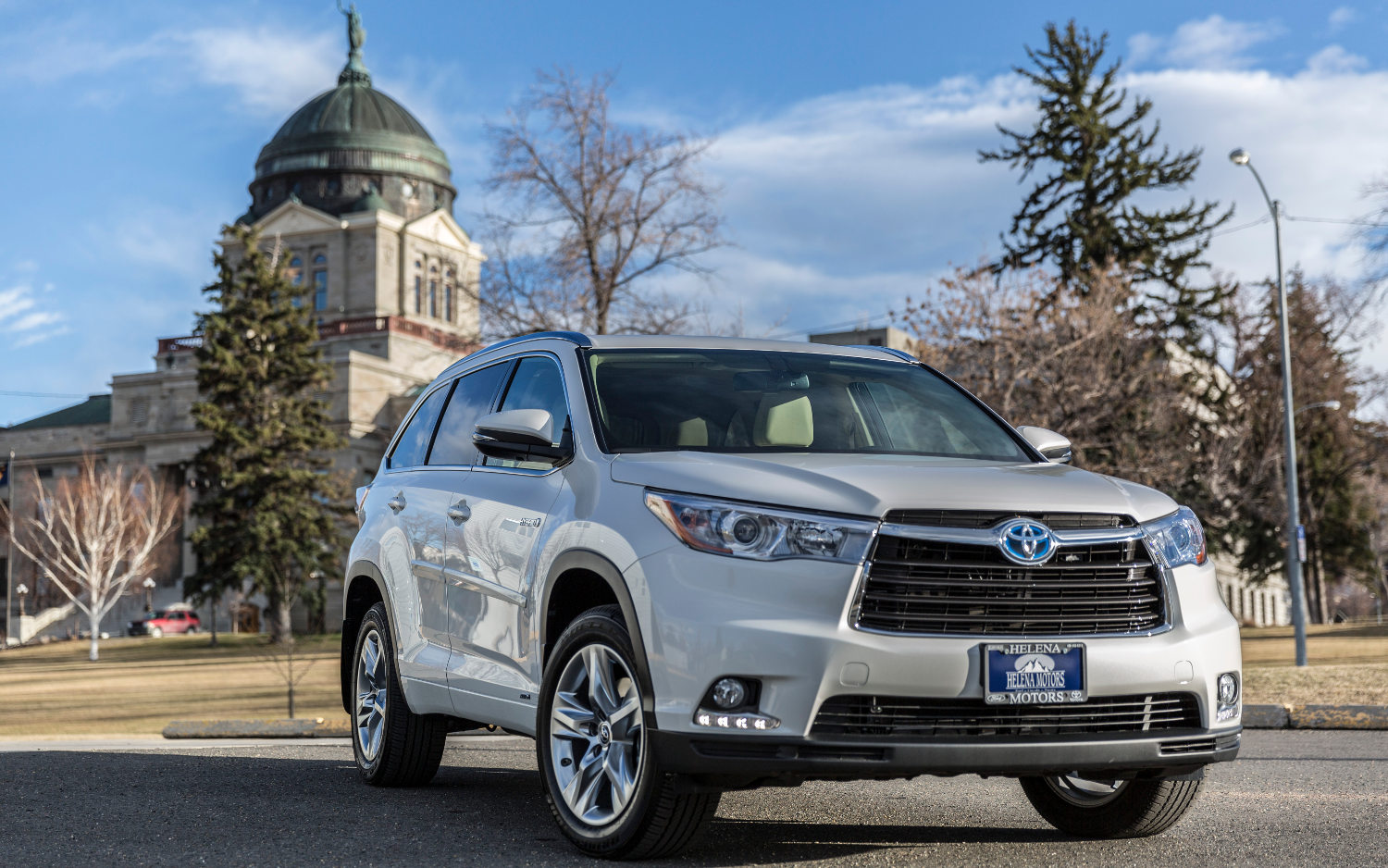
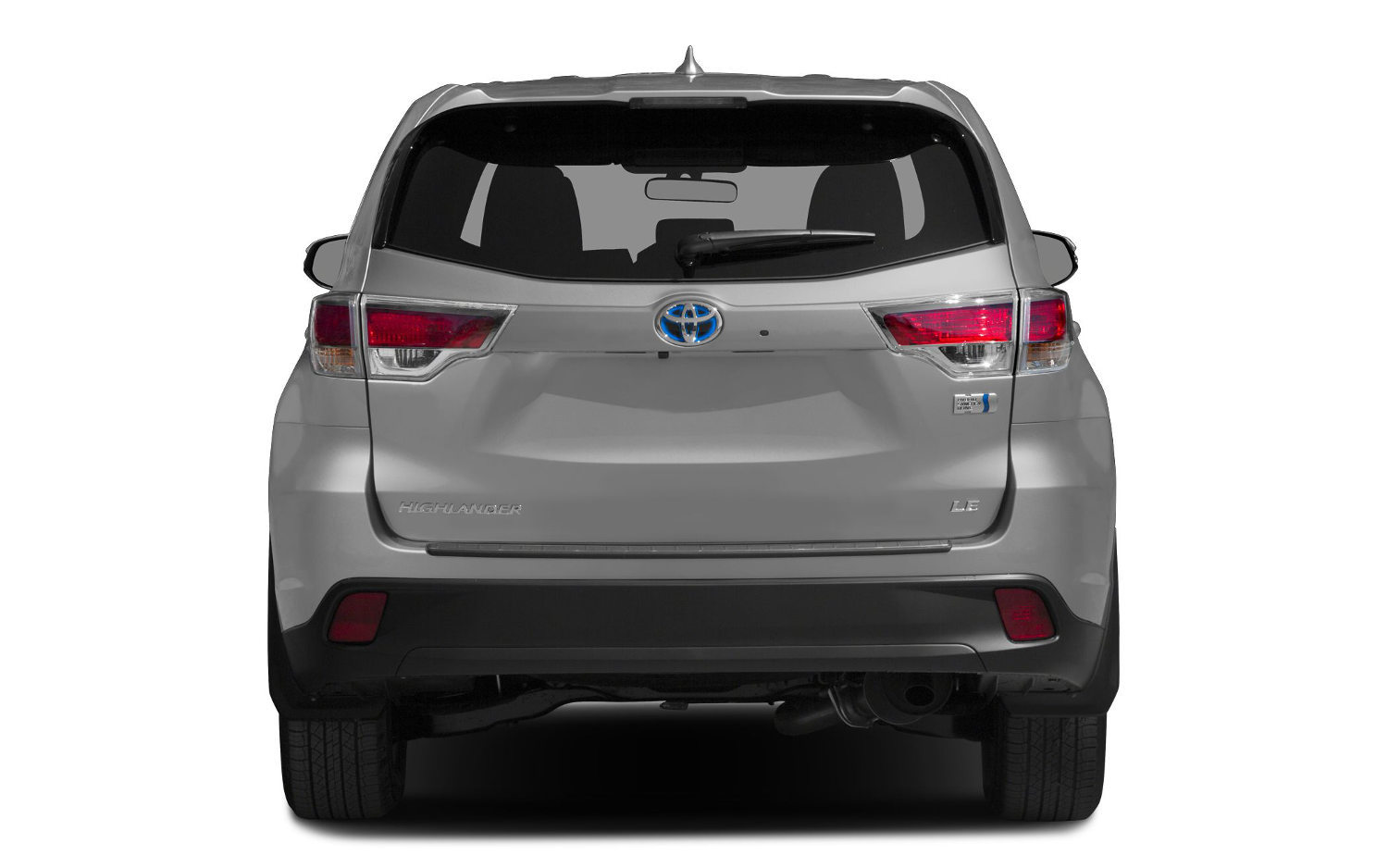
Comfortable and pleasing to drive, the 2016 Toyota Highlander is a no-brainer pick for a three-row family crossover. It also earns our top rating
Regardless of trim level, the Highlander stands out by virtue of its spacious and comfortable cabin. Second-row seating is a choice of three-across bench seating or captain's chairs with a side table. The refined V6 and smooth six-speed automatic transmission deliver effortless acceleration and make the Highlander one of the quickest big crossovers around. There are also plenty of contemporary tech tools and smartphone-integrated services, anchored by an 8-inch high-resolution touchscreen display in the higher trim levels
The Highlander packs enough goodness that we've made it one of our top picks for a three-row crossover this year. But it's not the only model worth checking out. The Highlander's main rival, the Honda Pilot, is fully redesigned this year and is more upscale and carlike than in prior years. The Ford Explorer is also updated this year and offers a similar range of prices and features plus a strong turbocharged V6 option. There's also the handsome-looking Dodge Durango or the three-row Hyundai Santa Fe, the latter of which stacks up nicely against the Highlander across the board. All of them are competent family vehicles, but the Highlander certainly earns its well-deserved reputation for all-around goodness pros Refined interior appointments Quiet, compliant ride Smooth and strong V6 engine Seating for up to eight, functional cabin design.
cons Lackluster four-cylinder engine Third-row seat isn't as roomy as those in some other top rivals
The 2016 Toyota Highlander isn't all that exciting to look at or to drive, but it's very versatile and handsome enough to be a great minivan alternative
The Highlander may look a little more rugged than it has in the past; yet it's still more closely related to Toyota's cars than to its rugged trucks like the 4Runner. The Highlander stands as a more civil, family-friendly alternative to the 4Runner or a more spacious alternative to the RAV4
In its latest generation, the Highlander lineup has become a little more truck-influenced from the outside, with the maw-like grille and exaggerated wheel wells and sills offering more than a faint hint of rugged cues. Inside, the cabin is all car, although there are a few fine details borrowed from Toyota's trucks, some Teutonic-themed dash action, and a pleasing jumble of lines and textures.
Pros Wide range of powertrains Flexible second row Easy third-row access Good connectivity
Cons Design is better, but still bland Just-adequate powertrains Somewhat busy dash design Hybrid only delivers if you drive gingerly
The Toyota Highlander's reasonable price and ample list of advanced safety features make it one the best value propositions in the class. You won't find any other midsize SUV at its roughly $30,000 price point with this many active safety features. On top of that, its interior is made with upscale materials, and the ride is hushed
the Highlander's driving dynamics are comfortable but dull. It’s base four-cylinder engine is unusual for the class, as most rivals have a standard V6. You can add a V6 engine to the Highlander, but you’ll pay about $1,400 to do so. With its base engine, the Highlander’s fuel economy is above average for the class. You’ll get even better gas mileage with the optional V6 engine. If you want a better driving experience and a more potent engine in the base model, look to the Honda Pilot. There’s a modest $35 difference in price between it and the Highlander, and the Pilot handles much better through turns. You’ll also get the V6 engine standard – just not the active safety features. And if you’re a fan of Apple CarPlay or Android Auto, the Pilot has them in all but the base trims. You can’t get either with Toyota – at any trim level
Pros Lots of standard active safety features Above-average fuel economy Comfortable and quiet on the highway
Cons Dull performance and handling Cramped third-row seat
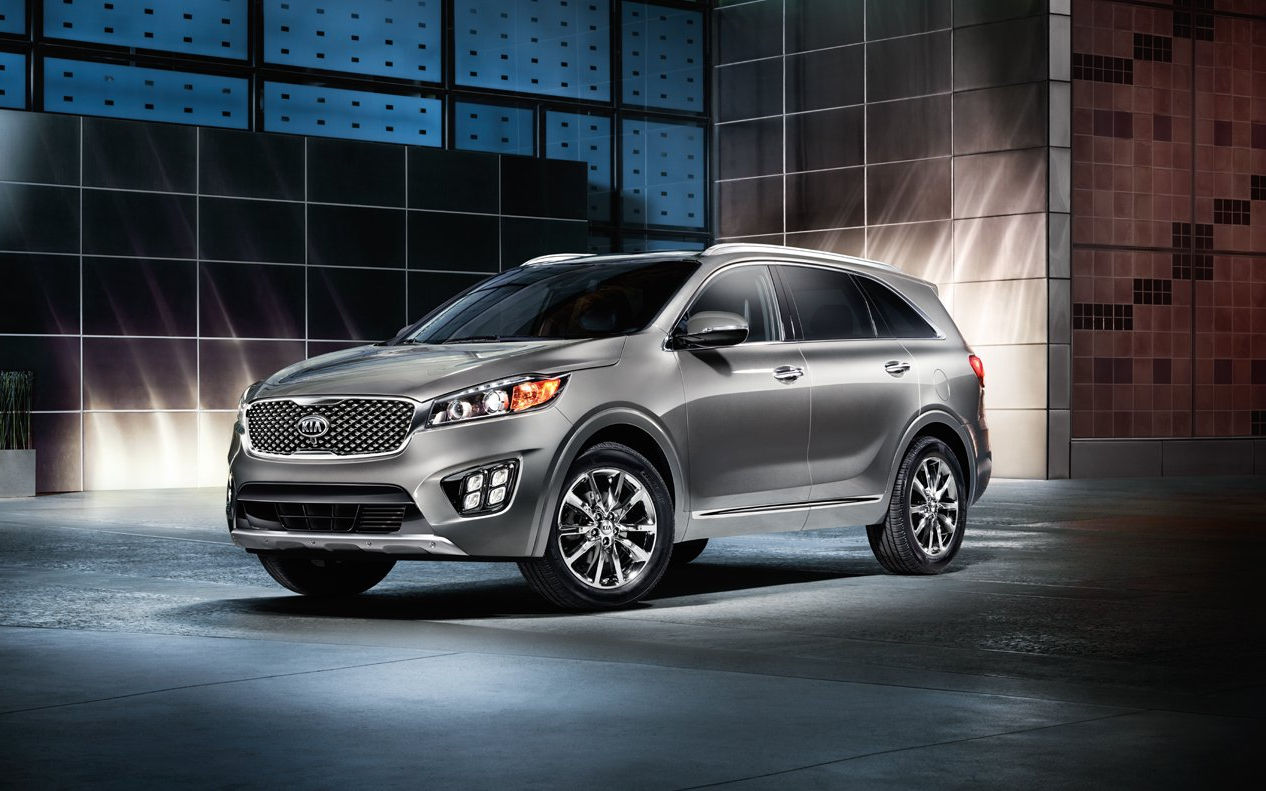
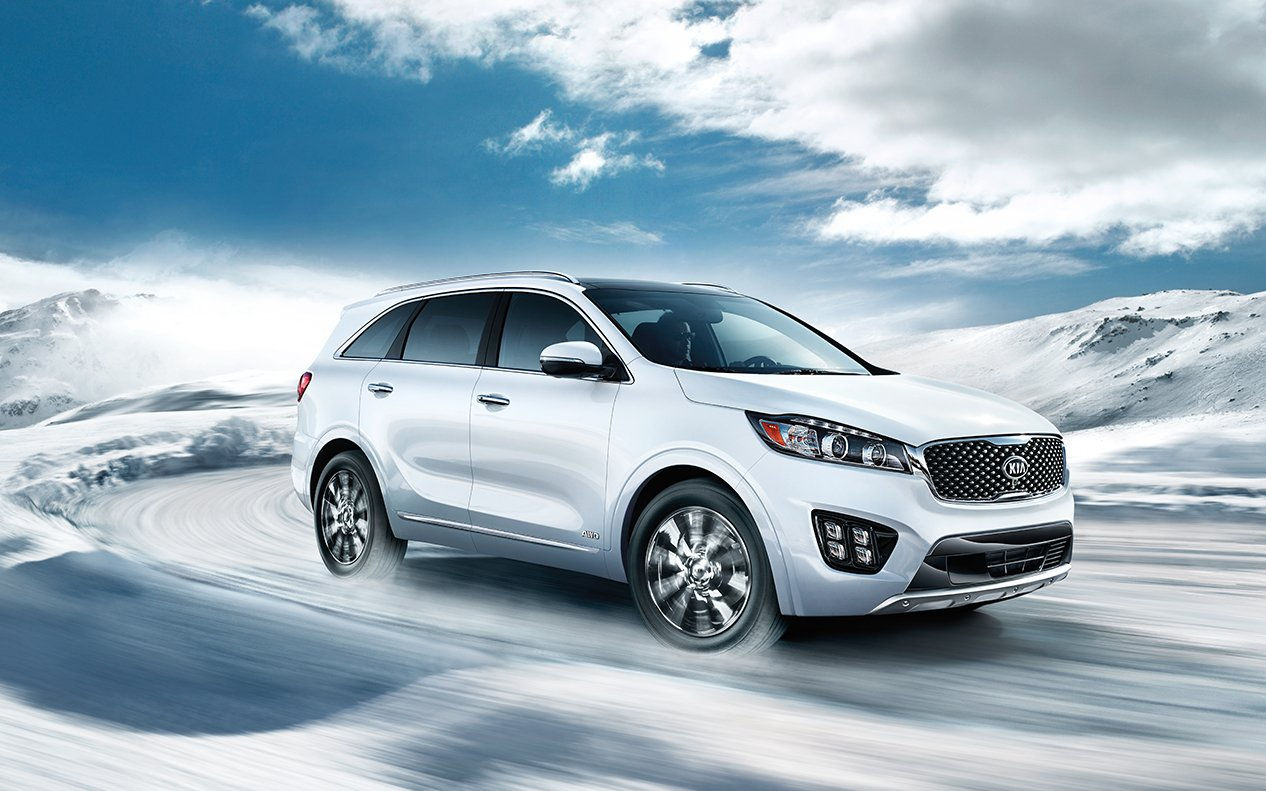
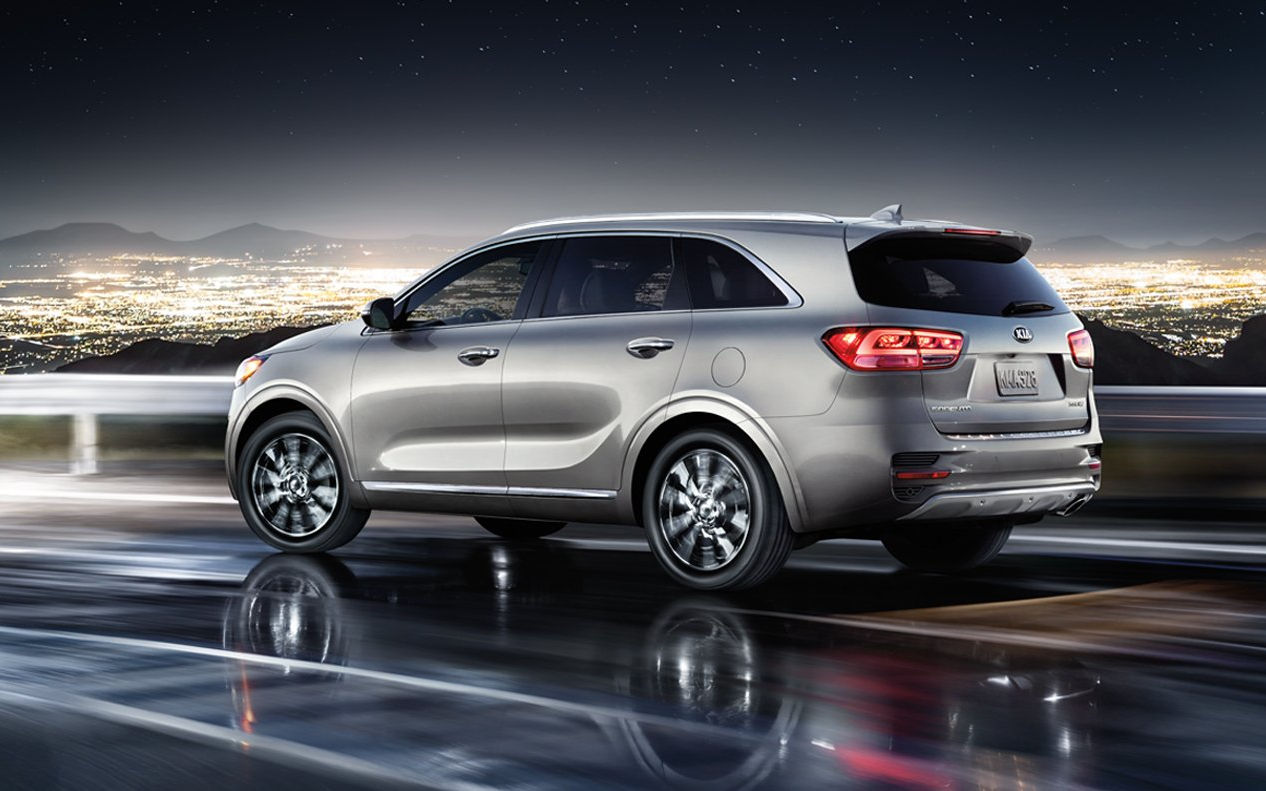
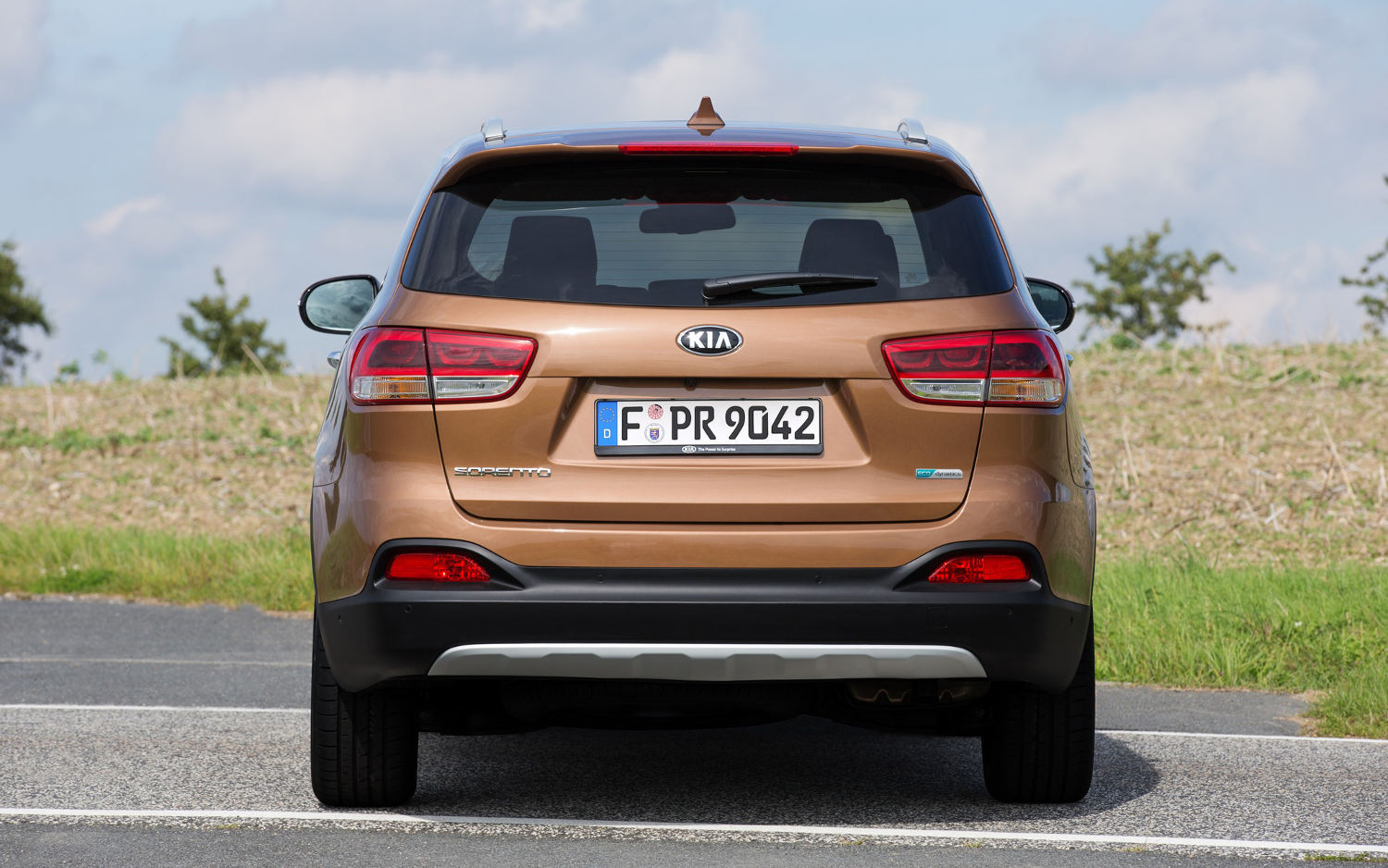
The 2017 Kia Sorento stays true to its high-value roots, but it's grown up in refinement and comfort. Kia Sorento received a full redesign, with completely new sheet metal, a new body structure, a newly available turbocharged inline-4 engine, plus modest gains in interior space and major gains in general cabin comfort and ride quality.
Pros Tight, "vault-like" feel Generous feature set Responsive, economical 2.0T Quiet cabin
Cons Short, bench-like second-row seats Can't get a third-row seat and turbo-4 engine together Active-safety features not widely available
The 2017 Kia Sorento ranks 1 out of 18 Midsize SUVs. The 2017 Kia Sorento is a versatile crossover that rates highly in a competitive class thanks to a powerful V6 engine, many user-friendly tech features, and the availability of third-row seats. It also has excellent safety and reliability ratings, and its low starting price makes it a great value.
Pros Easy to use infotainment system Potent V6 engine Stable handling Quality interior
Cons Weak standard engine Limited options for base model
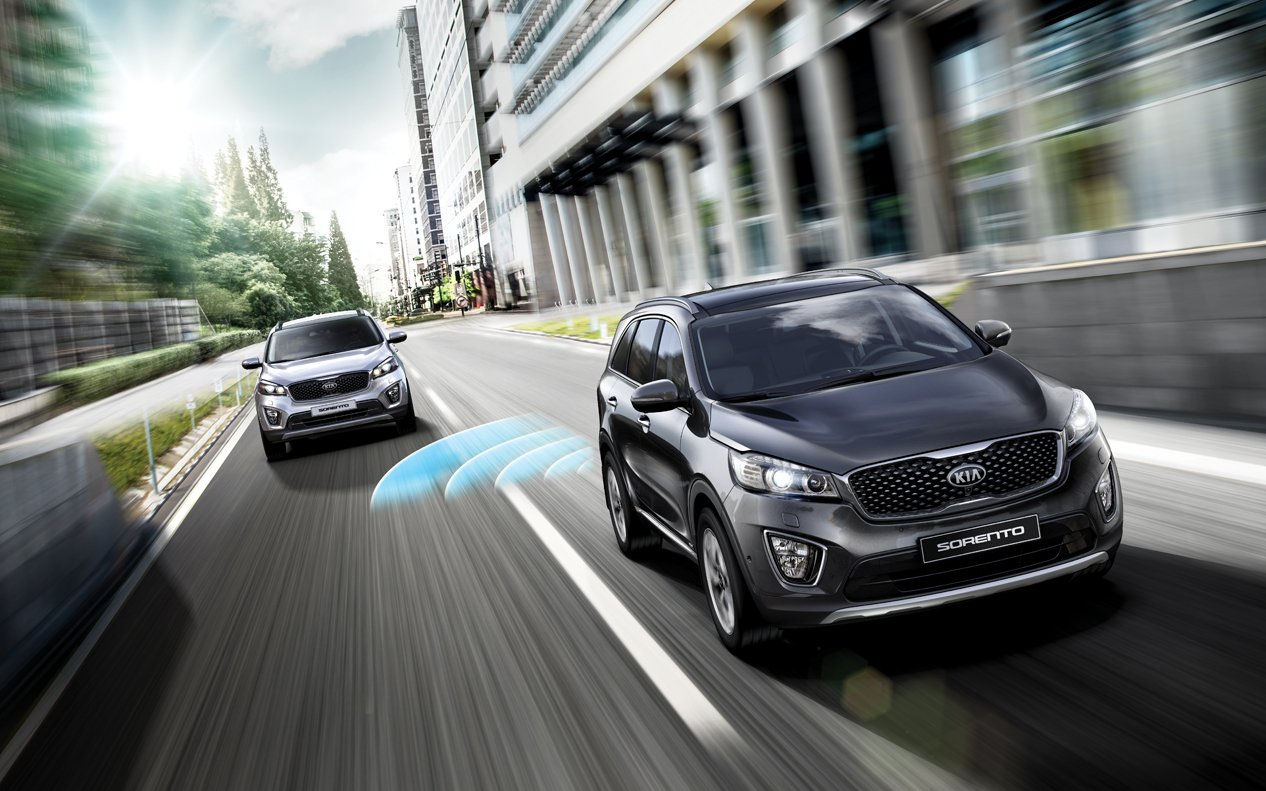
The 2017 Sorento can now be had with Apple CarPlay and Android Auto smartphone integration, along with a couple of new safety features (adaptive headlights and automatic emergency braking). Also, the EX 2.0T gets standard shift paddles, but the SX Limited is no longer offered with the 2.0T engine.
Pros Controls are easy to operate Cabin is well-made and attractive Second-row seats are versatile and comfortable Strong value proposition Excellent warranty Top crash-test scores.
Cons Turbo engine isn't as punchy or efficient as expected Most seven-passenger competitors offer more interior space.