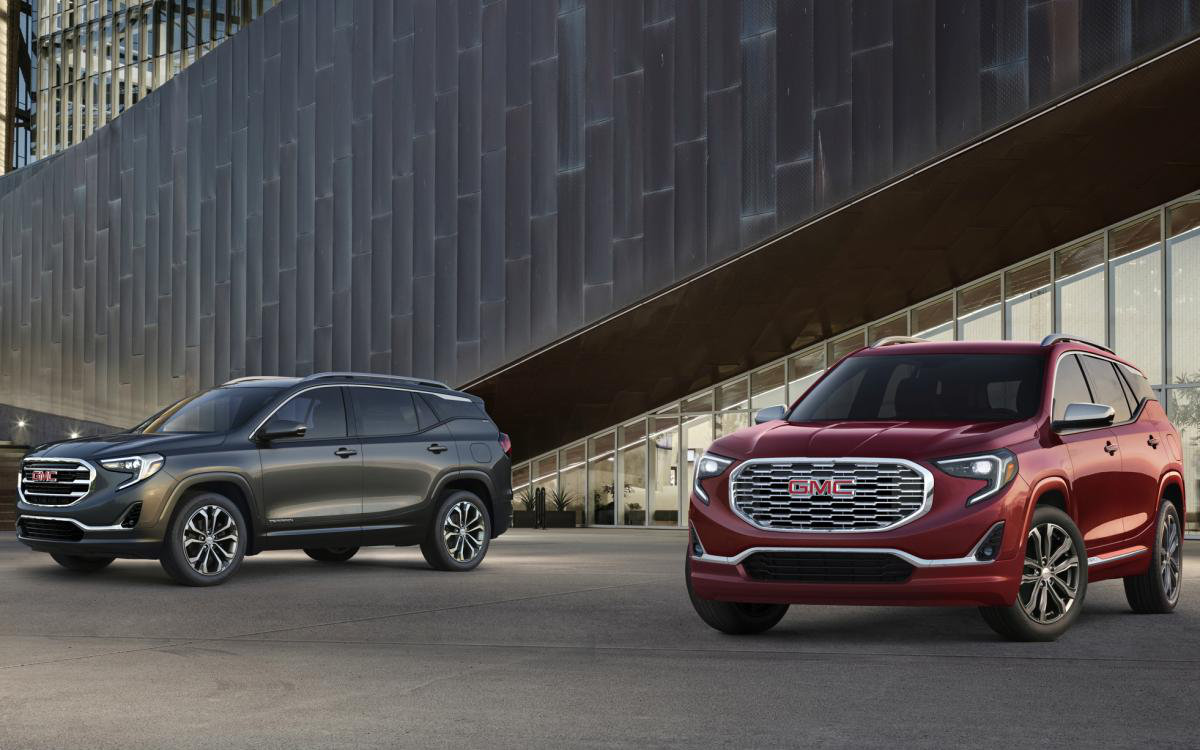
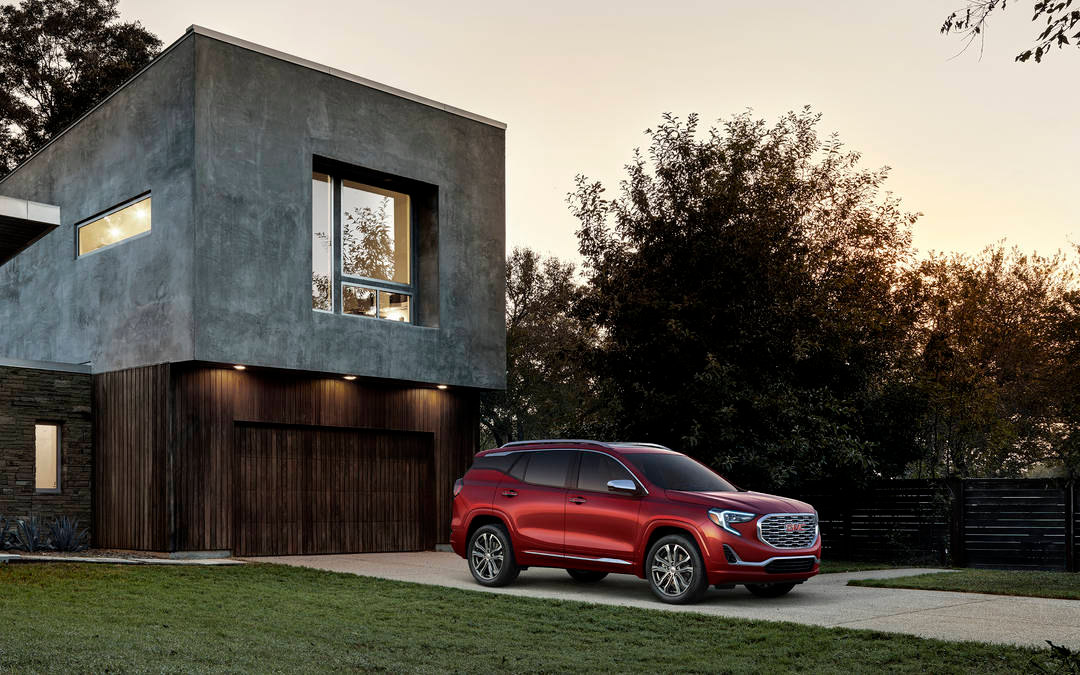
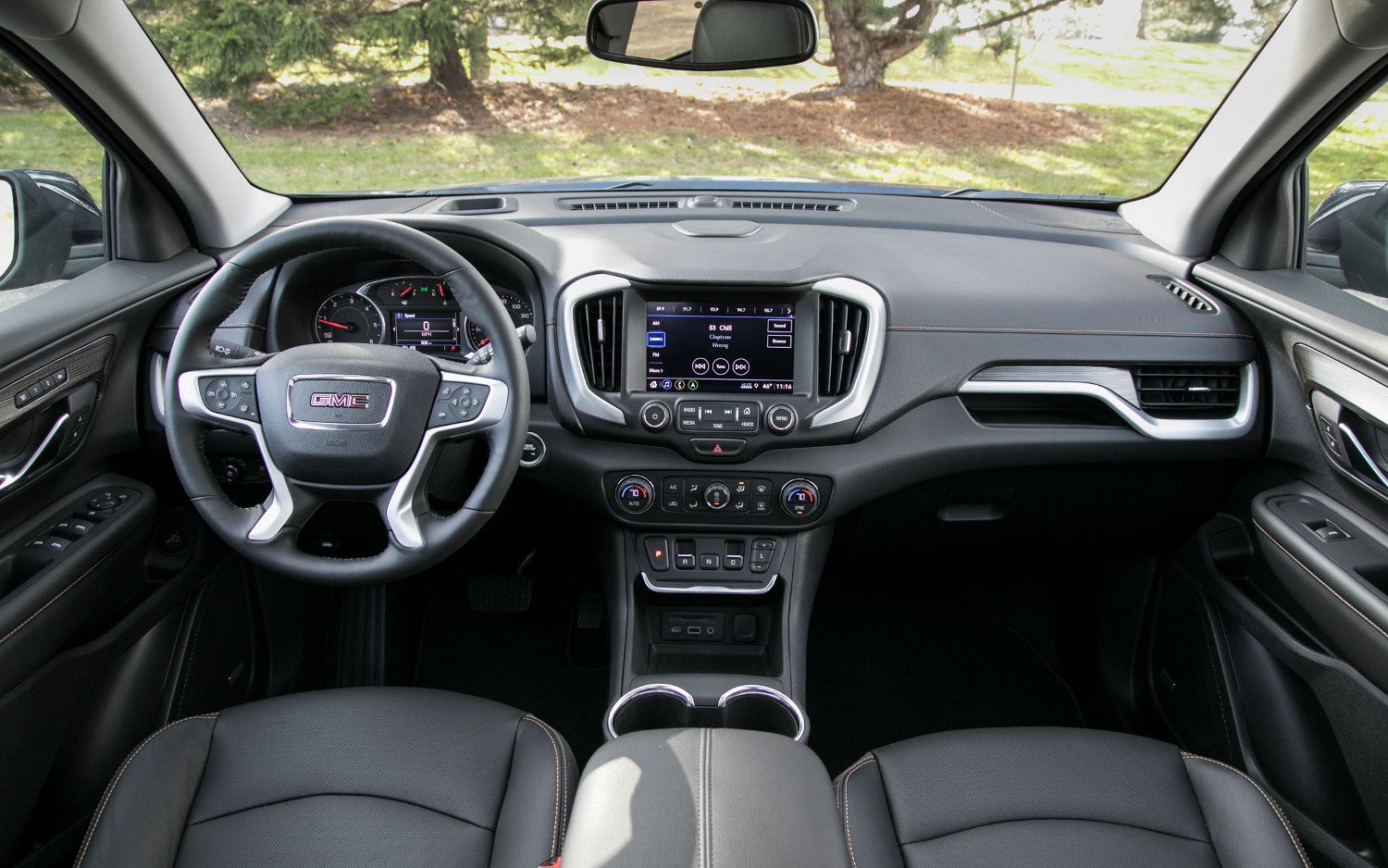
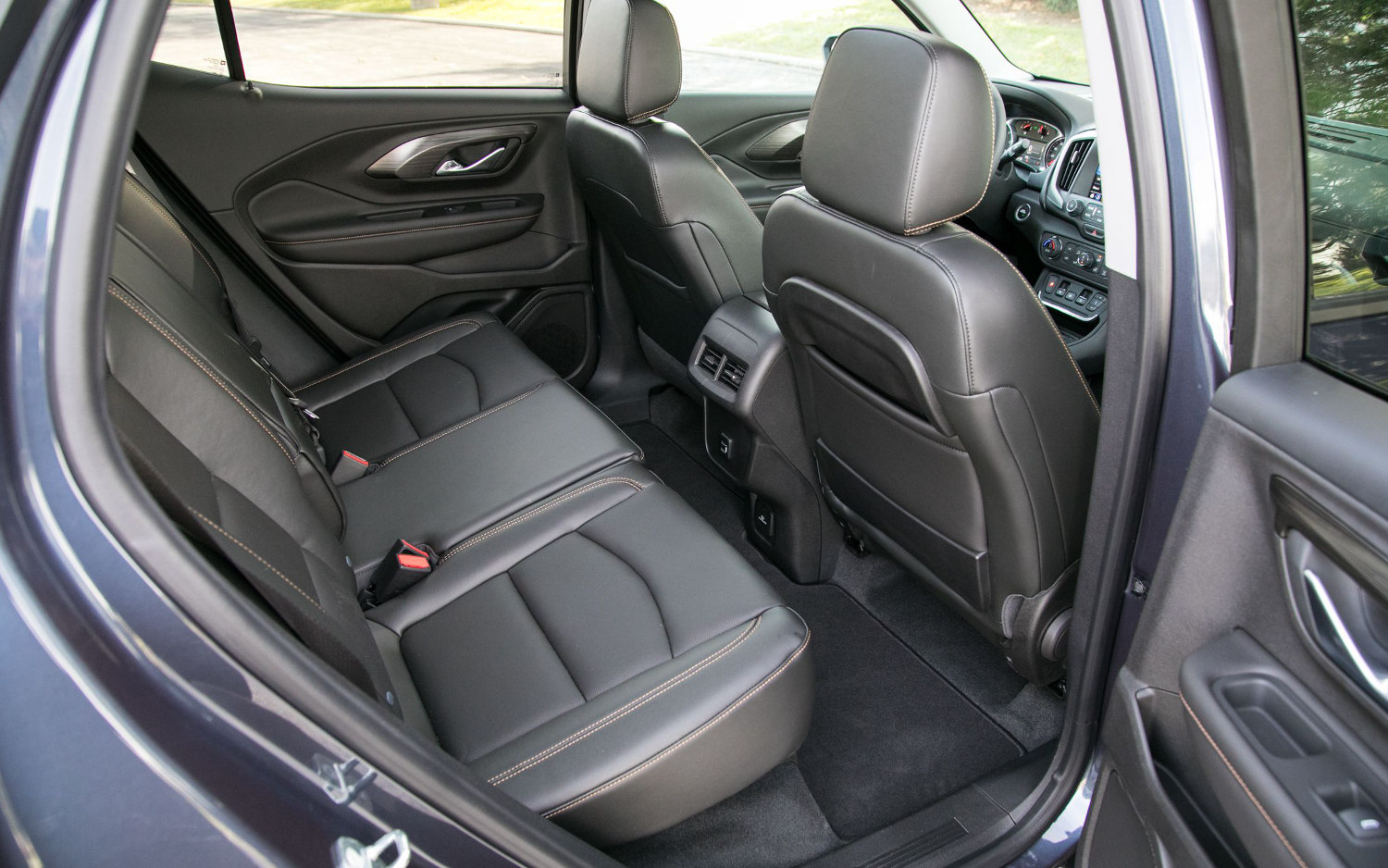
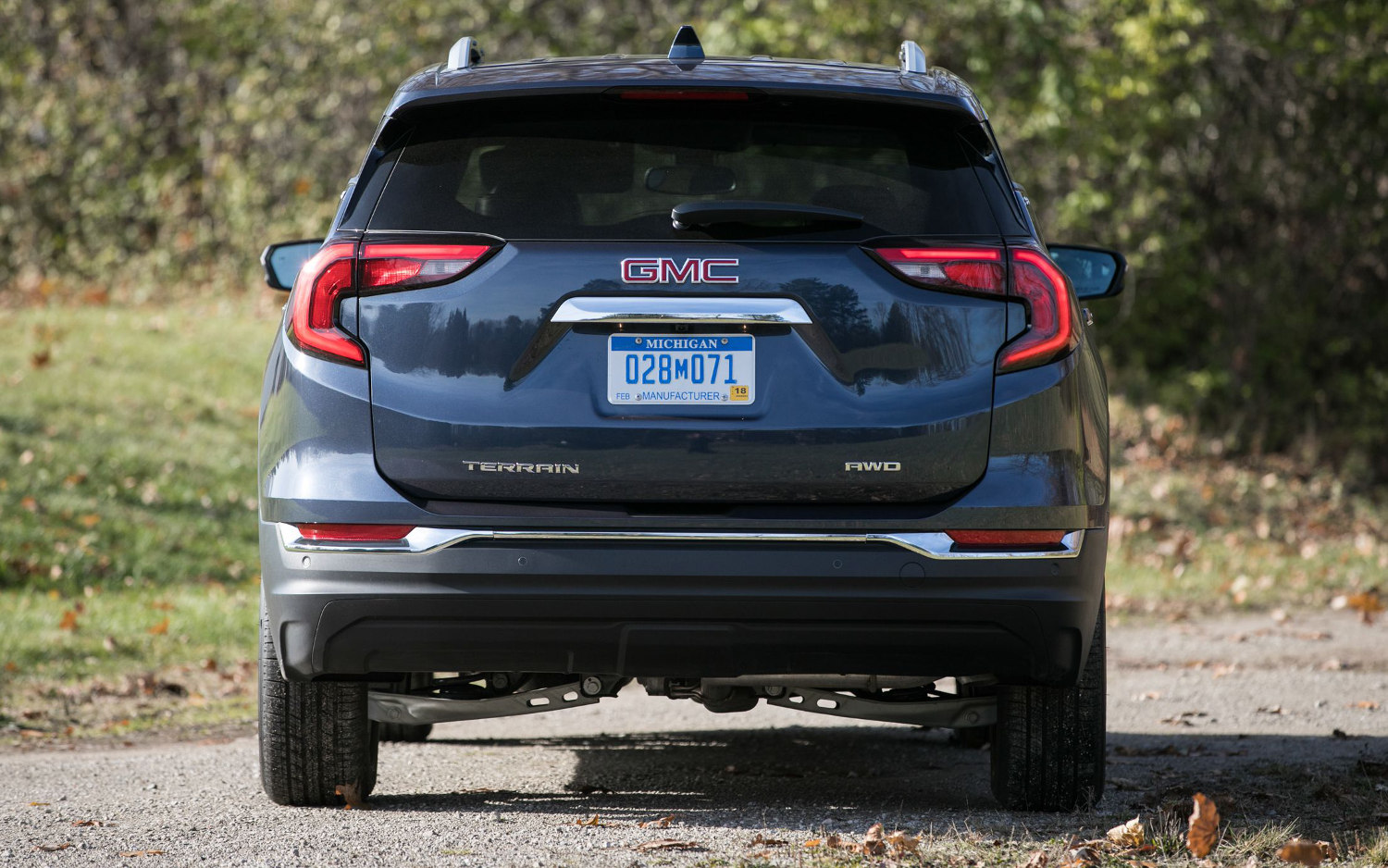
The 2018 GMC Terrain is an upscale twin to the Chevy Equinox and looks the part.Much like the last generation, the new Terrain takes a more aggressive approach to the shared GM architecture. The boxy body is bookended by a larger grille and a more sculpted rear end. The Terrain’s shape borrows much from the bigger Acadia, and is part of GMC’s newer design theme for its crossovers.
Pros Tough-and-tumble look Top-trim Denali version Fuel-efficient diesel version Advanced 9-speed automatic
Cons So long sliding second row What will fuel efficiency be? Can get expensive
Quiet and comfortable, the Terrain is exactly what we’d expect from the Professional Grade brand; enjoyable driving dynamics are an added surprise. Three turbocharged inline-fours are offered; the 170-hp 1.5-liter and 252-hp 2.0-liter are paired with a nine-speed automatic, while the 137-hp diesel 1.6-liter gets a six-speed unit.
Pros Stupefying fuel economy, well-packaged cabin.
Cons Interior materials are “meh” incarnate, relaxed acceleration, high price.
The 2018 GMC Terrain ranked #5 in Compact SUVs. Currently the GMC Terrain has a score of 8.5 out of 10 which is based on our evaluation of 26 pieces of research and data elements using various sources.
Pros Good gas mileage, especially from the turbodiesel Smooth ride Upscale interior Two rows of spacious seats
Cons Poor visibility Higher starting price than most competitors
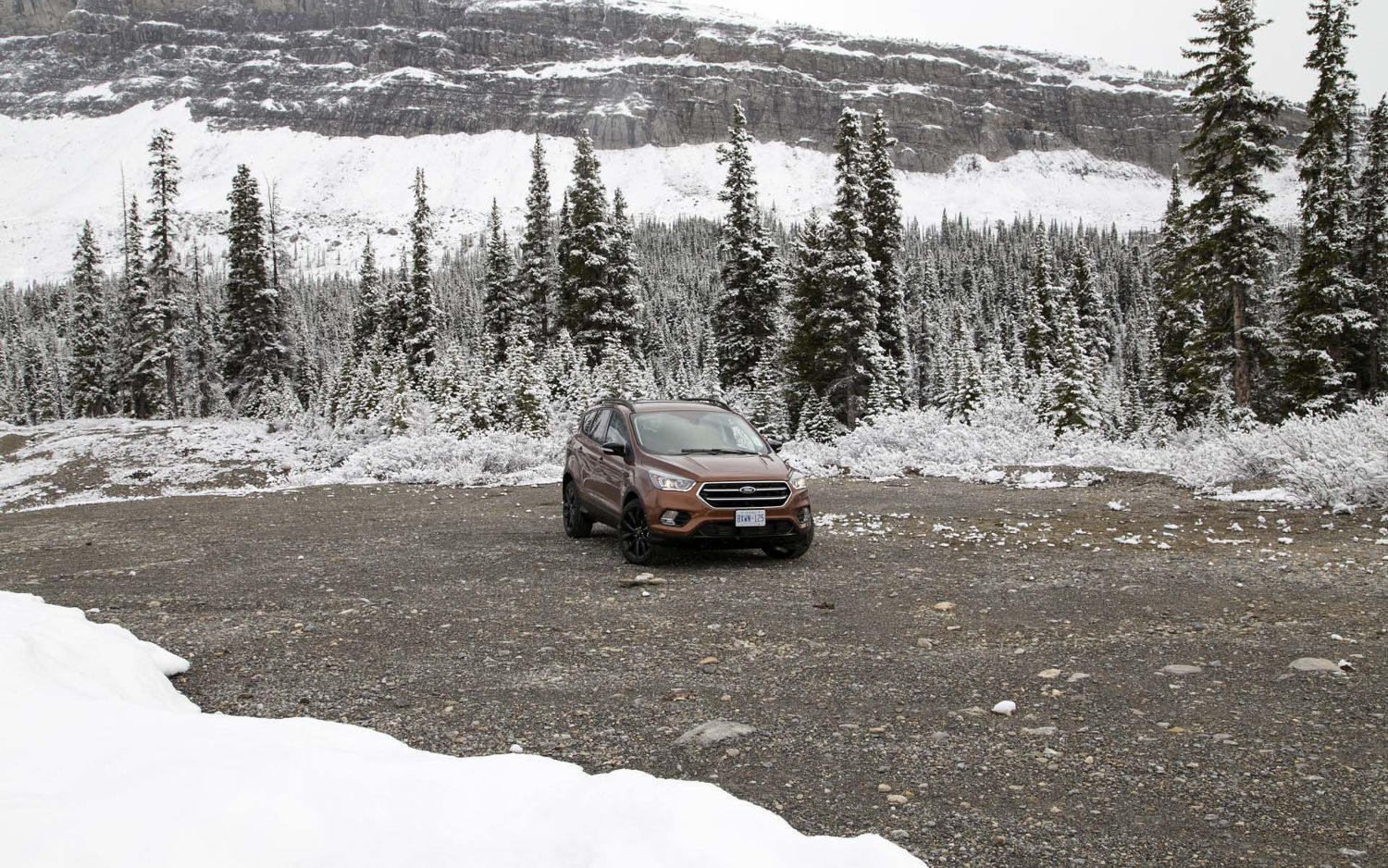
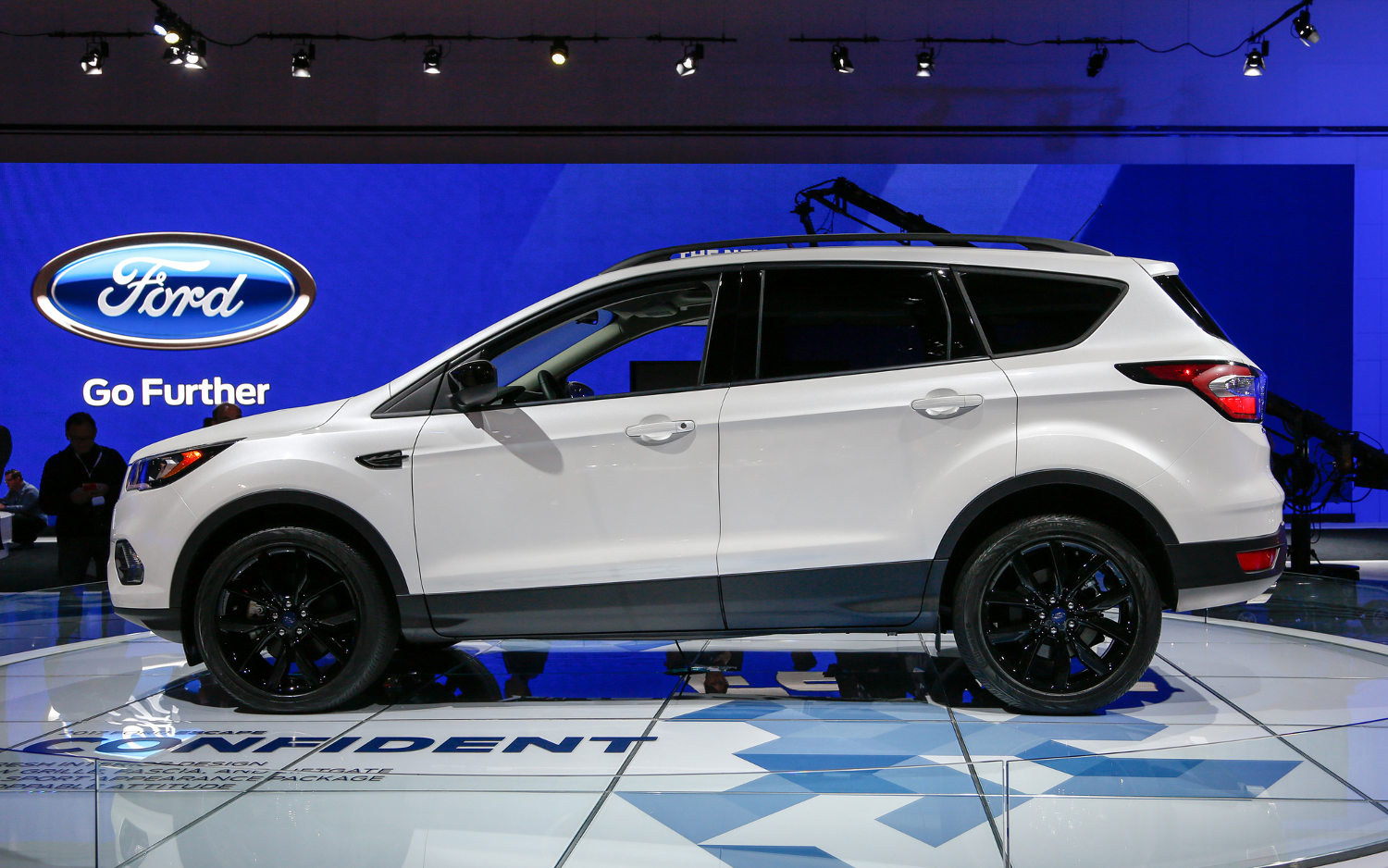
The 2017 Escape gets revised exterior styling, some minor interior improvements, a newly available 1.5-liter four-cylinder engine and a modified 2.0-liter engine with a bit more power. Models with Sync 3 also provide an ownership app (FordPass with Sync Connect) and Apple CarPlay and Android Auto smartphone integration. Safety features now include lane departure prevention, a drowsy driver warning system, and adaptive cruise control with forward collision alert.
Pros Optional 2.0-liter turbocharged engine accelerates quickly New tech interface features advanced voice control, Apple CarPlay, Android Auto Steering and handling feel more like that of a car than SUV More room for small stuff, and more power plugs
Cons New base engine lacks punch Dashboard design looks dated with many small, similar-looking buttons Base-model S trim available only with older, less efficient 2.5-liter four-cylinder engine
The 2017 Ford Escape ranks 4 out of 18 Compact SUVs. The 2017 Ford Escape has a solid ranking in the top third of the very competitive compact SUV class. A well-balanced ride, an upscale interior, potent optional engines, and a long list of available features help the Escape outperform many rivals.
Pros Quality interior Lots of cool, user-friendly tech features Nimble handling Peppy and fuel-efficient turbocharged engine options
Cons Below-average fuel economy with base engine
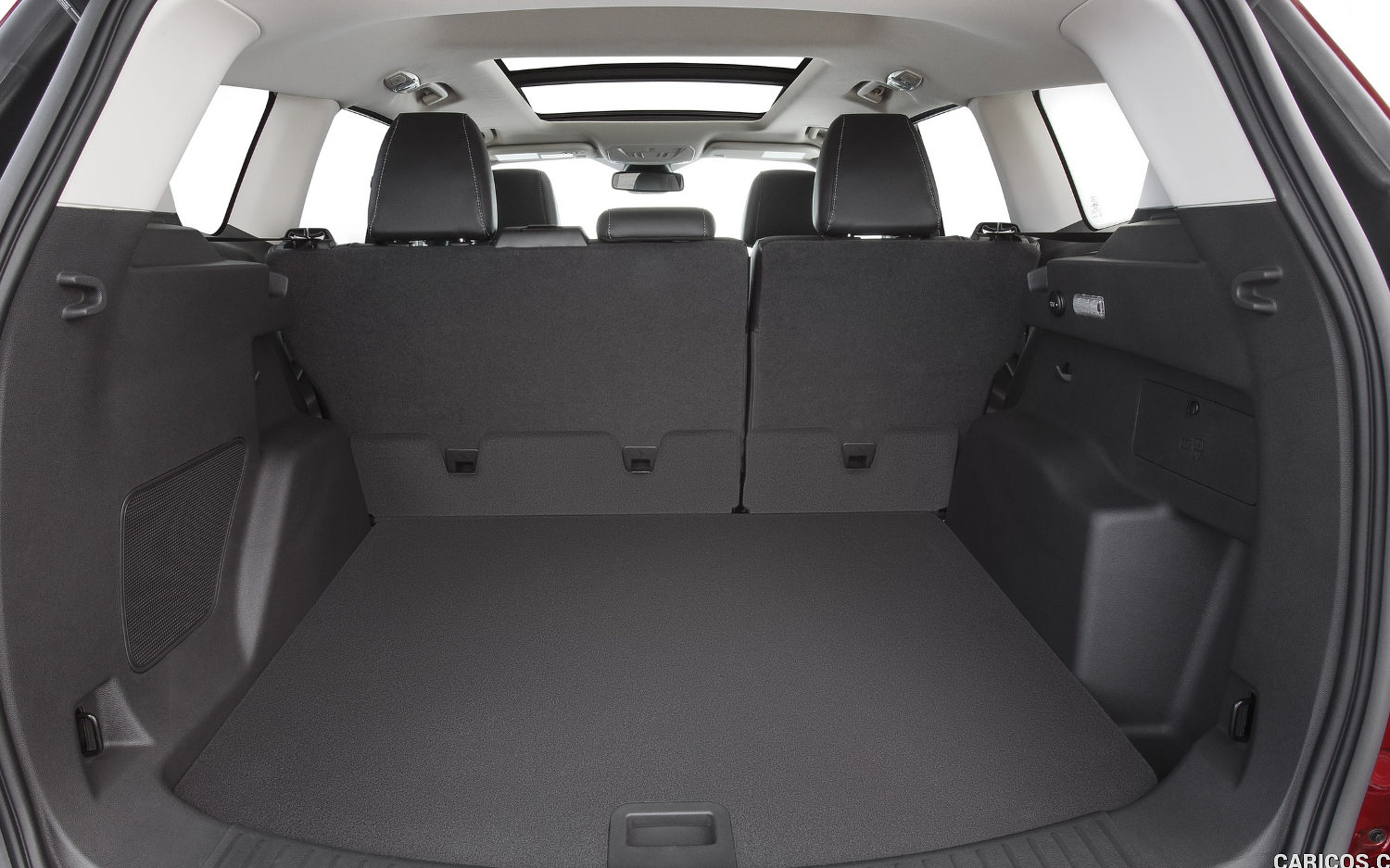
Strategically updated for 2017, the Ford Escape becomes an even more attractive alternative in the popular compact-SUV segment that includes the Honda CR-V, Kia Sportage, Hyundai Tucson, Mazda CX-5, Mitsubishi Outlander Sport and Toyota RAV4. Tasteful but effective exterior restyling enhances the Escape’s curb appeal while a comprehensive remake of its roomy, comfortable 5-passenger cabin elevates both visual sophistication and user-friendliness. Available in S/SE/Titanium trims and front- or all-wheel drive, the 2017 Escape also introduces a host of advanced tech touches including Ford’s Sync 3 infotainment system with Sync Connect along with support for Android Auto and Apple CarPlay. This versatile Ford offers three engines -- including two new, more powerful and more efficient EcoBoost 4-cylinders -- that help the Escape retain its best-in-class tow ratings.
Pros Buyers in the market for a stylish compact SUV that’s roomy, comfortable and capable with state-of-the-art infotainment features and class-leading tow ratings will find an ideal travel mate in the 2017 Escape.
Cons Save for personal styling preferences, there’s not a great deal to ding in this latest iteration of the Escape. The Mazda CX-5 has more sporting character and the Honda CR-V offers marginally more cargo space, but Ford’s highly adaptable hauler makes an impressive case for itself on every functional front.