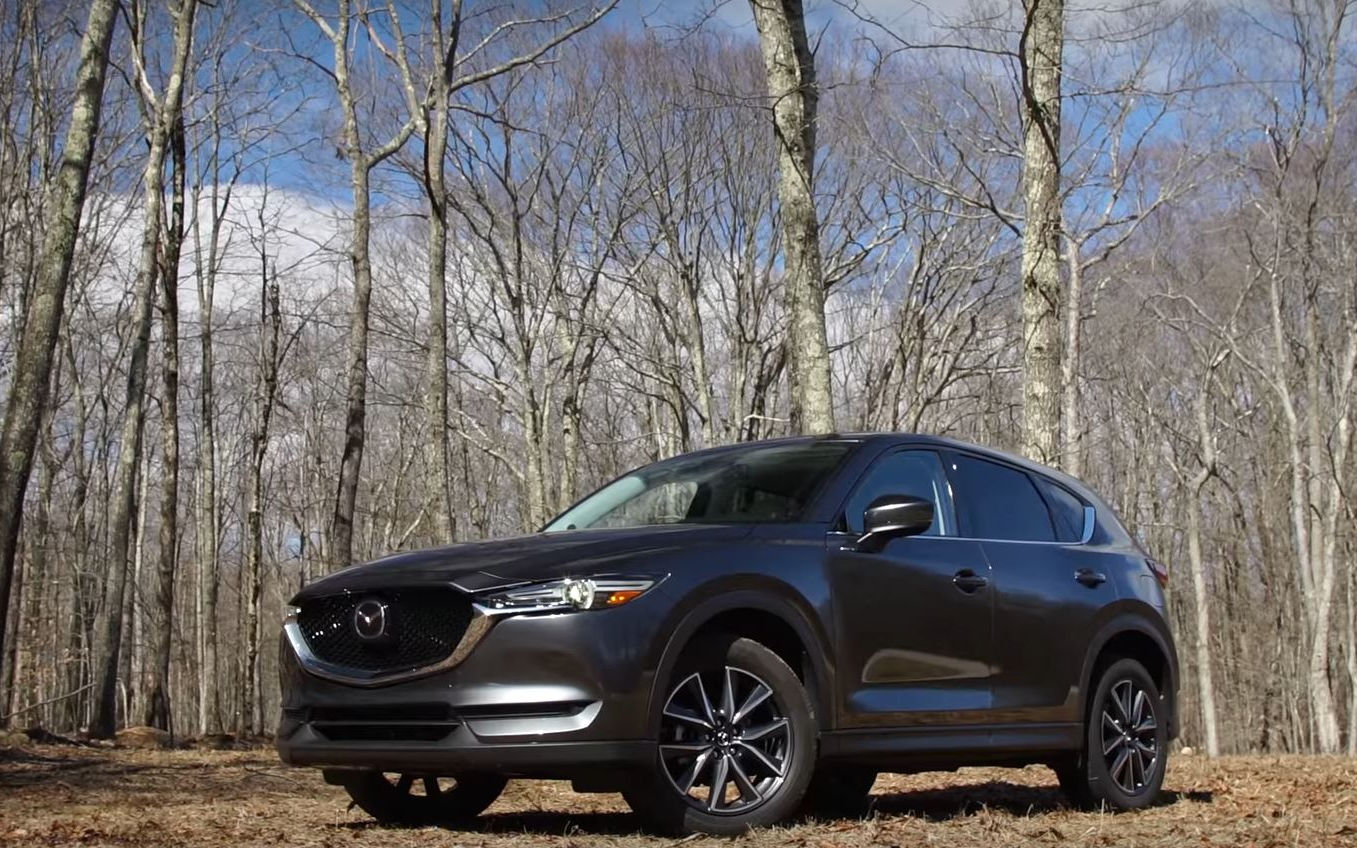
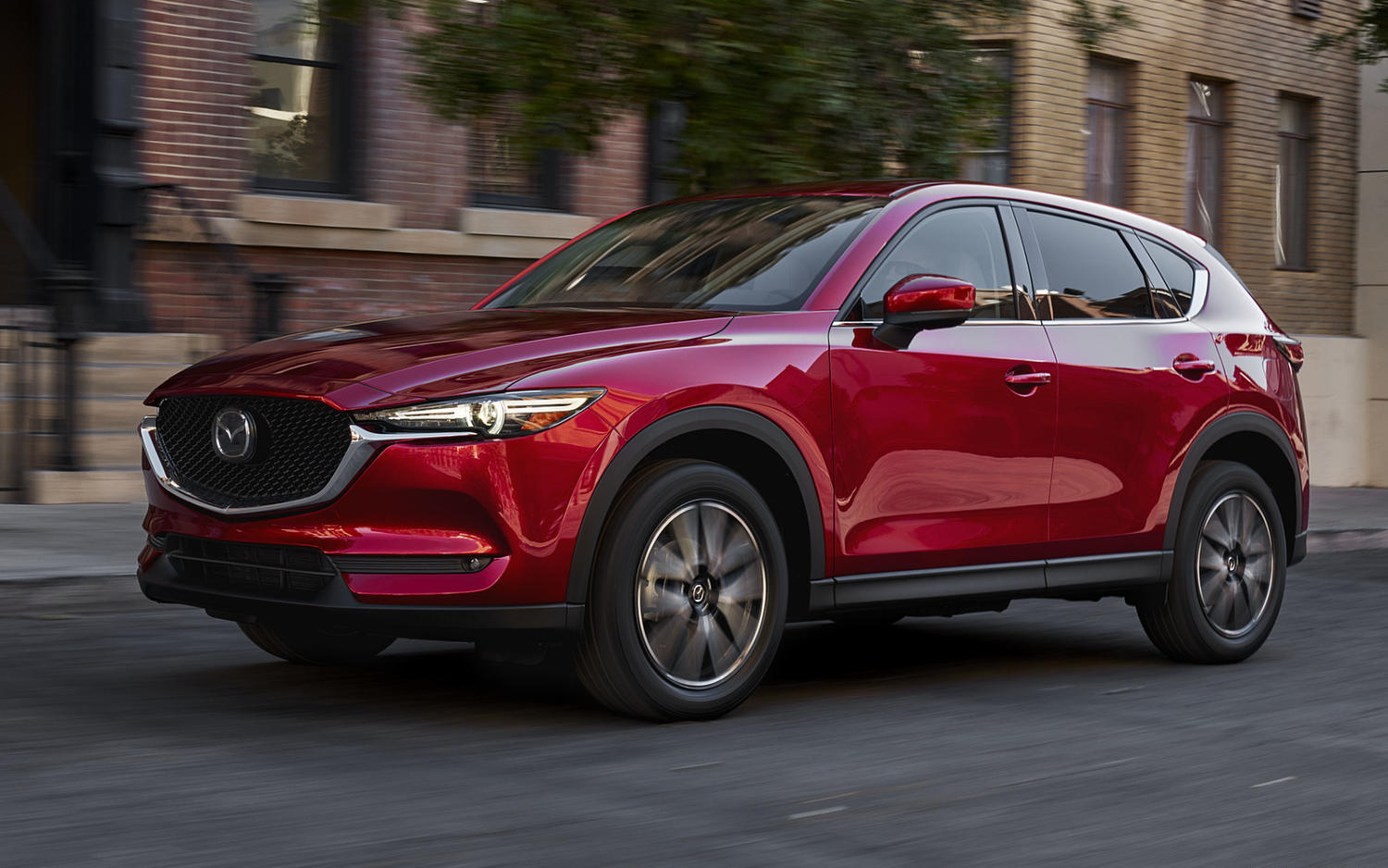
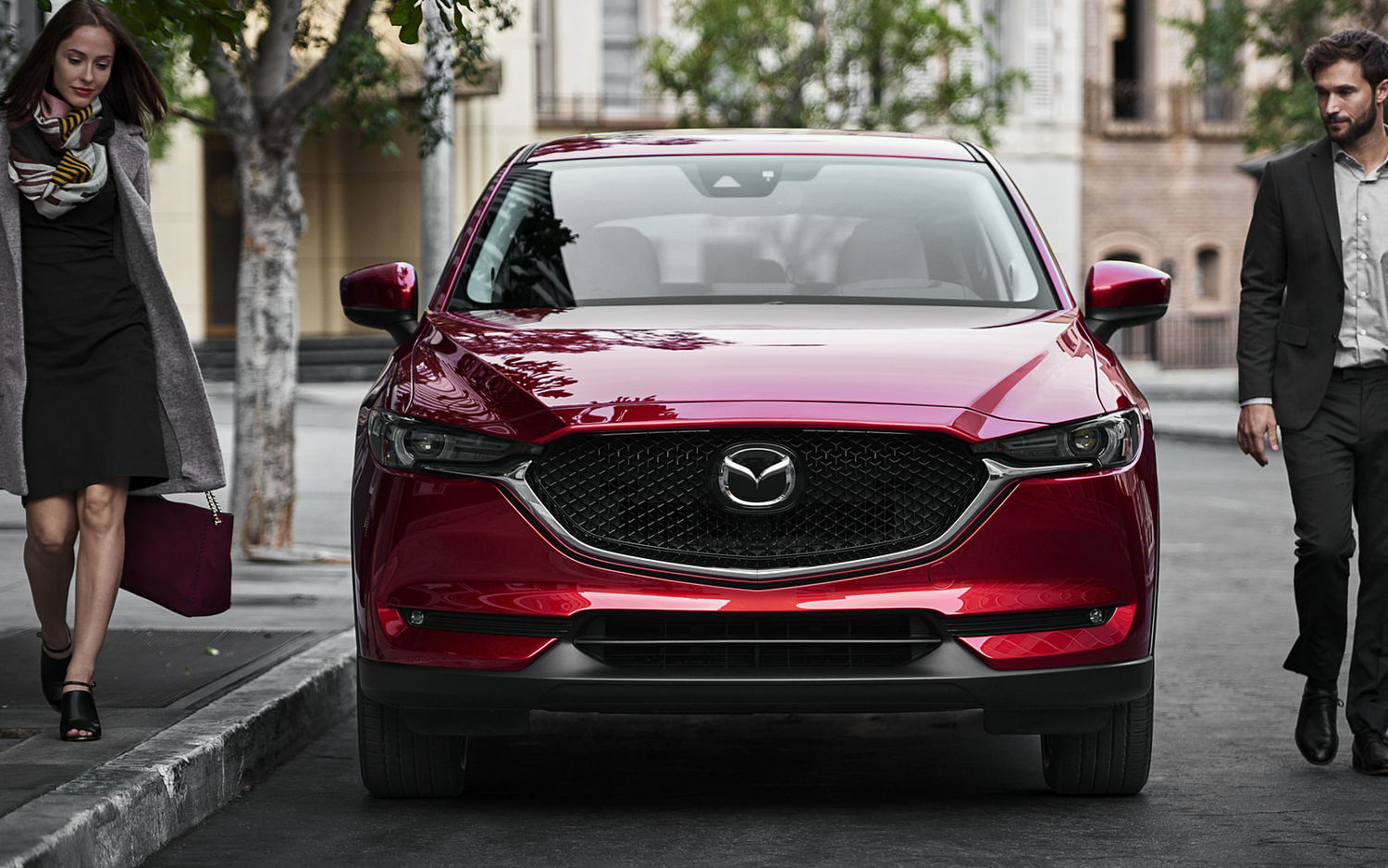
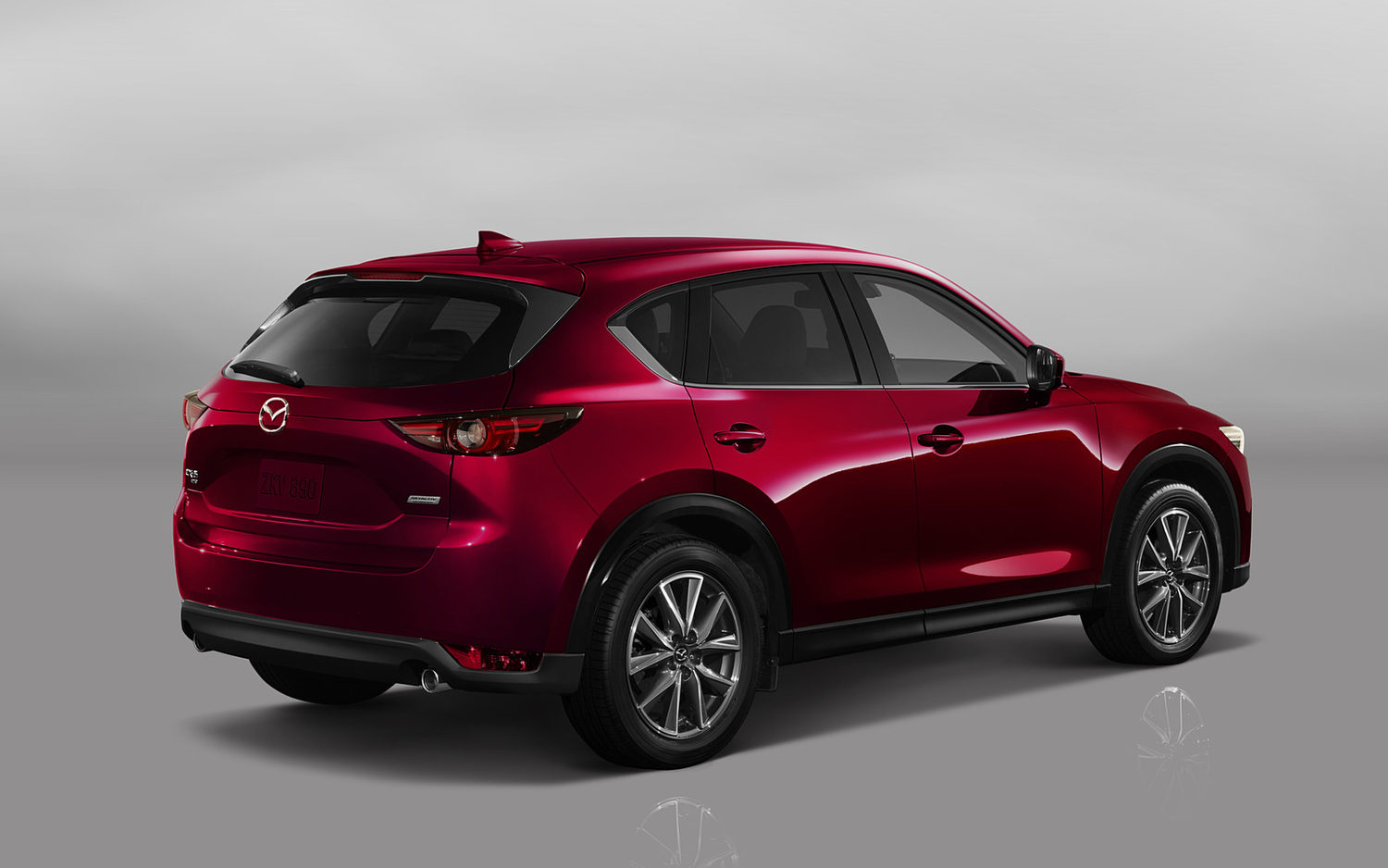
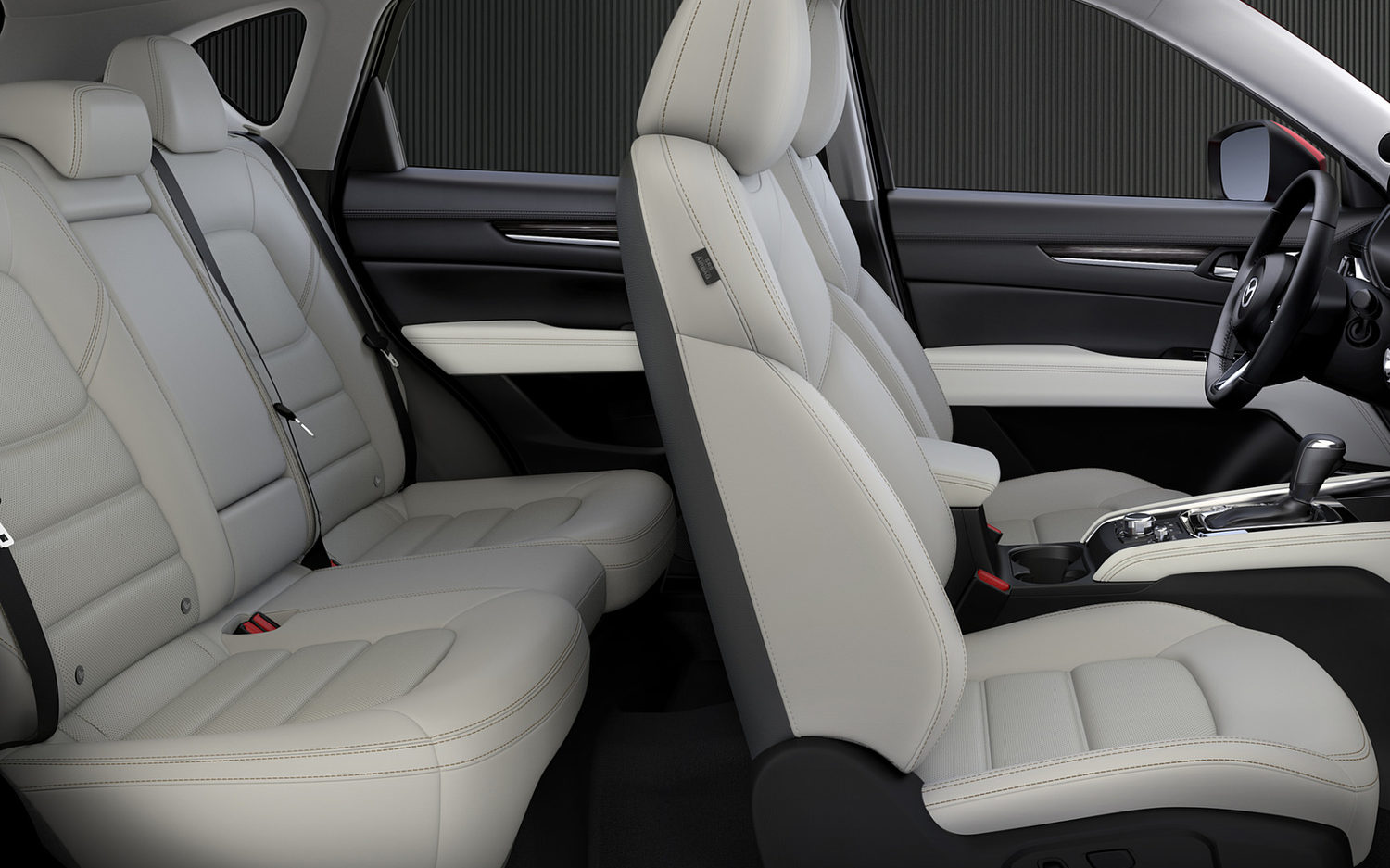
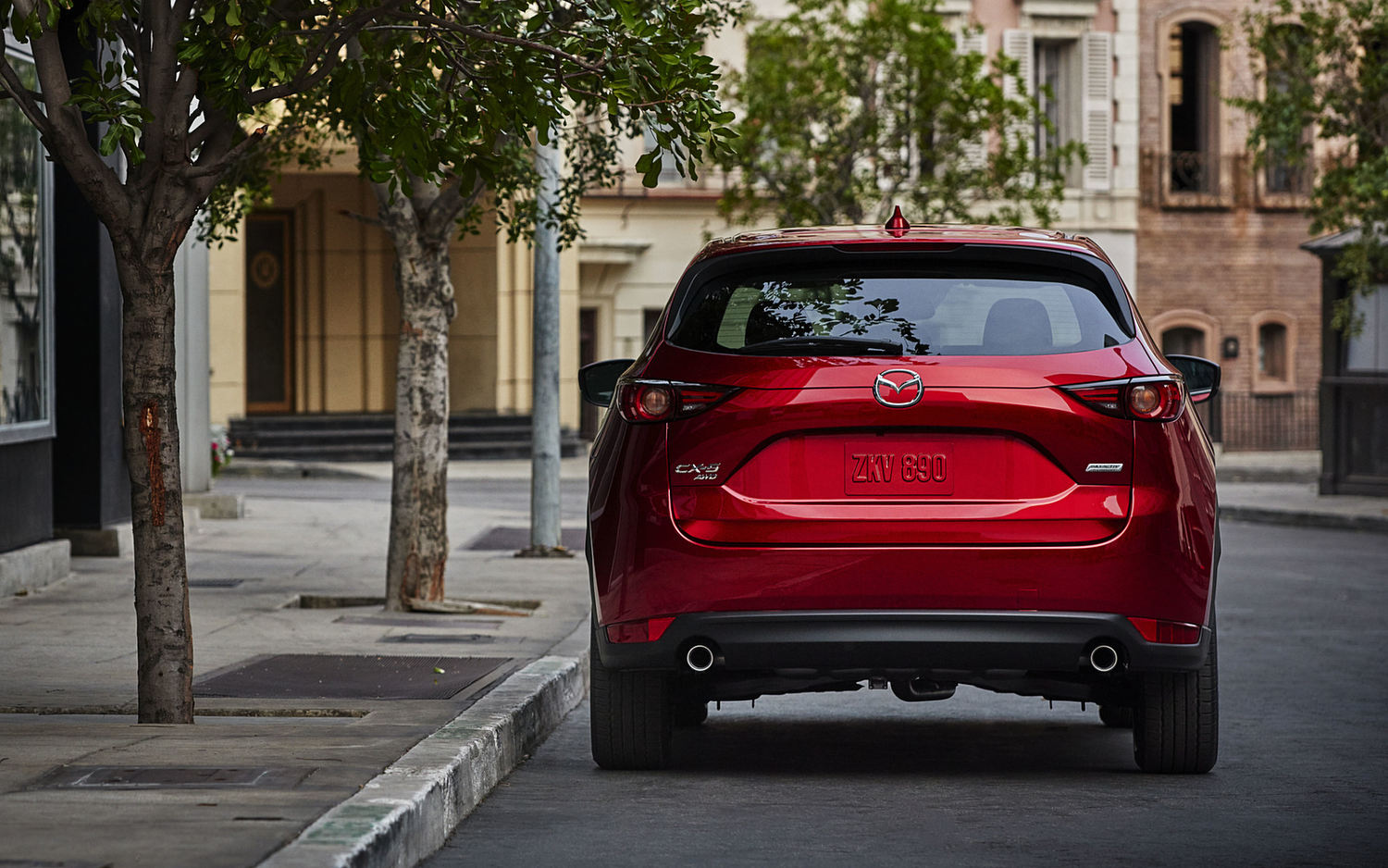
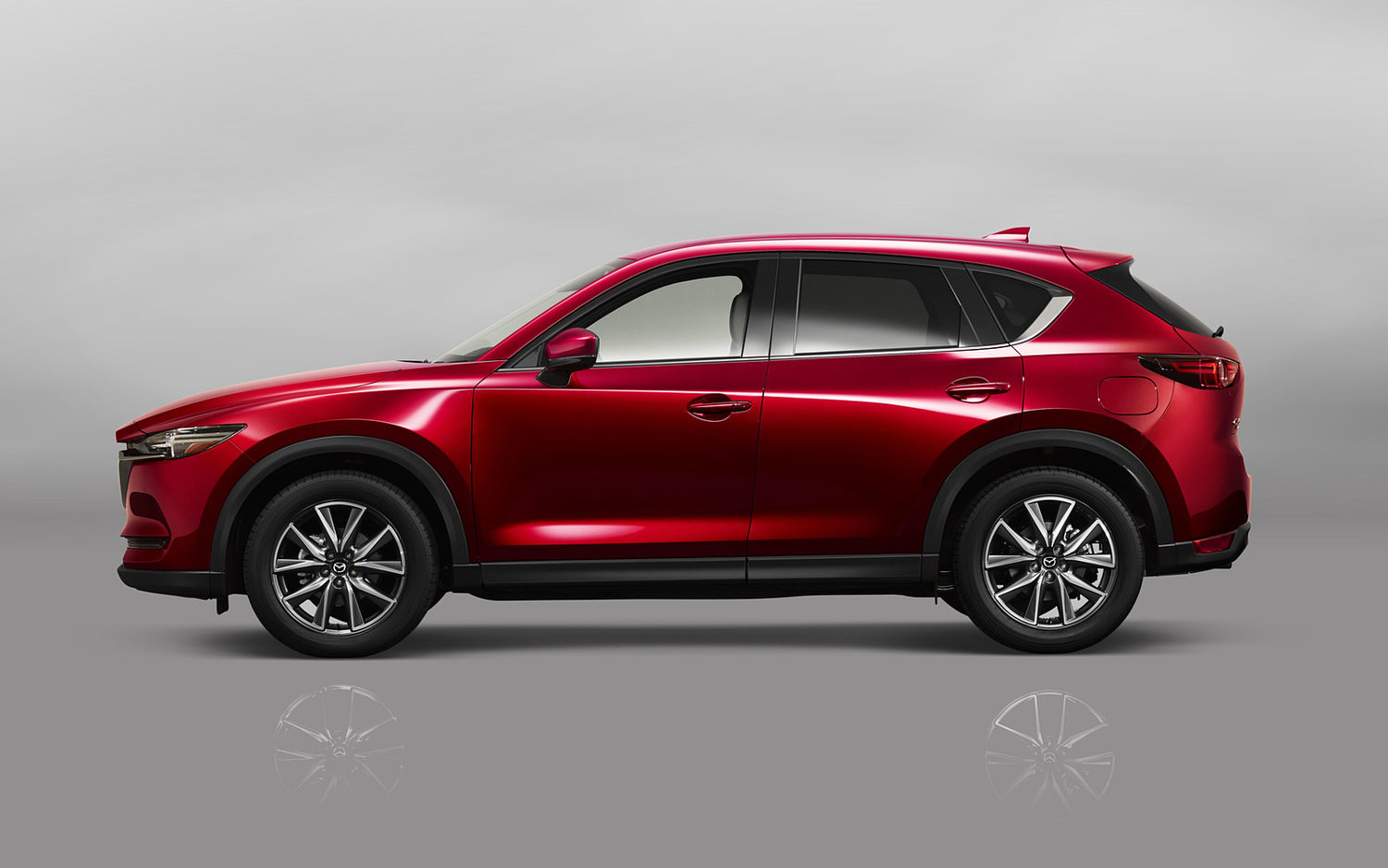
The 2017 Mazda CX-5 ranks 2 out of 18 Compact SUVs. The 2017 Mazda CX-5 ranks near the top of the compact SUV class for its outstanding performance, comfortable passenger space, high-quality interior, and laudable features.
Pros Fantastic performance Smooth ride Upscale cabin Roomy and comfortable seats
Cons Average engine power Low predicted reliability rating
The 2017 Mazda CX-5 has been fully redesigned. Though its dimensions haven't changed, it's smoother and quieter to drive. Other improvements include sharper styling, a more upscale cabin and some new features. Its engine and automatic transmission are largely carried over, though last year's manual transmission is no longer available.
Pros Keen handling and steering make the CX-5 enjoyable to drive Attractive and upscale cabin for a premium ownership experience Quieter on the highway than before
Cons Not as powerful as some rivals
The 2017 Mazda CX-5 takes a lot of small steps forward, but are any of them big enough changes to sway buyers? The 2017 Mazda CX-5 is new this year, and improves upon last year's model with a better interior and exterior look, quieter ride, a new-ish standard engine, and a coming turbodiesel that could be among the leaders for small crossovers in highway mileage. It's offered in Sport, Touring, and Grand Touring trims with varying levels of creature comforts.
Pros Best-looking compact crossover, by our eyes Improved interior Excellent driveability Fold-flat rear seats
Cons Not dramatically different than outgoing model Turbodiesel arriving later this year Finicky infotainment system Small-ish cargo area
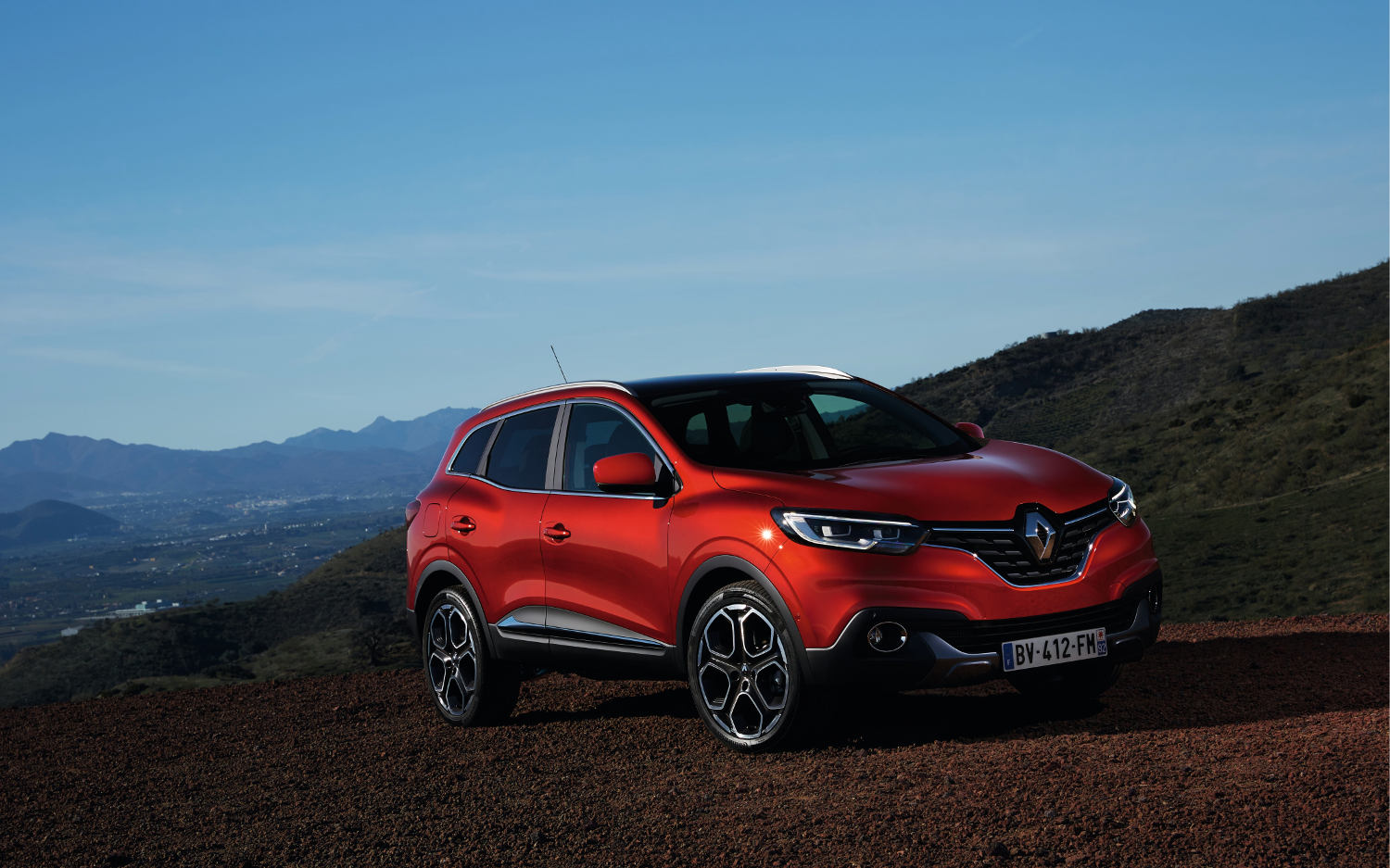
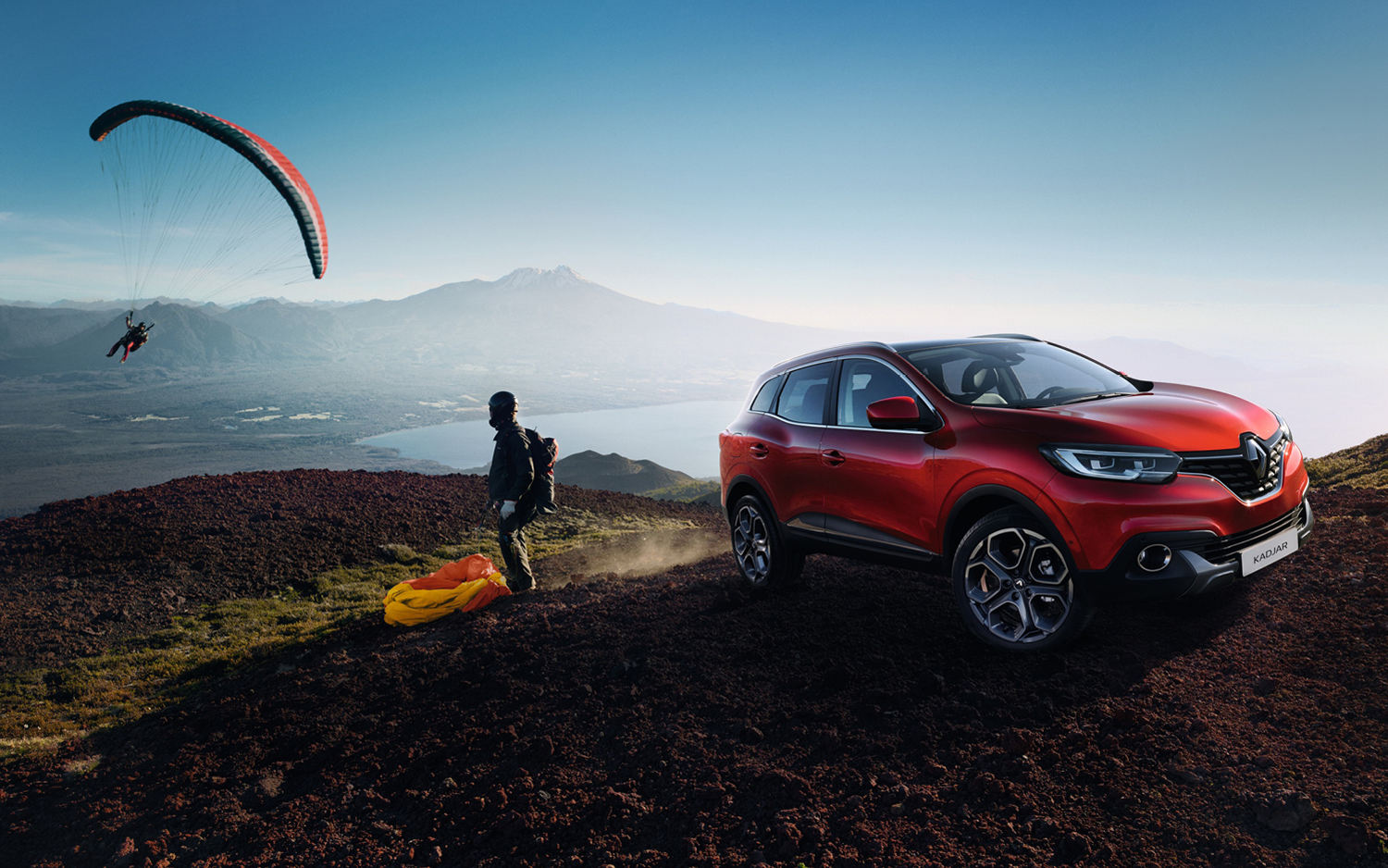
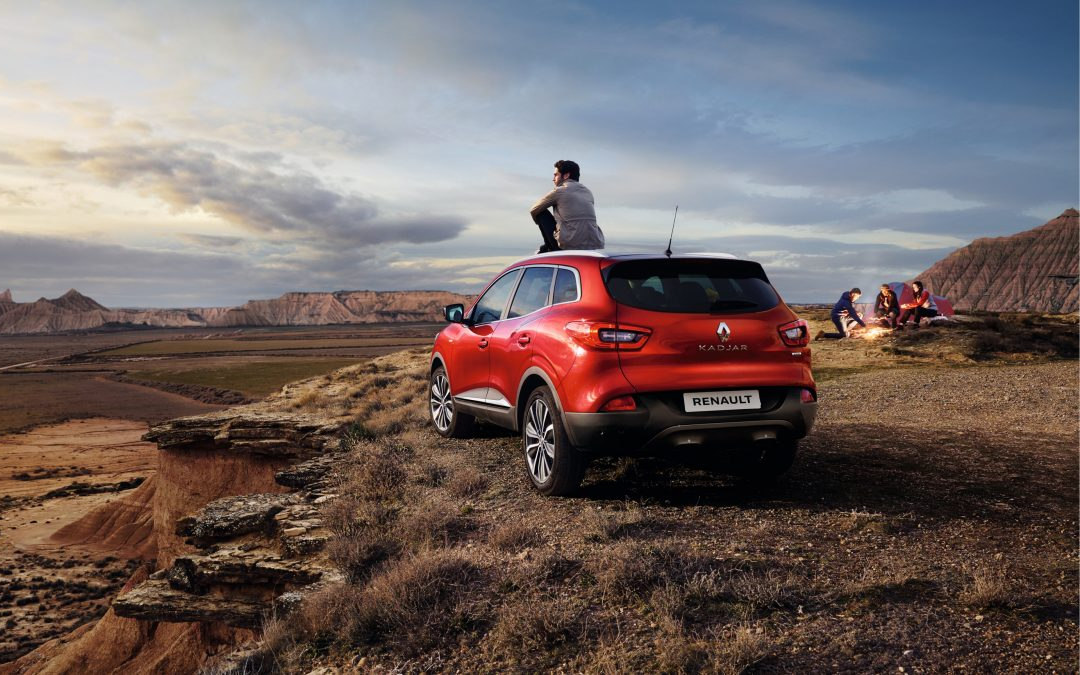
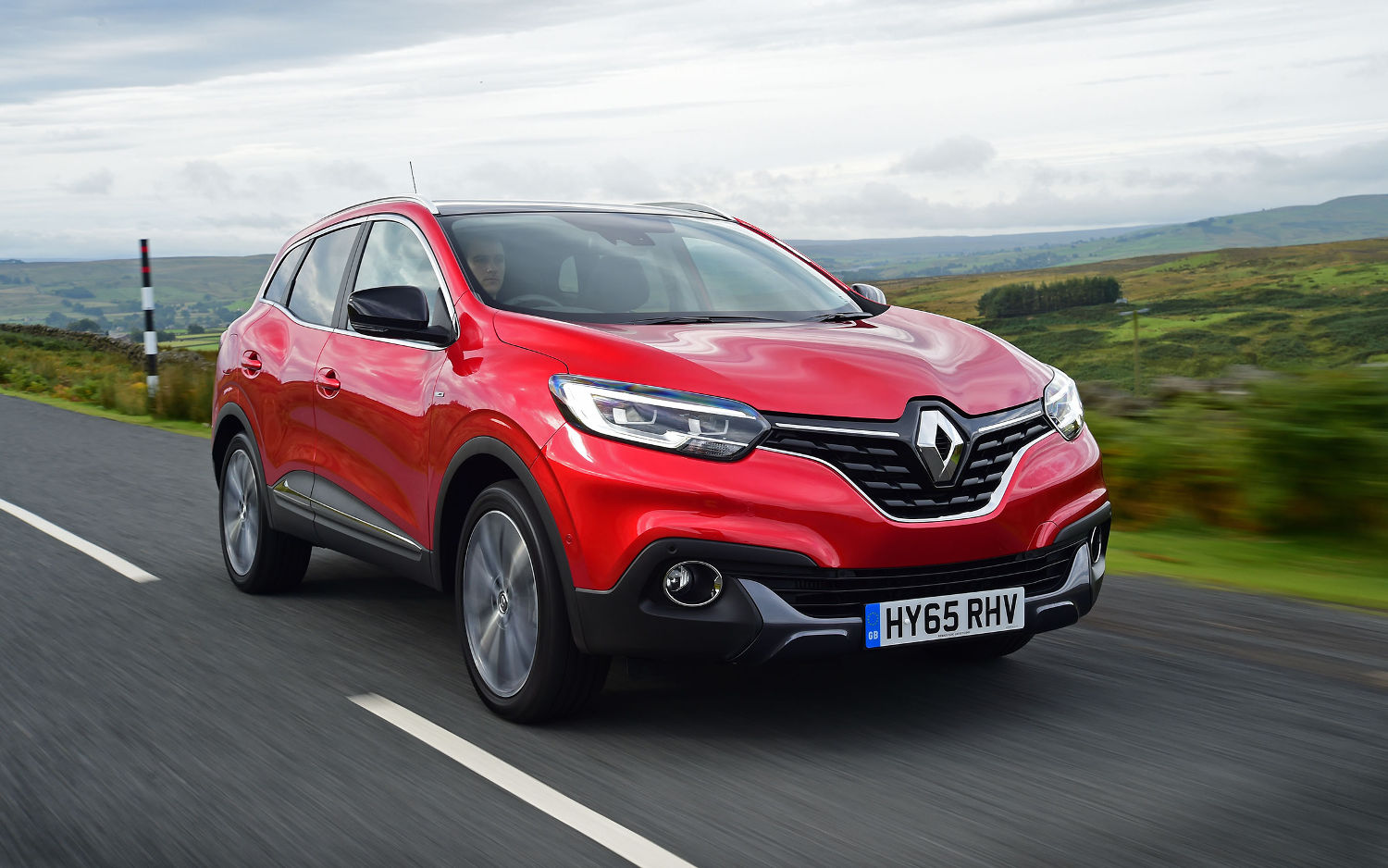
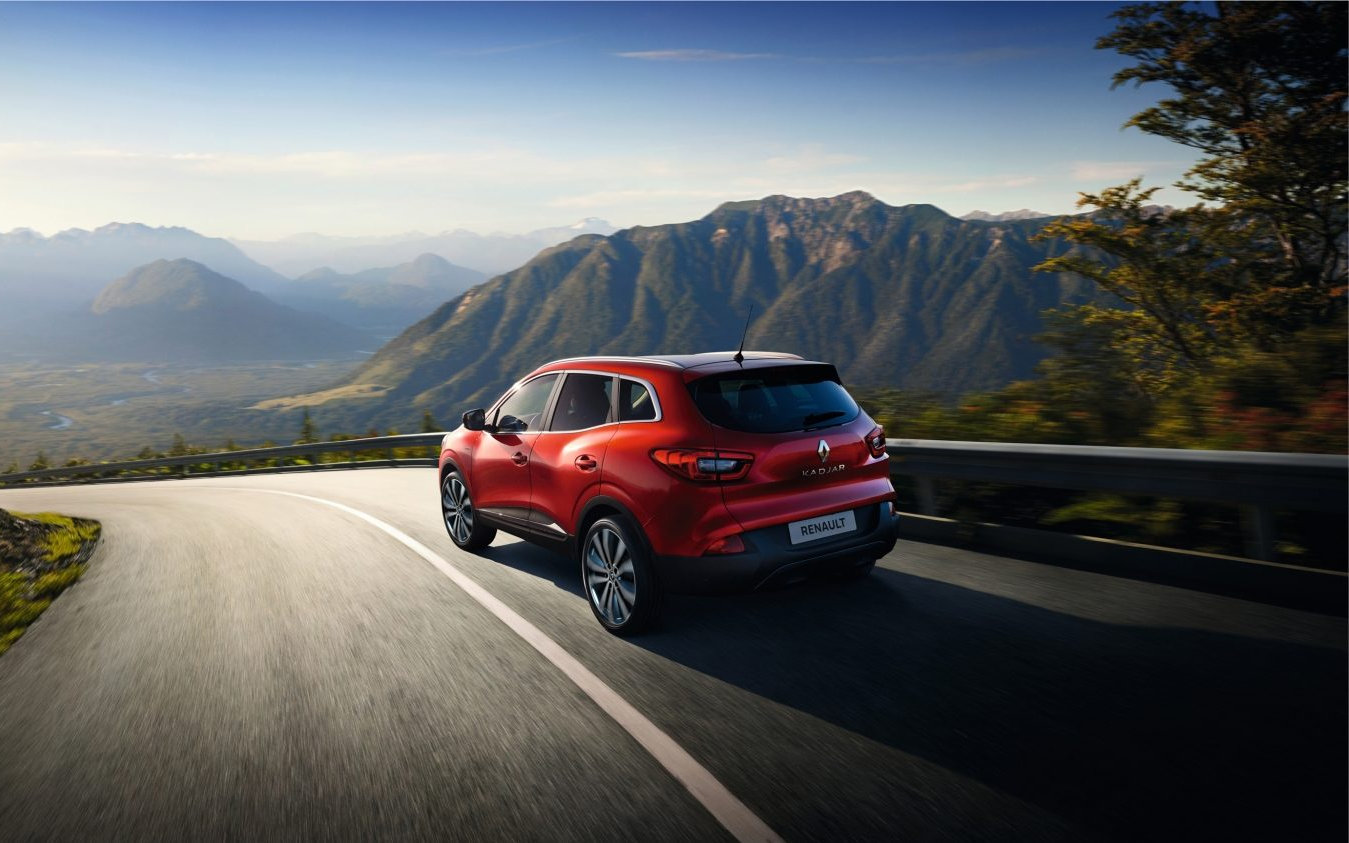
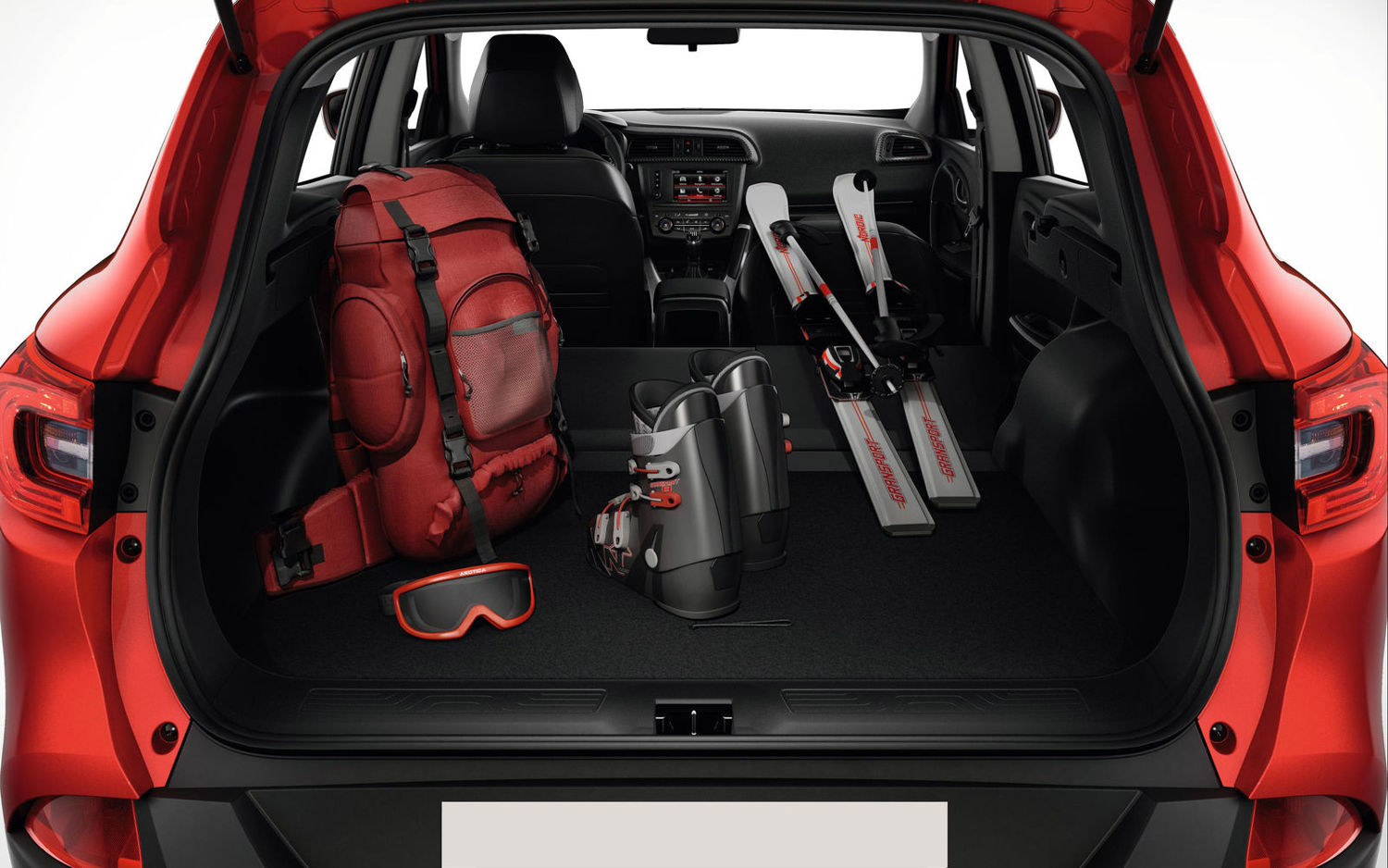
The Renault Kadjar is a stylish crossover that's based on the same platform as the Nissan Qashqai. But, while the Qashqai took undisputed class honours when it arrived in early 2014, the game has moved on, and the Renault equivalent betters it in almost every area. However, the Renault just falls short of the all round appeal of the SEAT Ateca. There's a single body style for the Kadjar, and it slots into the Renault range above the Captur. Both of these models will be joined by the larger Koleos SUV later in 2017. There are four trim levels to choose from: the entry-level, air con-equipped Expression+, the mid-spec Dynamique and Dynamique S, while at the top of the range is Signature trim. Cars in top-spec trim are expensive, but they do boast a generous amount of kit, including a Bose stereo, 19-inch alloy wheels, and touchscreen nav is included on Dynamique models and above. The Kadjar earned a five-star rating when it was tested by Euro NCAP, just like the Nissan Qashqai. All but the entry-level model has lane departure warning and traffic sign recognition as standard. Autonomous emergency braking, which will automatically apply the brakes if a collision is imminent, is an option on all trim levels.
The Renault Kadjar is a family crossover that not only rivals the Honda CR-V, Mazda CX-5 and Volkswagen Tiguan, but is also a worthy alternative to best-selling hatchbacks such as the Ford Focus and Volkswagen Golf. The Kadjar shares many parts with the Nissan Qashqai, but its body is a bit bigger. This means you get slightly more passenger space and a larger boot. The Renault’s interior also packs a high-tech infotainment system and an eye-pleasing dashboard.
Pros Competitive price Practical cabin Excellent fuel economy
Cons Just one petrol engine High-end models are expensive Sunroof reduces rear headroom
As a small SUV, the Kadjar is also a rival to the Kia Sportage, Seat Ateca and Skoda Yeti, but it's the aforementioned Nissan that it has most in common with, because it uses the same platform and engines. This means Kadjar buyers can choose from turbocharged 1.2-litre petrol and 1.5- and 1.6-litre diesels, although the 1.6 is the only option if you want four-wheel drive. In terms of interior space, the Kadjar and Qashqai are closely matched, and both offer a high-riding driving postion that gives you a good view down the road. However, the Kadjar's styling is closer to that of its smaller SUV sibling, the Renault Captur.