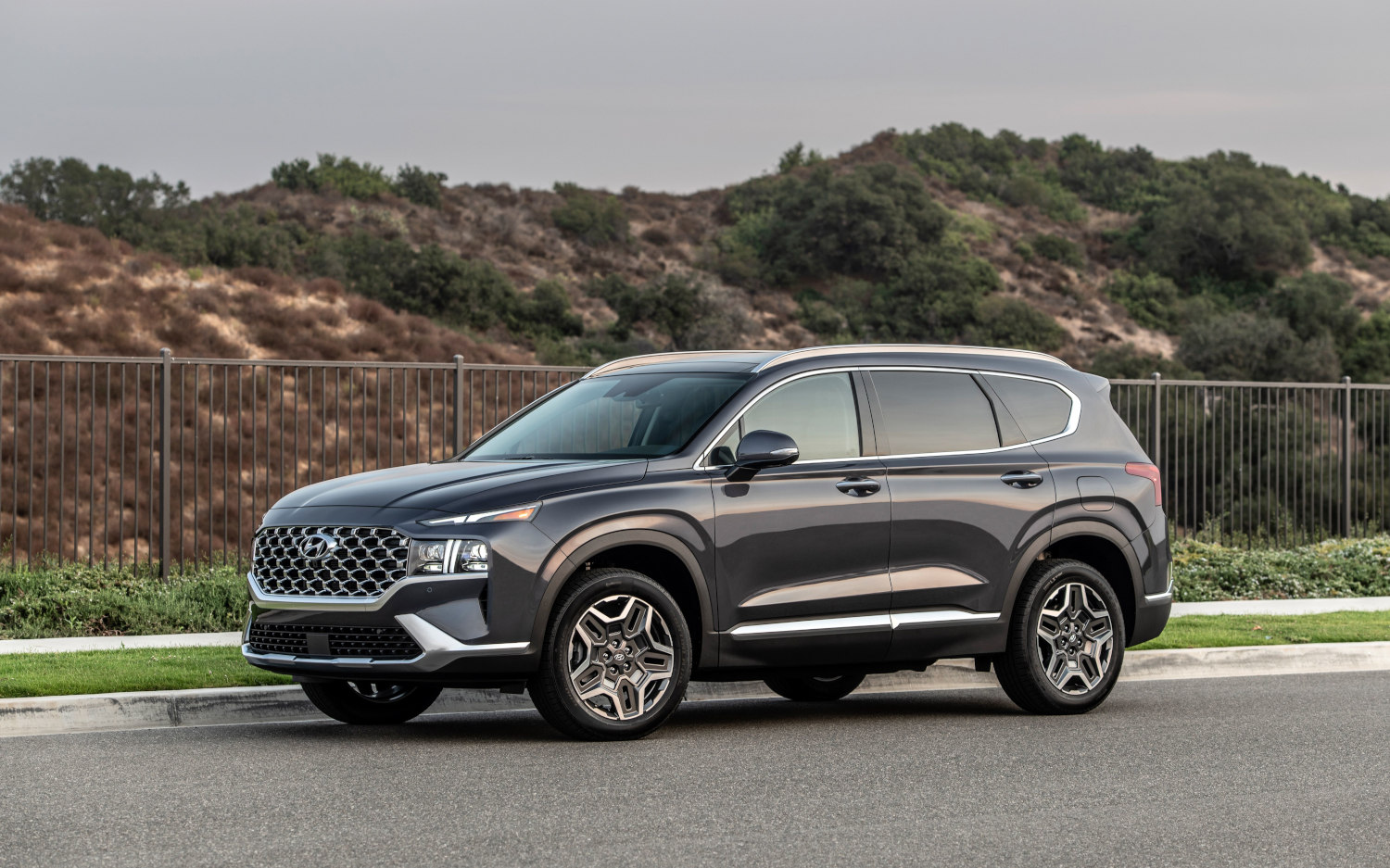
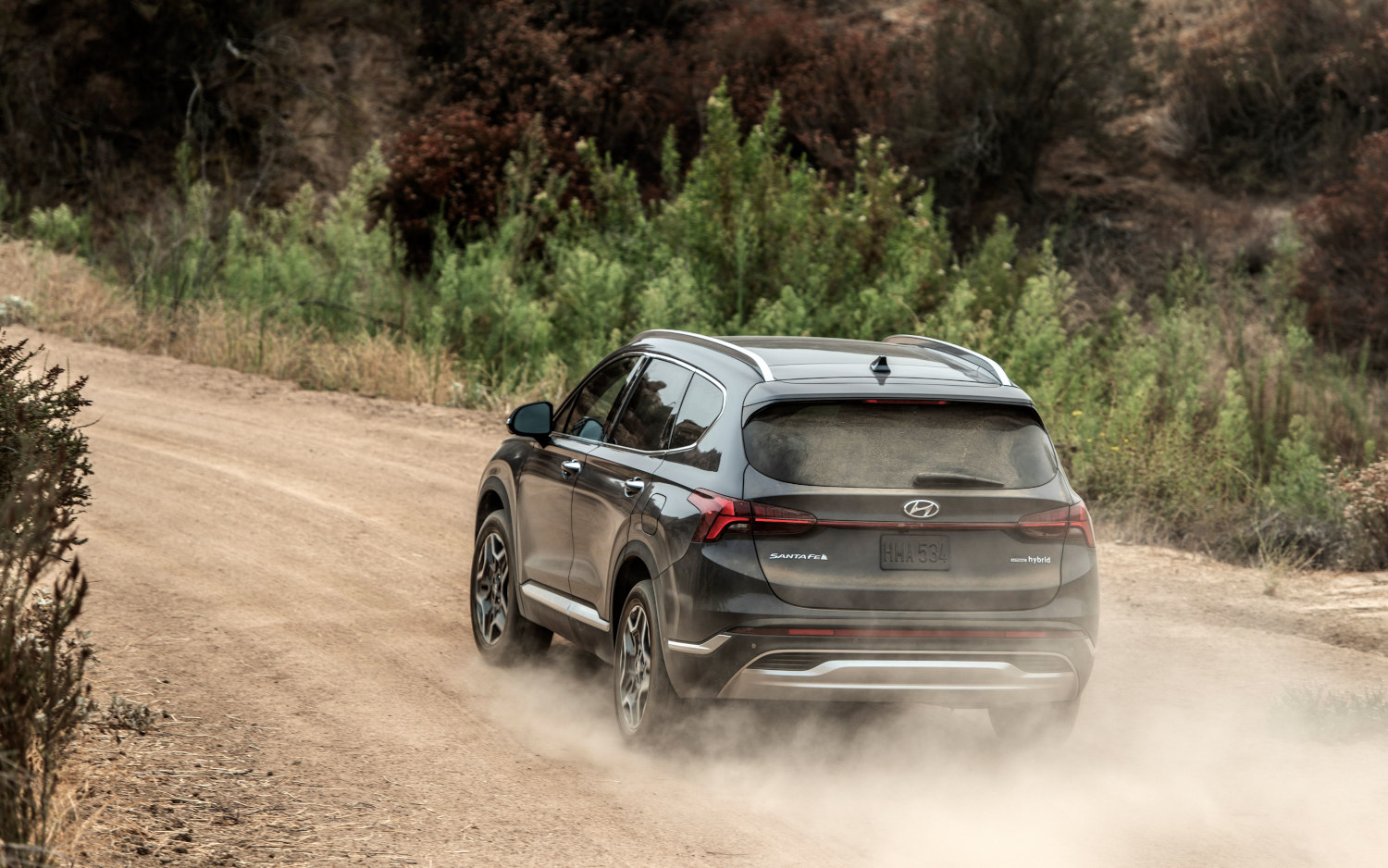
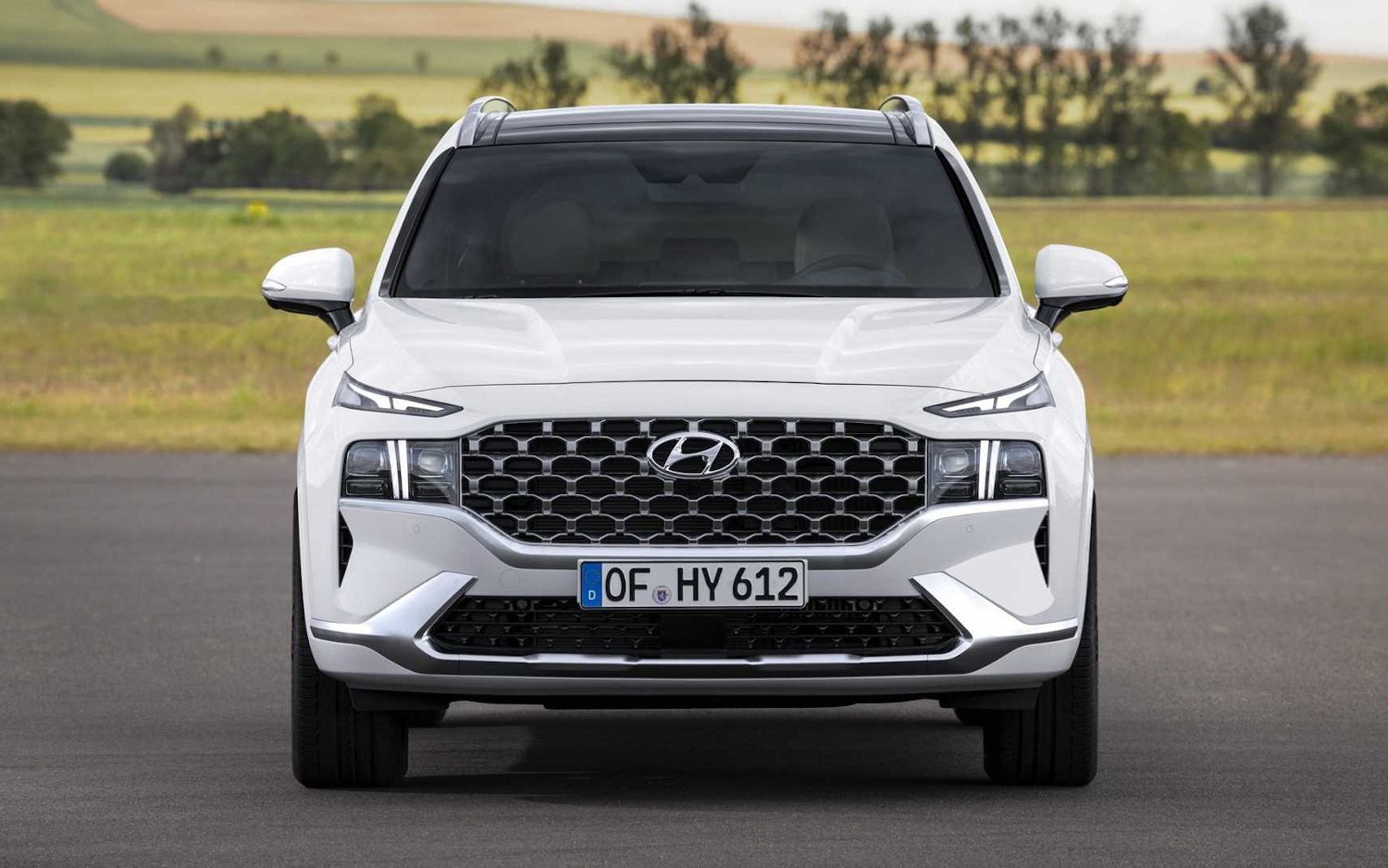
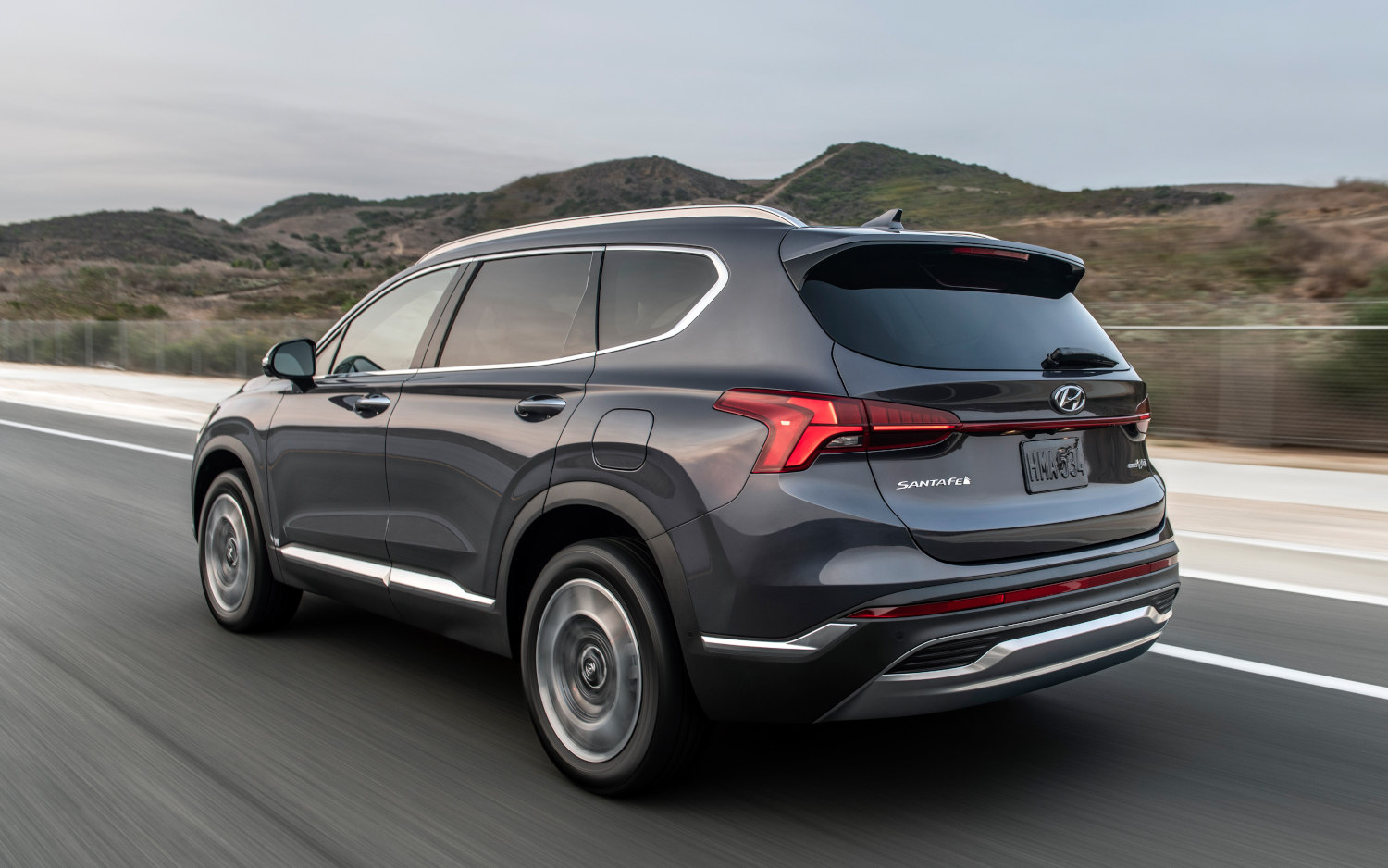
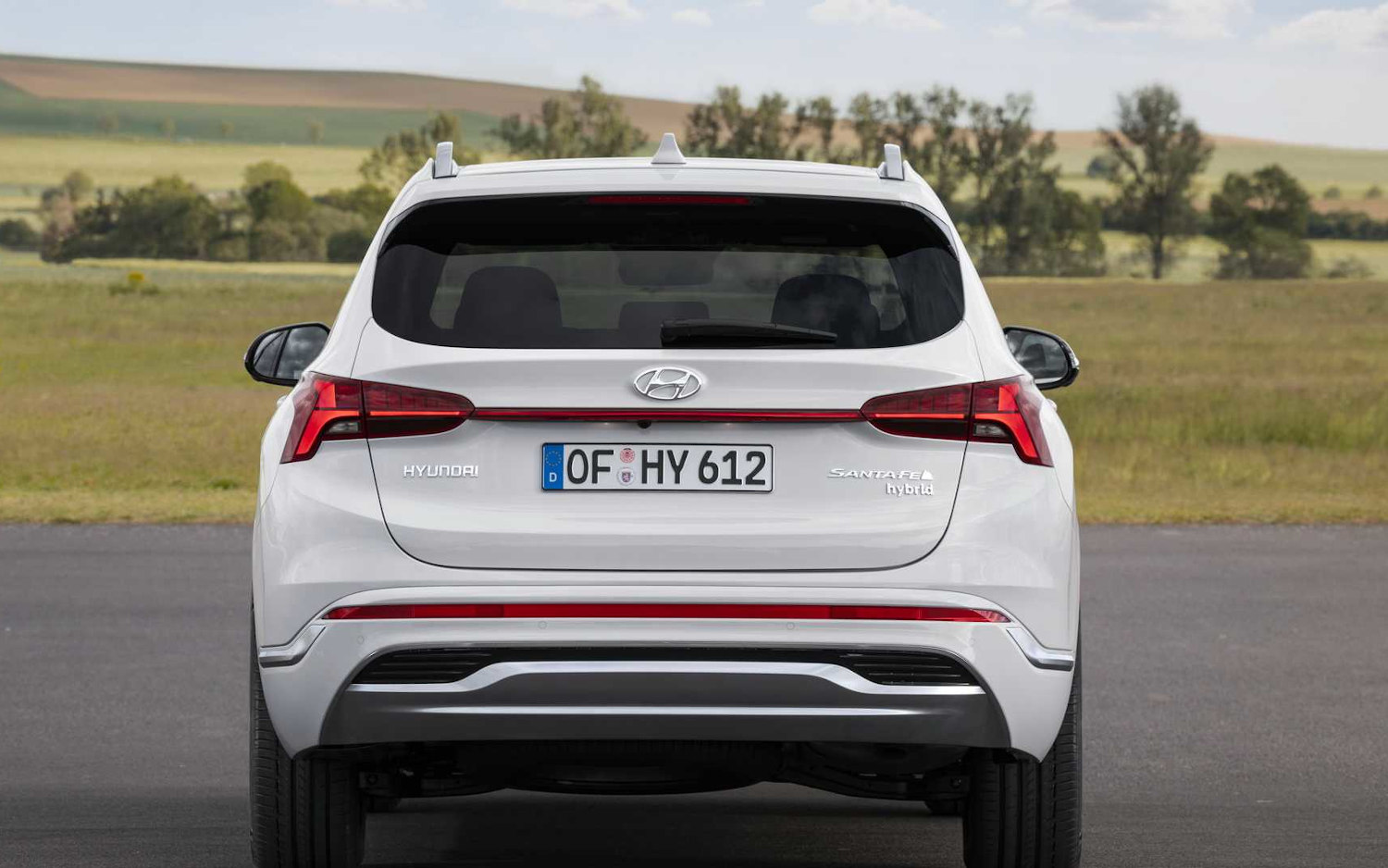
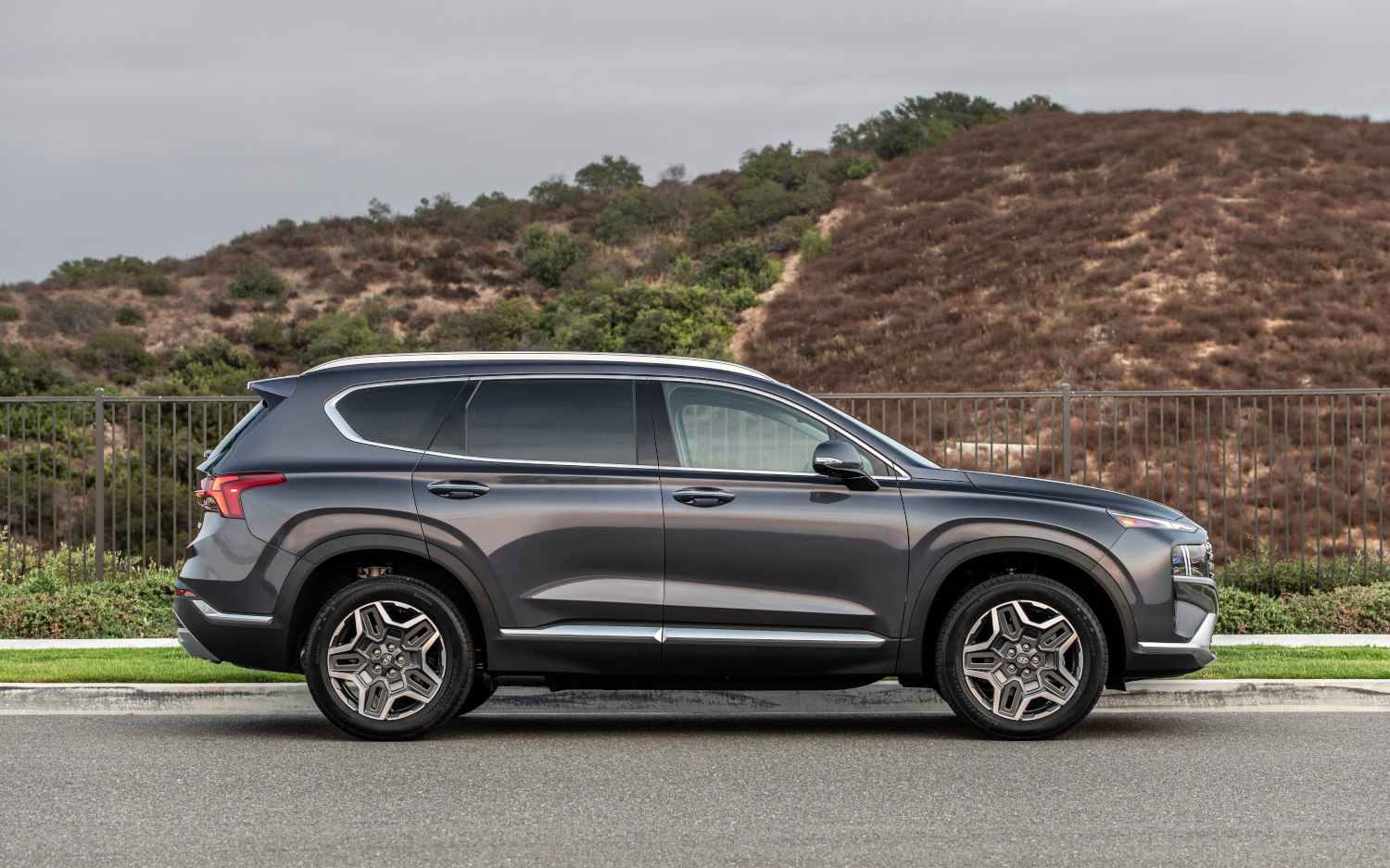
The Santa Fe receives a visual freshening for 2021 that includes bolder front-end styling and improvements to its interior. Three new powertrains are offered: A 2.5-liter four-cylinder replaces the standard 2.4-liter unit, a turbocharged 2.5-liter four-cylinder replaces the optional turbocharged 2.0-liter, and a hybrid variant powered by a turbocharged 1.6-liter four-cylinder and an electric motor joins the lineup. The Santa Fe gains a push-button shifter, several new optional driver-assistance features including a semi-autonomous driving mode, larger 8.0-inch and optional 10.3-inch infotainment displays, an optional 12.3-inch digital gauge display, and standard wireless Apple CarPlay and Android Auto. Following in the larger Palisade's footsteps, the Santa Fe also gains a fancy Calligraphy trim level with quilted leather upholstery, a color head-up display, standard all-wheel drive, unique exterior accents, and more upscale interior embellishments.
The 2021 Hyundai Santa Fe pushes efficiency with a new hybrid model.
PROS Larger standard and available touchscreens Hybrid and plug-in hybrid models More efficient, potent powertrains Revised transmission
CONS Expected price increase Calligraphy edges into Genesis turf Unknown standard features Unknown value
Pros Comfy, spacious, clever tech
Cons Not very interesting, not as cheap as it was, lack of choice RE engines
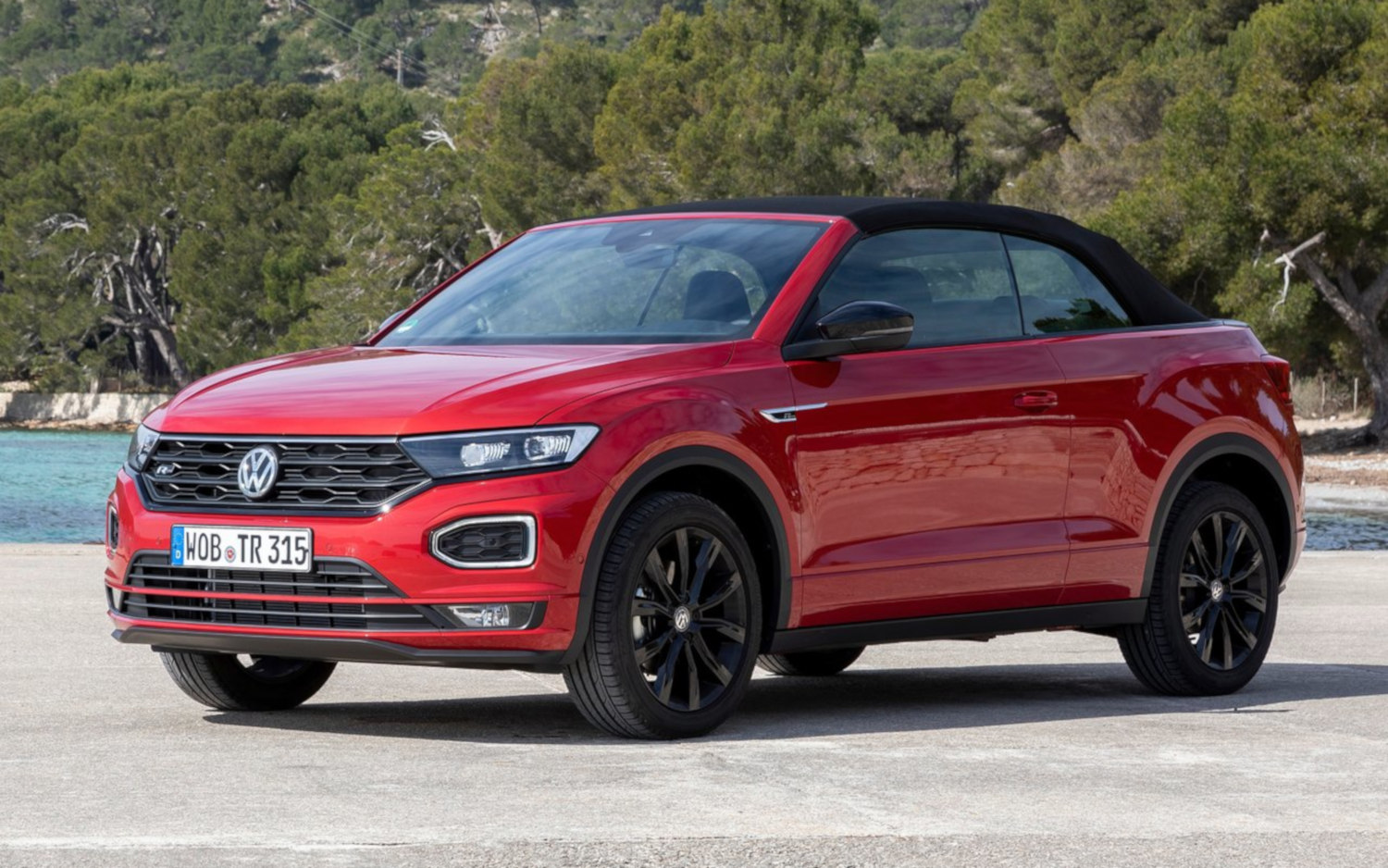
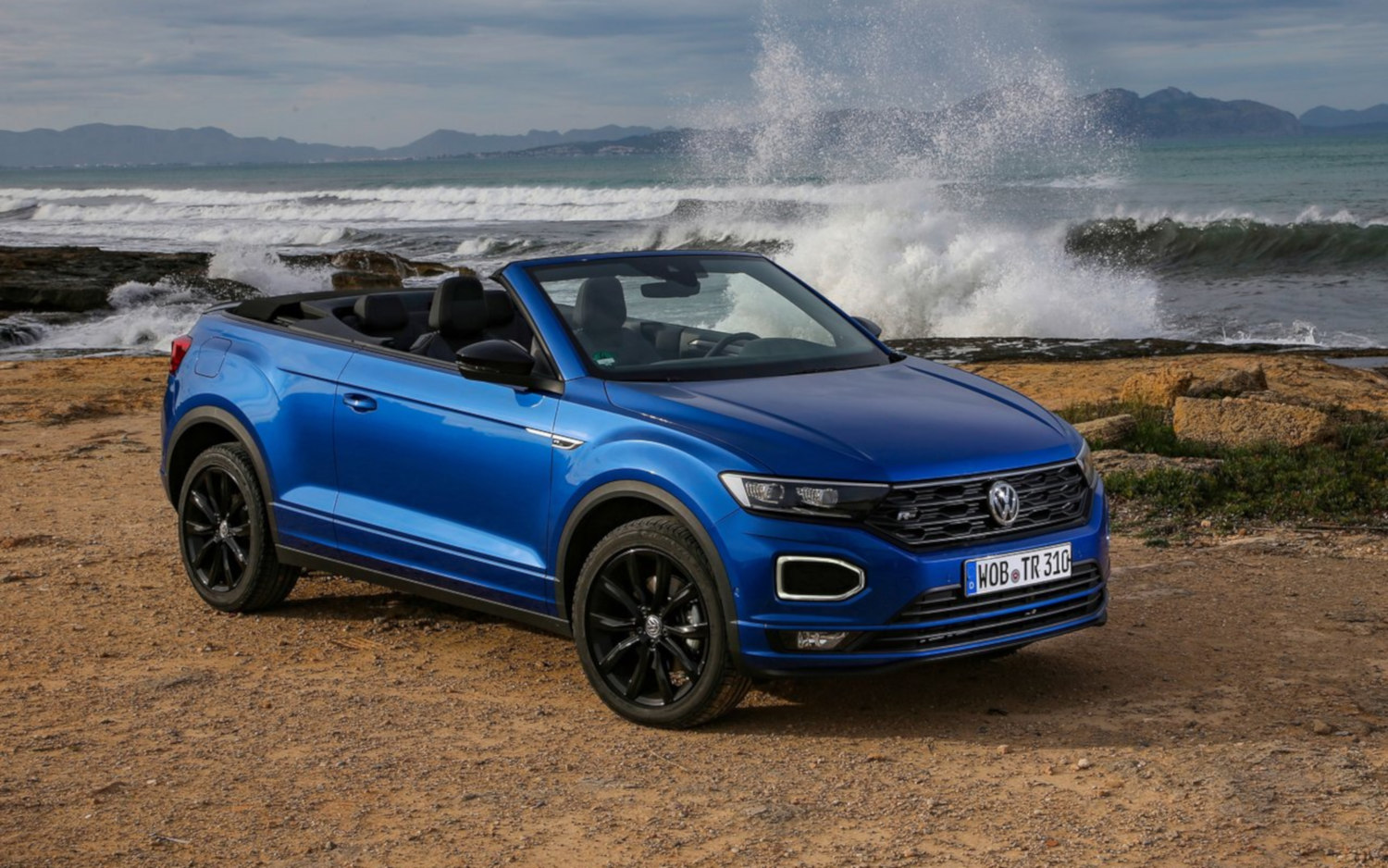
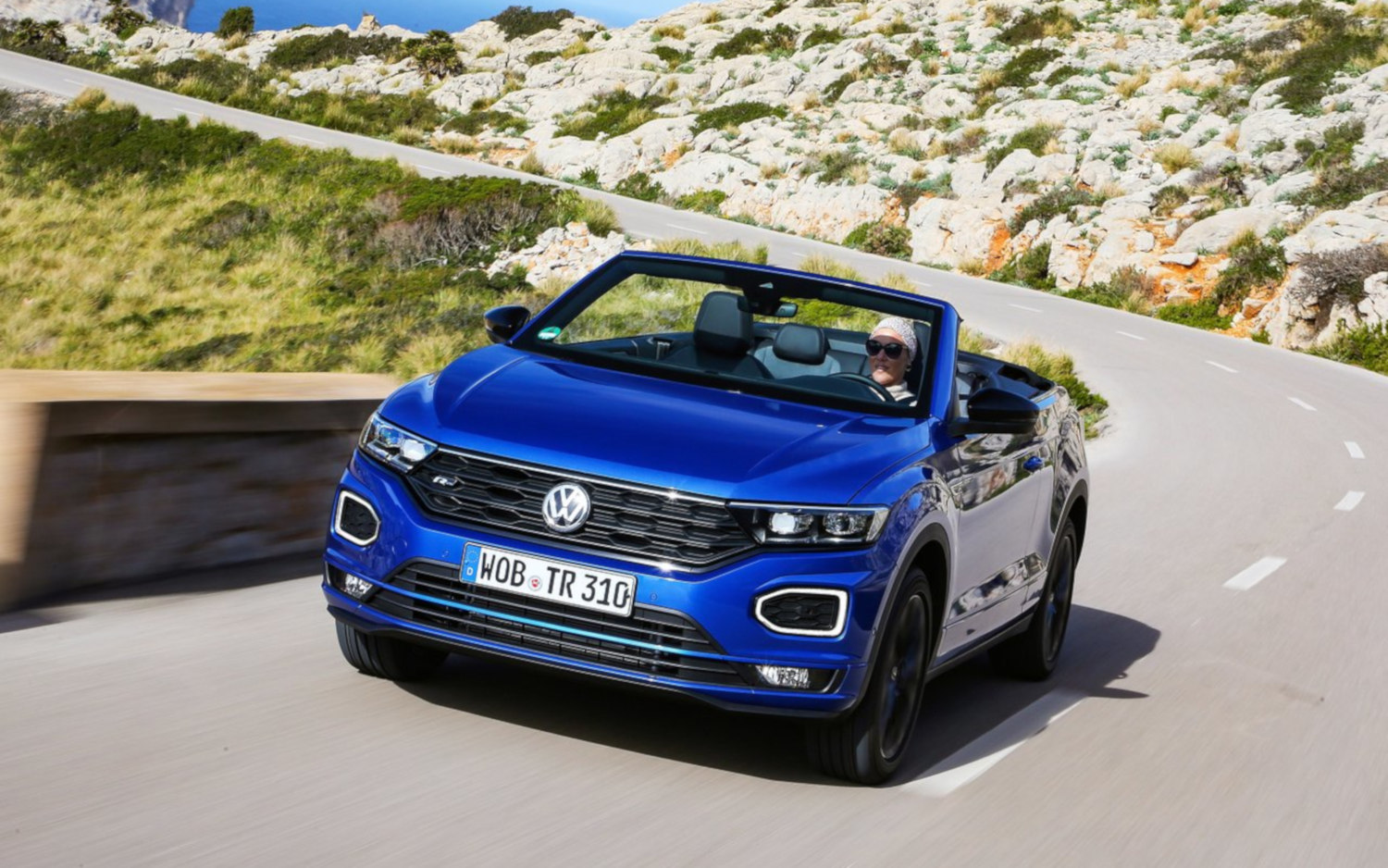
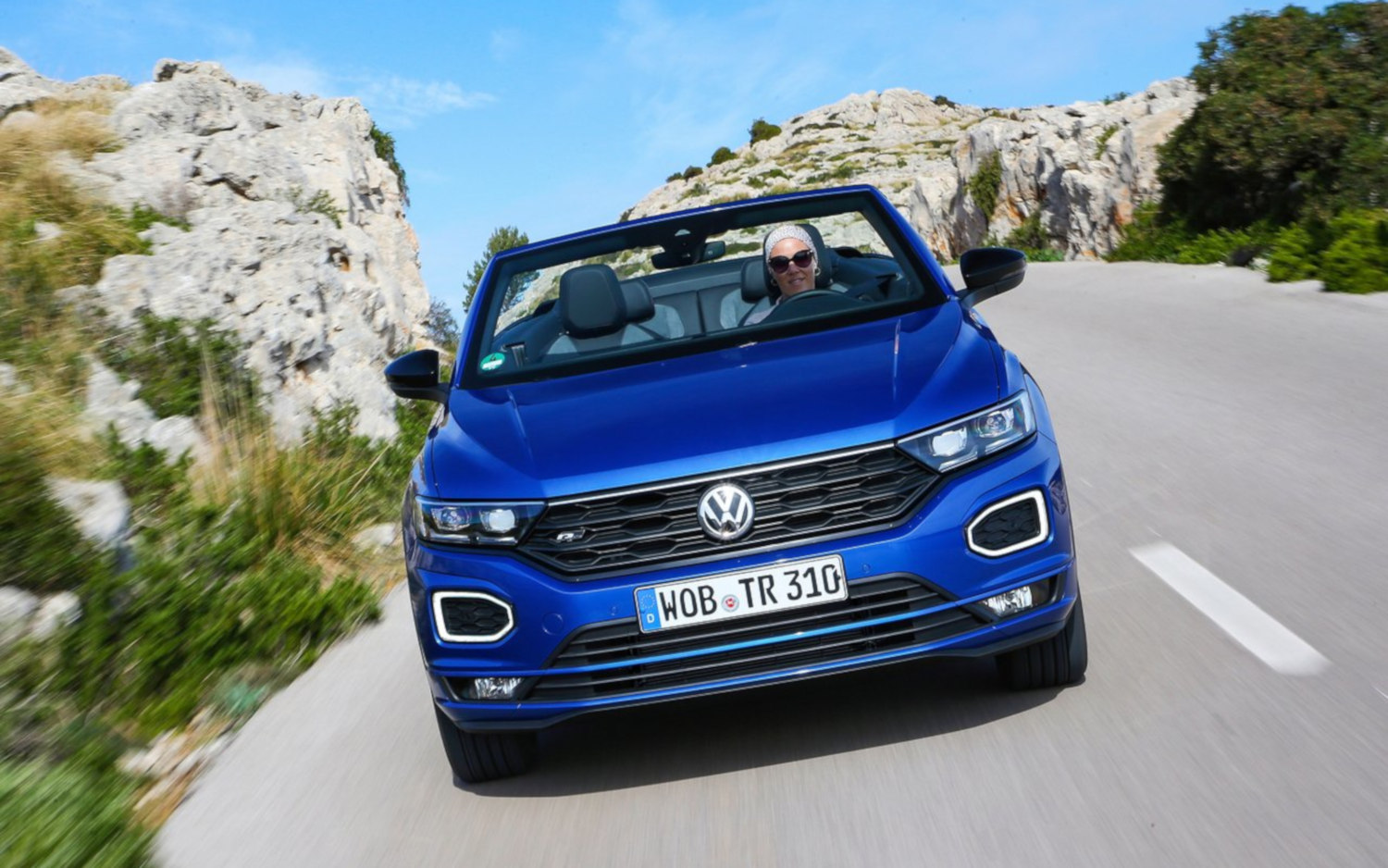
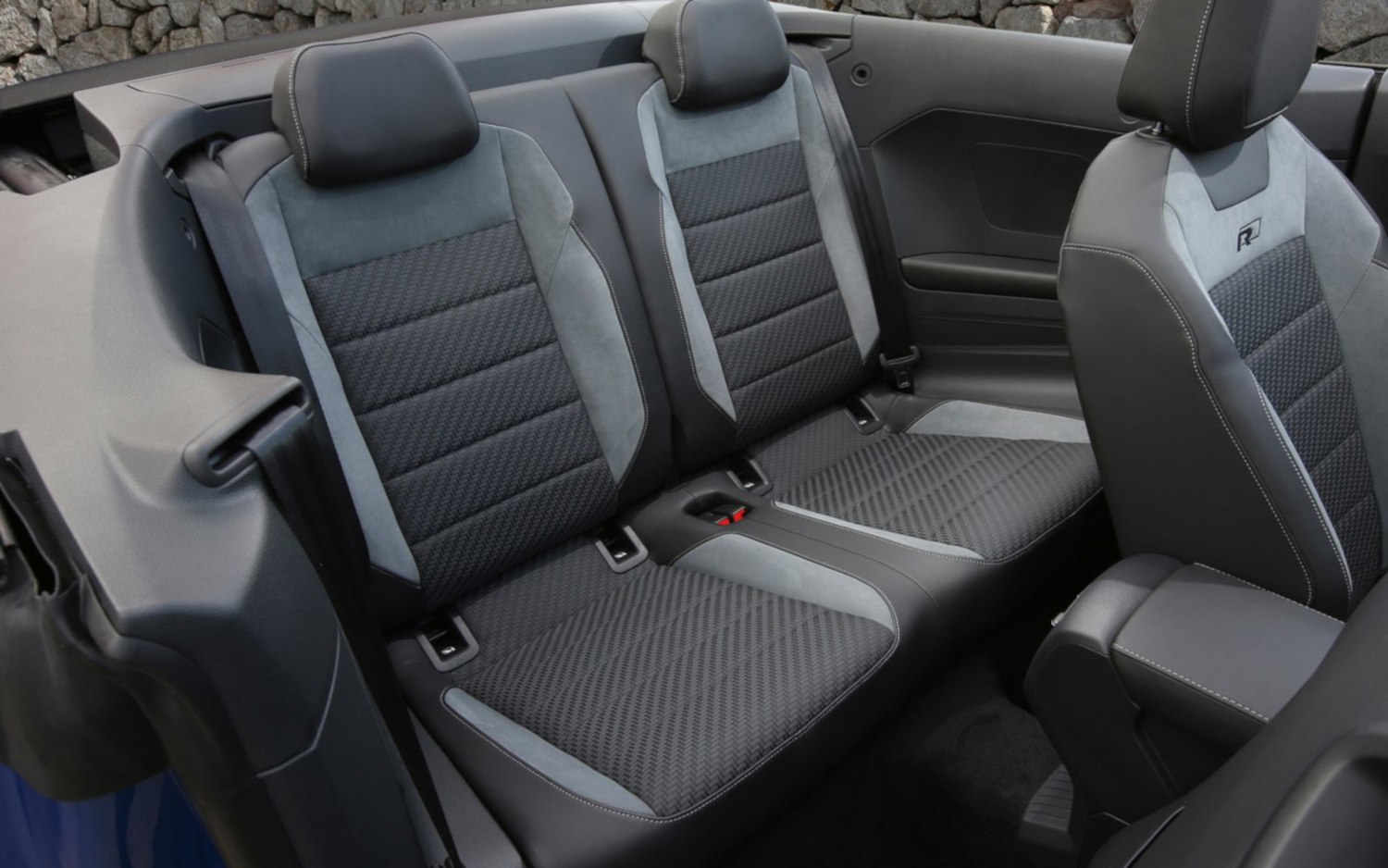
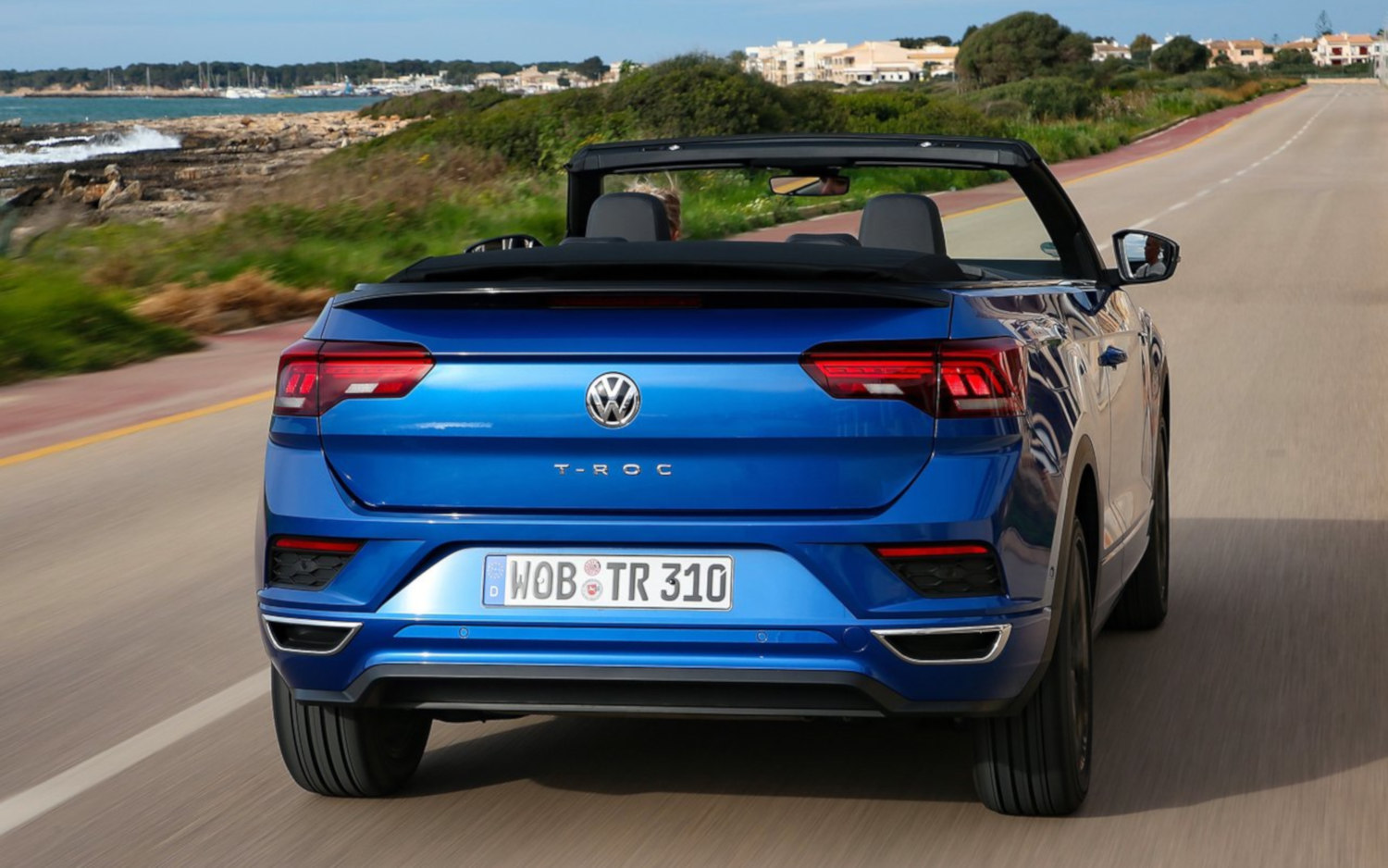
The 2020 Volkswagen T-Roc Cabriolet is a drop-top version of the company’s subcompact crossover. Launches two years after the coupe regular version, the 2020 T-Roc Cabriolet isn’t just a T-Roc with a soft-top, it also features only two doors instead of four. What’s more, the soft-top has a sleeker design, so the Cabriolet looks sportier than its standard sibling. Inspired by the Nissan Murano CrossCabriolet and the Range Rover Evoque Convertible, the 2020 T-Roc Cabriolet is Volkswagen’s only small convertible to date after the discontinuation of the Beetle.
Volkswagen has unveiled its drop-top T-Roc Cabriolet, which it's billing as the only mainstream crossover with a proper convertible roof. Based on the T-Roc SUV, the company's drop-top crossover follows in the footsteps of the soft-top Range Rover Evoque and Nissan Murano CrossCabriolet by blending wind-in-your-hair thrills with the taller ride popular with buyers at the moment. Although it bears the T-Roc name, the Cabriolet isn't just a normal T-Roc SUV with the roof prised off. It's actually 34mm longer than the hardtop with a 37mm longer wheelbase, while front seat occupants sit 599mm above the road – which Volkswagen says ensures they "enjoy a great view".
PROS Traditional SUV attributes with wind-in-the-hair fun Marks a return of convertibles to VW’s line-up Trims start with well-equipped Design It certainly makes a statement...
CONS Less practical than the five-door T-Roc SUV Cabriolet quite a bit pricier, too Reduced engine range with no diesel Handling becomes a bit wobbly